 Slimepress
Code Vein II Review — Old Wounds Remain, but Traveling Beyond the Bloodline With These Vampire Partners Still Feels Worthwhile
If you remember Bandai Namco’s 2019 anime Soulslike Code Vein, you’ll likely recall how it stood out through its mix of vampire themes, edgy action, and a flexible build system. While the original struggled with uneven combat and some infamous level design (yes you, Cathedral of the Sacred Blood), it also showed clear potential, leaving players hopeful for a sequel that could push the series further.
Now, years later, Code Vein II finally arrives — and this time, it feels less like a safe follow-up and more like a full-scale evolution.
Rather than offering simple visual upgrades or minor system tweaks, Code Vein II attempts to rebuild itself across worldbuilding, exploration, character design, and gameplay depth, while openly drawing inspiration from Elden Ring-style open exploration. From its time-travel narrative hook to its freely explorable post-apocalyptic world, the game carries a strong sense of ambition, not just to be a sequel, but to become a true flagship entry for the Code Vein universe.
That ambition comes with trade-offs. Code Vein II isn’t flawless — it delivers impressive highs alongside areas still in need of refinement. This review is based on nearly 70 hours of hands-on experience (before finishing the main story), examining its combat, core systems, exploration structure, progression, and audiovisual style. Rather than simply asking whether the game is “worth buying,” this review aims to answer a bigger question:
What direction is Code Vein II truly heading toward — and has it finally found its own path of blood?
Title: Code Vein II
Developer: Bandai Namco Studios
Publisher: Bandai Namco Entertainment
Platform: PlayStation 5, Xbox Series X|S, PC
Release Date: January 30, 2026
Code Vein II’s Worldbuilding and Story Premise
Code Vein II inherits the original’s post-apocalyptic vampire setting, but significantly expands its narrative scope and timeline structure, reshaping the story into a dark fantasy epic centered on sacrifice, redemption, and the cycle of fate between Revenant (vampire in Code Vein) and human. Rather than simply continuing the previous world, the sequel reinterprets the origins of the catastrophe, using time travel to let players step directly into the past and witness the pivotal moments that led to humanity’s downfall.
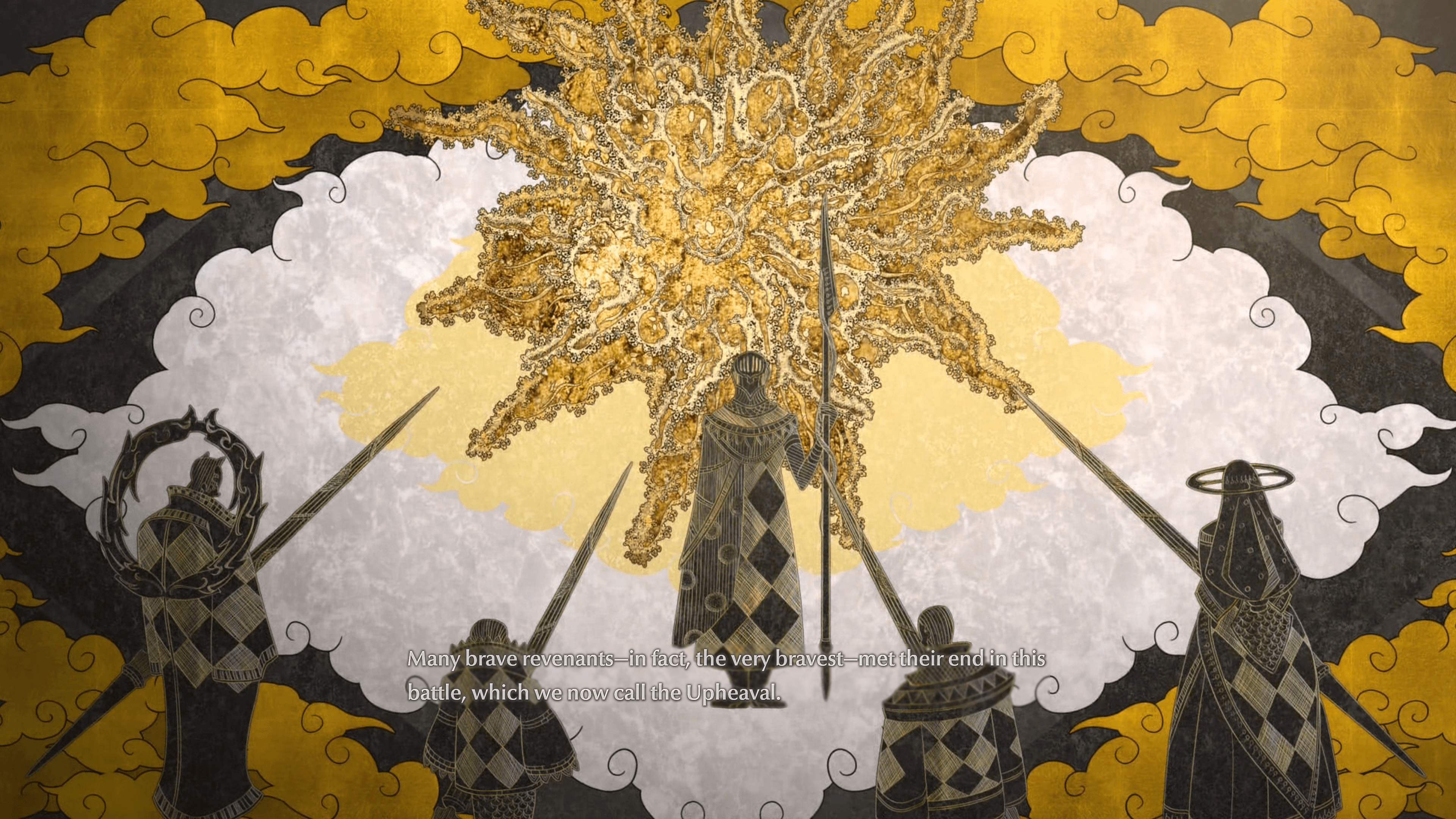
The story revolves around the disaster known as the “Resurgence” — an event that drove vampires into madness, transforming them into monstrous beings and pushing the long-existing Revenant and human civilization toward collapse. To halt the spread, six Revenant heroes sacrificed themselves, sealing the catastrophe within a massive, moon-like cocoon before entering eternal slumber. However, the seal is weakening: each time a hero’s will breaks, it triggers a devastating collapse, and if the final guardian falls, the world will face total annihilation.
Players take on the role of a fallen Revenant Hunter resurrected by Lou Magmell, a special revenant capable of traversing time. As both the protagonist’s savior and the story’s narrative anchor, Lou guides the journey across a century of history, allowing players to enter the memories and unresolved regrets of the six heroes in an effort to rewrite destiny.
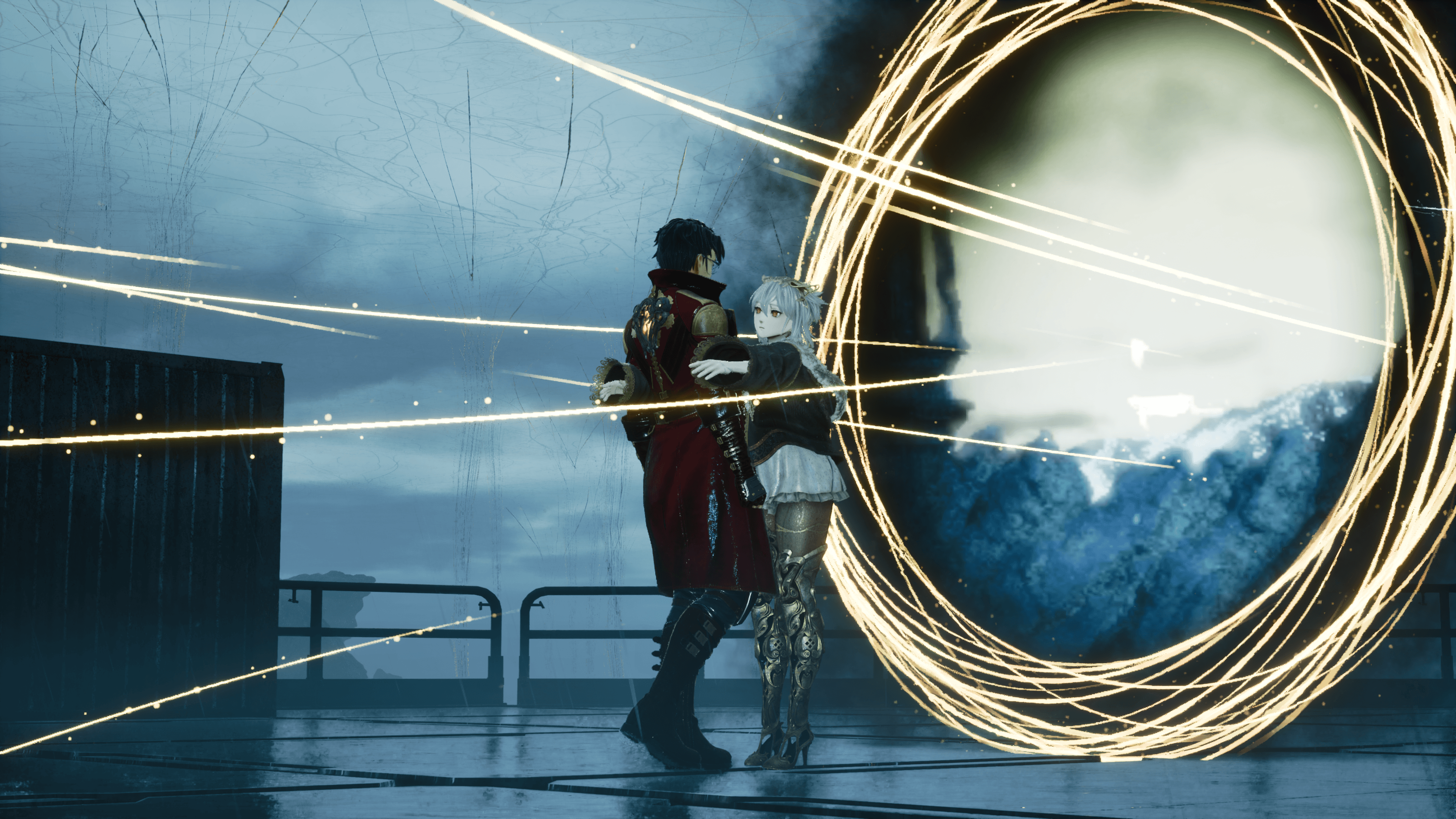
Structurally, the main plot still follows a familiar Soulslike framework — defeating key figures to save the world — but the time-travel mechanic reframes the journey as one of actively participating in history rather than merely confronting the present. Each return to the past functions as a self-contained emotional chapter, exploring themes of tragedy, duty, and hope, ultimately deepening player empathy toward the heroes’ choices.
The game also delivers more refined worldbuilding. Bloodlines now serve not only as gameplay mechanics but as cultural symbols of revenant’s heritage; everyone wearing masks to avoid infection reinforce the apocalyptic social divide; and the visual motif of heroes sealed in cocoons ties together themes of blood, sacrifice, and lunar imagery. As player actions begin to influence the future, the cause-and-effect link between past and present strengthens immersion and narrative weight.
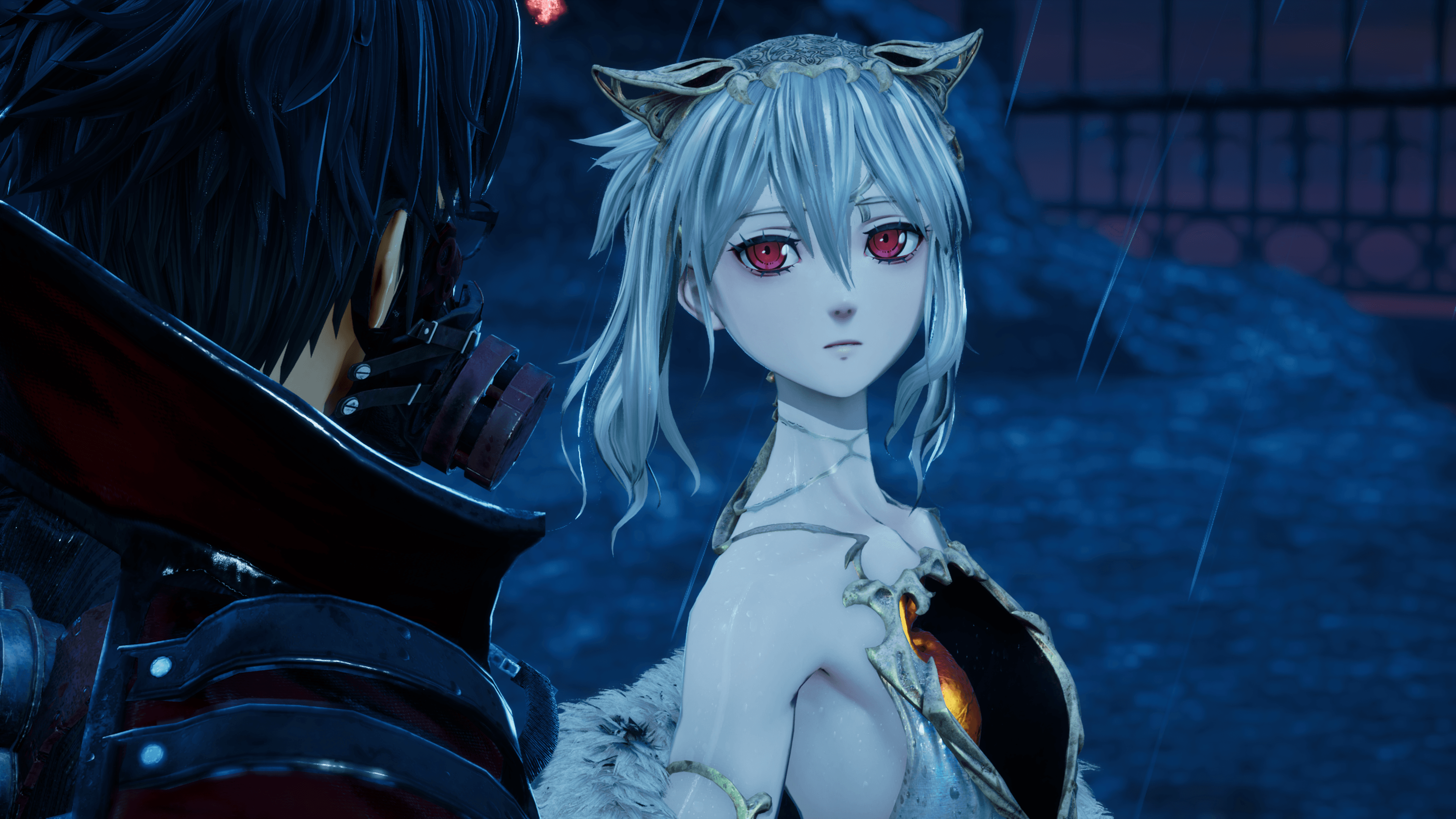
That said, some storytelling elements remain conventional. The core structure still leans on familiar tropes — sealed calamities, fallen heroes, destined sacrifice — limiting its sense of surprise, and the player character at times feels more like a narrative conduit than a fully realized protagonist. The opening chapter also moves at a slower pace, which may affect first impressions before the broader exploration and branching narrative fully unfold.
Even so, compared to its predecessor, Code Vein II demonstrates greater narrative ambition and maturity. Time travel transforms the player from a passive survivor into an active agent shaping fate, while the intertwined arcs of the six heroes form the game’s strongest emotional backbone. Based on my around 70 hours of playtime, this character-driven storyline stands out as one of the most engaging and memorable elements in the experience. While the overall plot may not be revolutionary, the developers succeed in retelling a familiar apocalypse with renewed emotional depth and a distinct Code Vein identity.
Code Vein II’s Exploration Design and Open-World Structure
Code Vein II marks the series’ first full leap into open-world design, successfully transforming its traditionally linear Soulslike structure into a freer exploration experience that still maintains clear pacing and direction. Across world layout, system design, and environmental presentation, it’s clear the developers aimed for a larger, more ambitious, and more cohesive experience than before.
The open world is the game’s most notable evolution, and its visual identity plays a major role in shaping exploration. The gothic, post-apocalyptic aesthetic returns, enhanced by anime-inspired character designs and high-quality lighting to create a striking vampire atmosphere. One standout feature is the dual-era time travel presentation: players first explore ruined modern locations, then revisit the same areas in the past, where desolate wreckage transforms into thriving cities. This “one map, two timelines” contrast adds both strong visual impact and deeper narrative immersion.
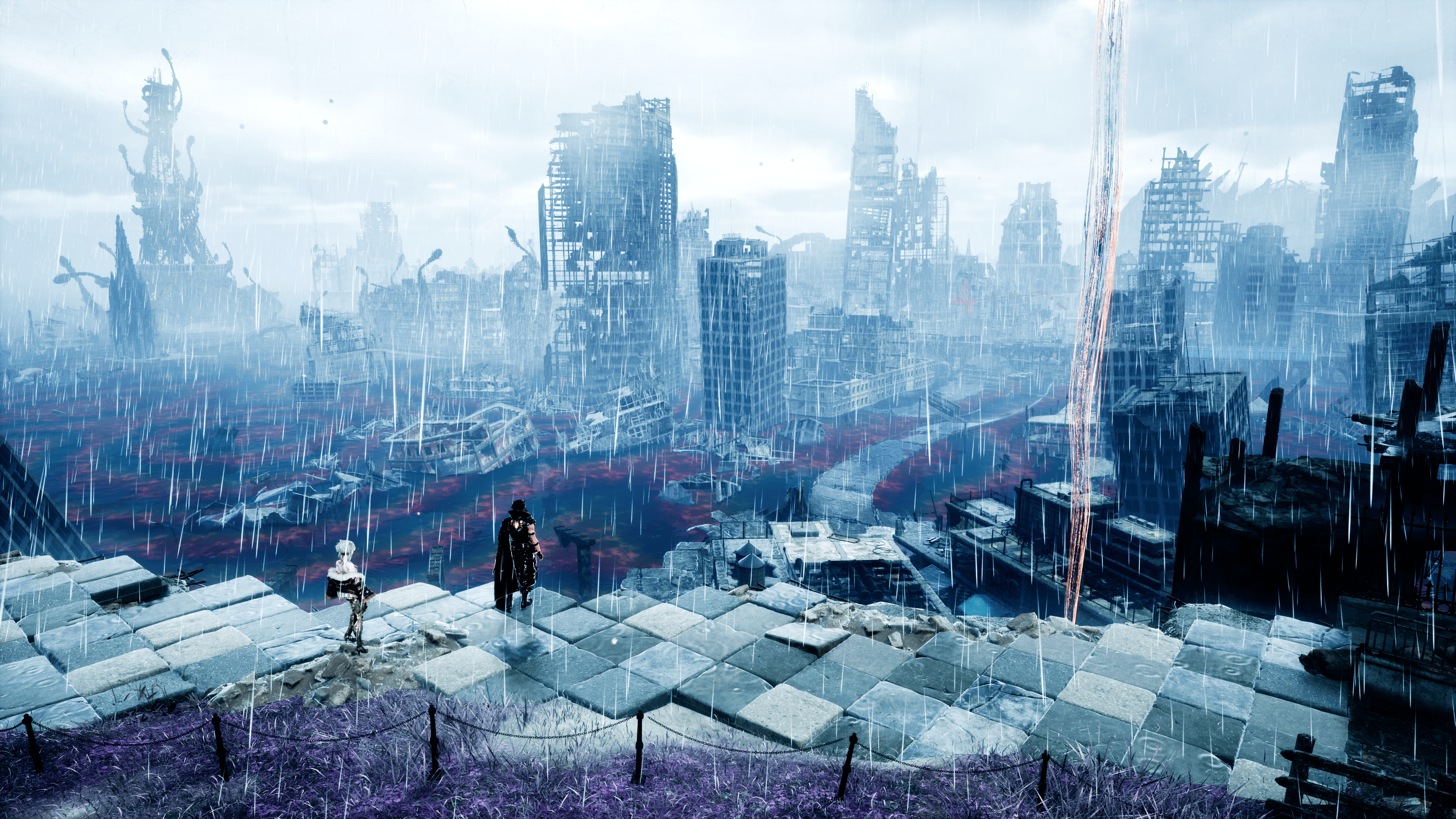
The world is built as a seamless large-scale map supported by a day–night cycle and dynamic weather, such as rainfall that directly affects enemy behavior and spawn patterns. Depending on time and conditions, players may encounter different threats, keeping exploration fresh and unpredictable.
Comparisons to Elden Ring are inevitable — and structurally, Code Vein II shares familiar elements like scattered ruins, dungeons, side activities, treasure points, and resource hubs that reward free roaming. However, the game adopts a more player-friendly guidance system: once locations are discovered, the map marks points of interest (such as buildings or dungeons), reducing frustration and making navigation more accessible than traditional Soulslike titles.
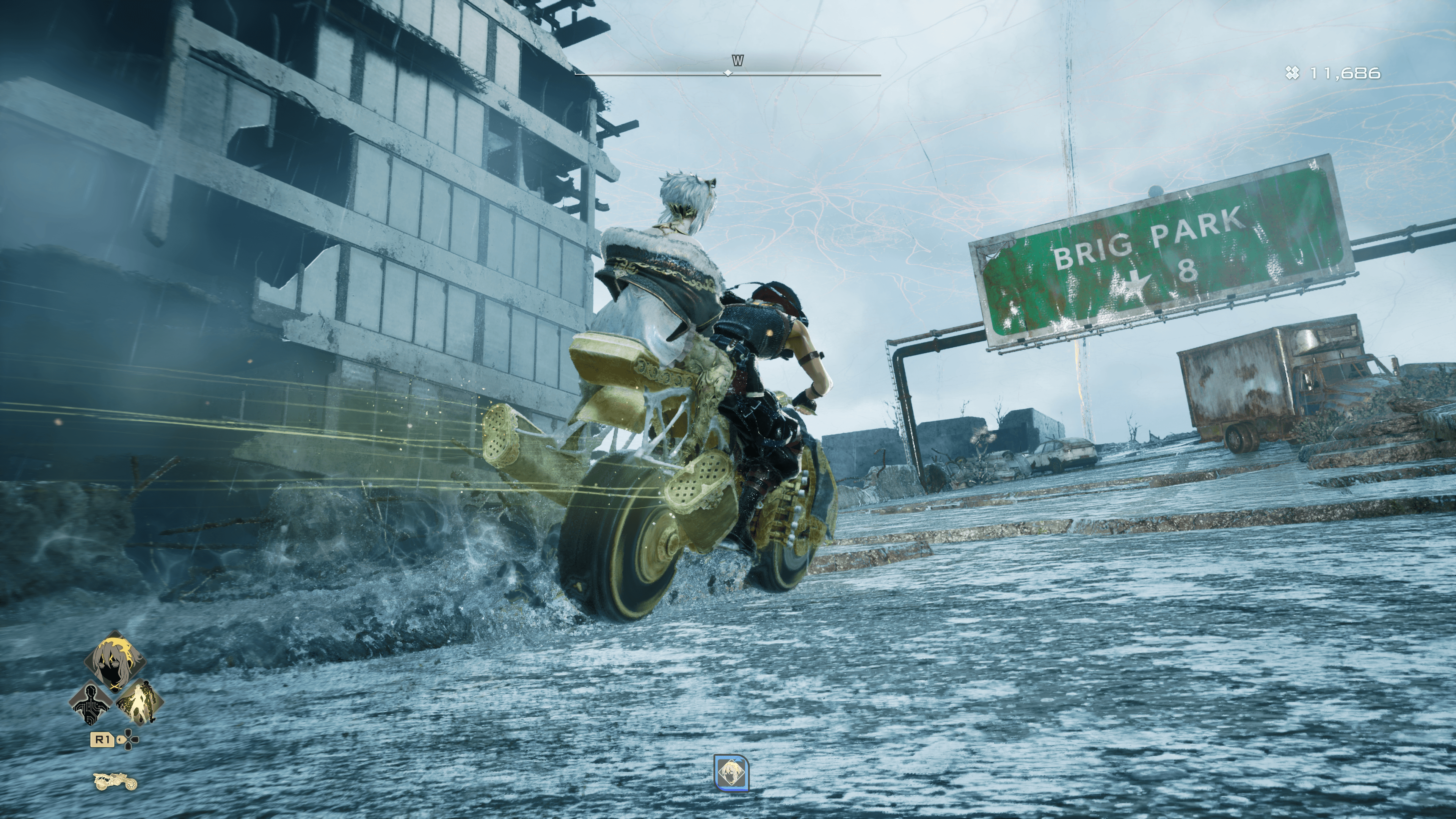
Yes — you can finally jump and crouch. These mechanics aren’t cosmetic; they play an active role in traversal, puzzle-solving, and secret-hunting, encouraging vertical exploration and rewarding clever movement. The terrain features layered elevations, interactive platforms, and alternate routes, often hiding unexpected discoveries for observant players.
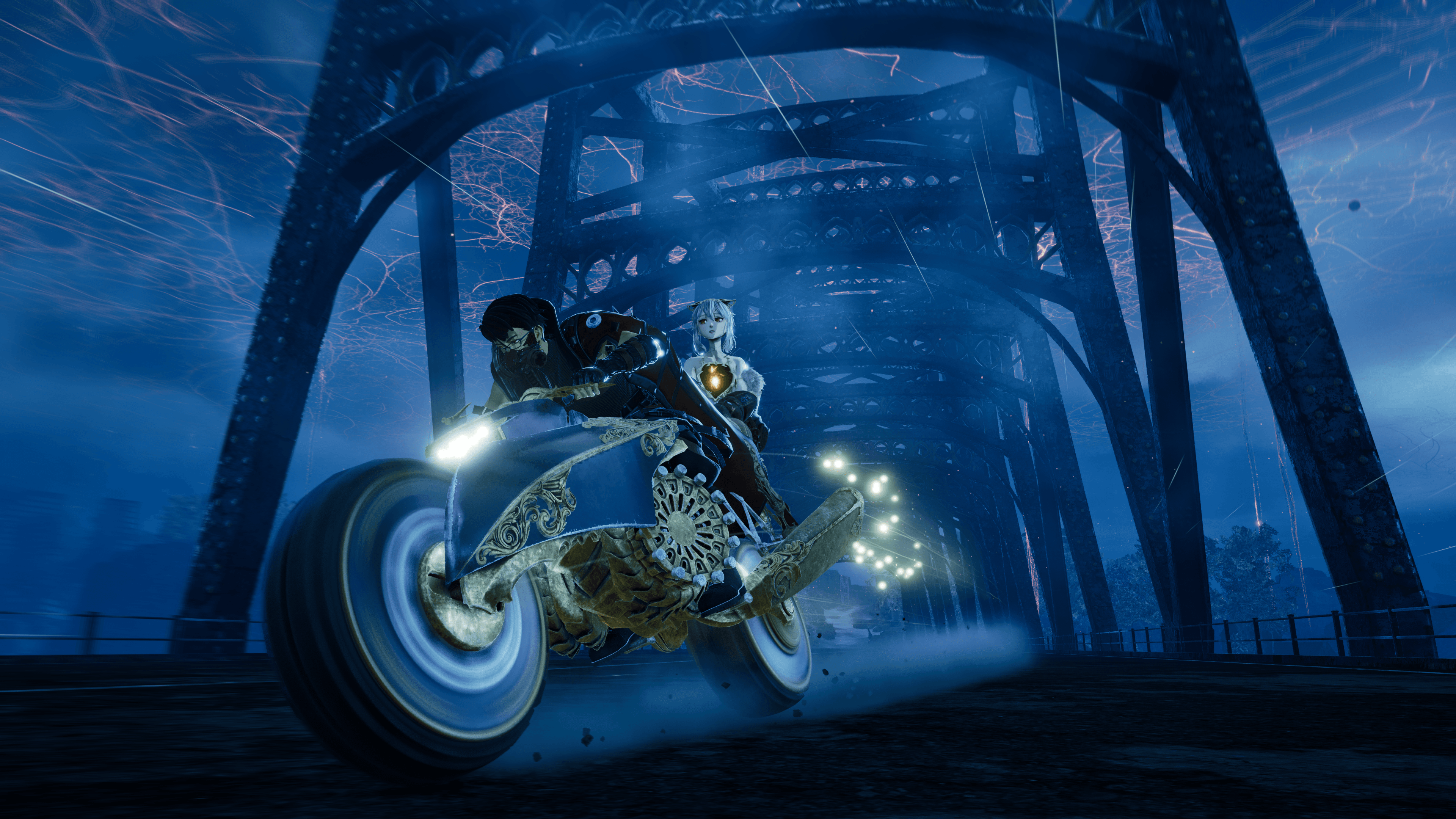
And of course — an open world needs a ride. Code Vein II introduces a stylish metal motorcycle that feels perfectly on-brand. It improves traversal speed, allows steering, boosting, braking, and even gliding downhill. The handling is somewhat underpowered, but still enjoyable — much like the game’s combat feel: slightly imperfect, yet satisfying enough. Regardless, the vehicle significantly improves exploration flow and efficiency.
Exploration rewards are robust and meaningful. The world is packed with crafting materials, consumables, and upgrade resources, echoing Elden Ring-style crafting systems. Key collectibles include Golden Statues and Golden Ichor for permanent healing upgrades, as well as Revenant Shrines that grant temporary or permanent buffs.
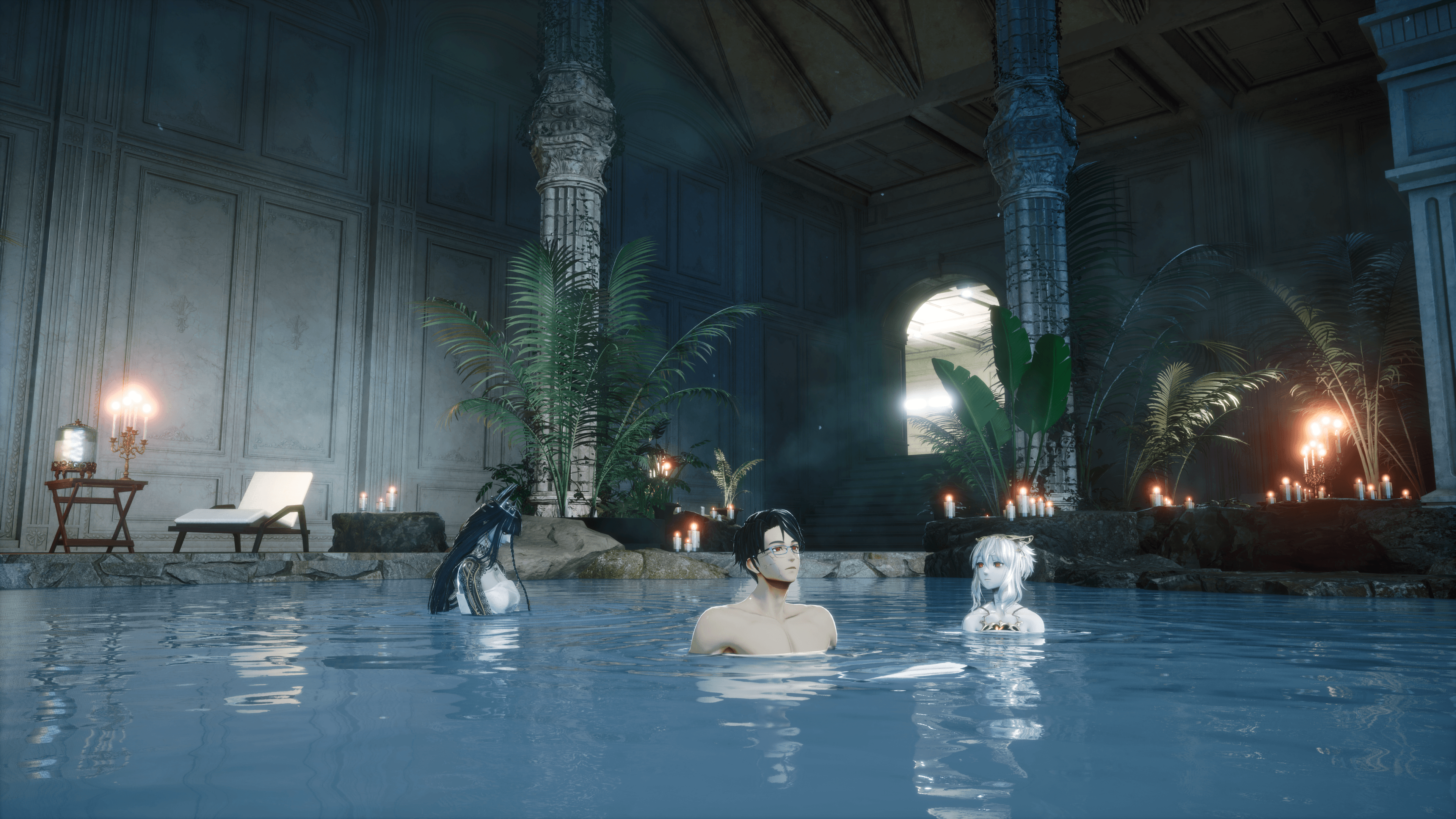
That said — the true endgame reward might just be the hot springs scattered across the world. Discovering them lets you relax with companions, unlock rare items, and enjoy character interactions. Gameplay value? Yes. Emotional value? Also yes. Fan service? Absolutely, albeit slightly.
Environmental visual guidance also plays a strong role. Like Breath of the Wild and Elden Ring, the world uses striking landmarks — towers, ruins, massive structures — to naturally draw players toward points of interest, encouraging exploration through curiosity rather than map icons.
As expected from a Soulslike, the world features elite enemies and roaming bosses, generally at a reasonable density. However, some mid-to-late-game regions suffer from enemy overcrowding, causing occasional difficulty spikes and fatigue.
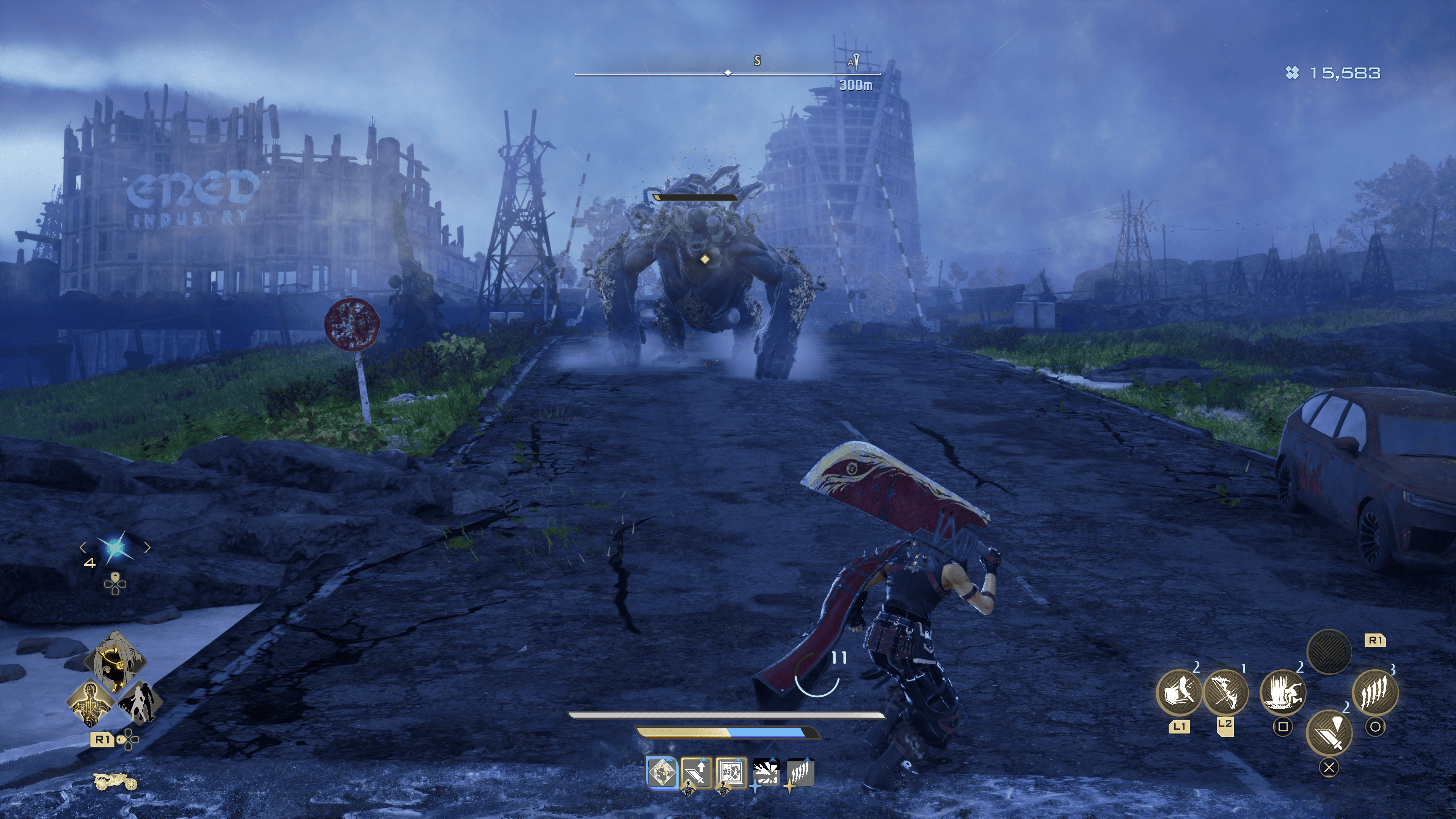
Fortunately, checkpoint placement is generous. The classic Souls-style save system returns via Mistle statues, which are well-positioned near key routes and boss encounters, significantly reducing backtracking frustration — even if enemies respawn when you rest (hey, we’ll blame the Blood Moon…).
Dungeon design follows familiar Soulslike conventions. Maps remain hidden until players destroy “jammers,” encouraging memory-based navigation and environmental awareness. Skilled players can even destroy jammers early to gain a tactical advantage — a smart layer of risk–reward design. That said, dungeon layouts lean more linear, closer to Nioh than classic labyrinthine Souls design.
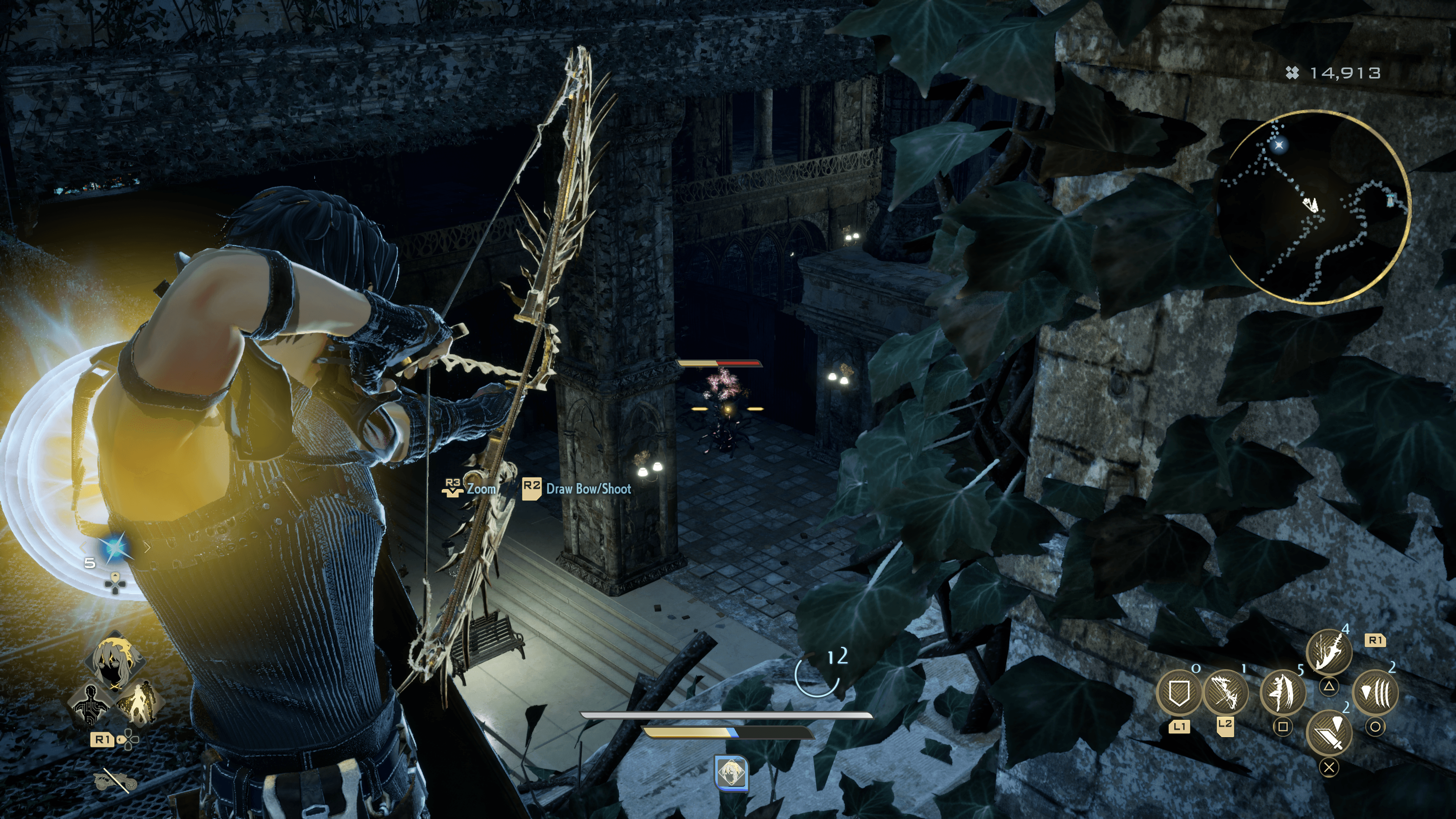
Code Vein II’s open-world exploration stands out as one of its strongest achievements. Rather than copying Elden Ring, it successfully blends gothic apocalypse aesthetics, vampire identity, and its own gameplay rhythm into a distinct experience. Whether you’re scouring ruins, unlocking maps strategically, soaking in hot springs, or gliding off cliffs on a motorcycle, exploration feels like a true adventure — not just traversal.
While the dungeon variety still has room to grow, this is ultimately a post-apocalyptic vampire world worth revisiting again and again.
Code Vein II’s Combat System and Action Flow
Code Vein II builds on the original’s stylish “revenant hunter” combat foundation, expanding build freedom, skill synergy, and flashy anime-style spectacle. Combat isn’t just about mechanical execution — it’s also a highly stylized performance, packed with exaggerated, edgy, and visually striking effects.
The game features seven weapon types, each with distinct light/heavy attacks and combo rhythms, further customizable through Revenant Formae. As a revenant hunter, the protagonist uses the “Blood Code” to replicate revenant abilities, applying Formae across melee buffs, ranged offense, crowd control, and status effects.
Formae fall into three main categories — combat techniques, elemental magic, and self-buffs — with up to four equippable at once. However, they’re limited by a multi-stat Capacity system (stability, control, conversion, conduction). While the individual stat effects aren’t especially intuitive, the system forces meaningful trade-offs, making builds more strategic than simple stat stacking.
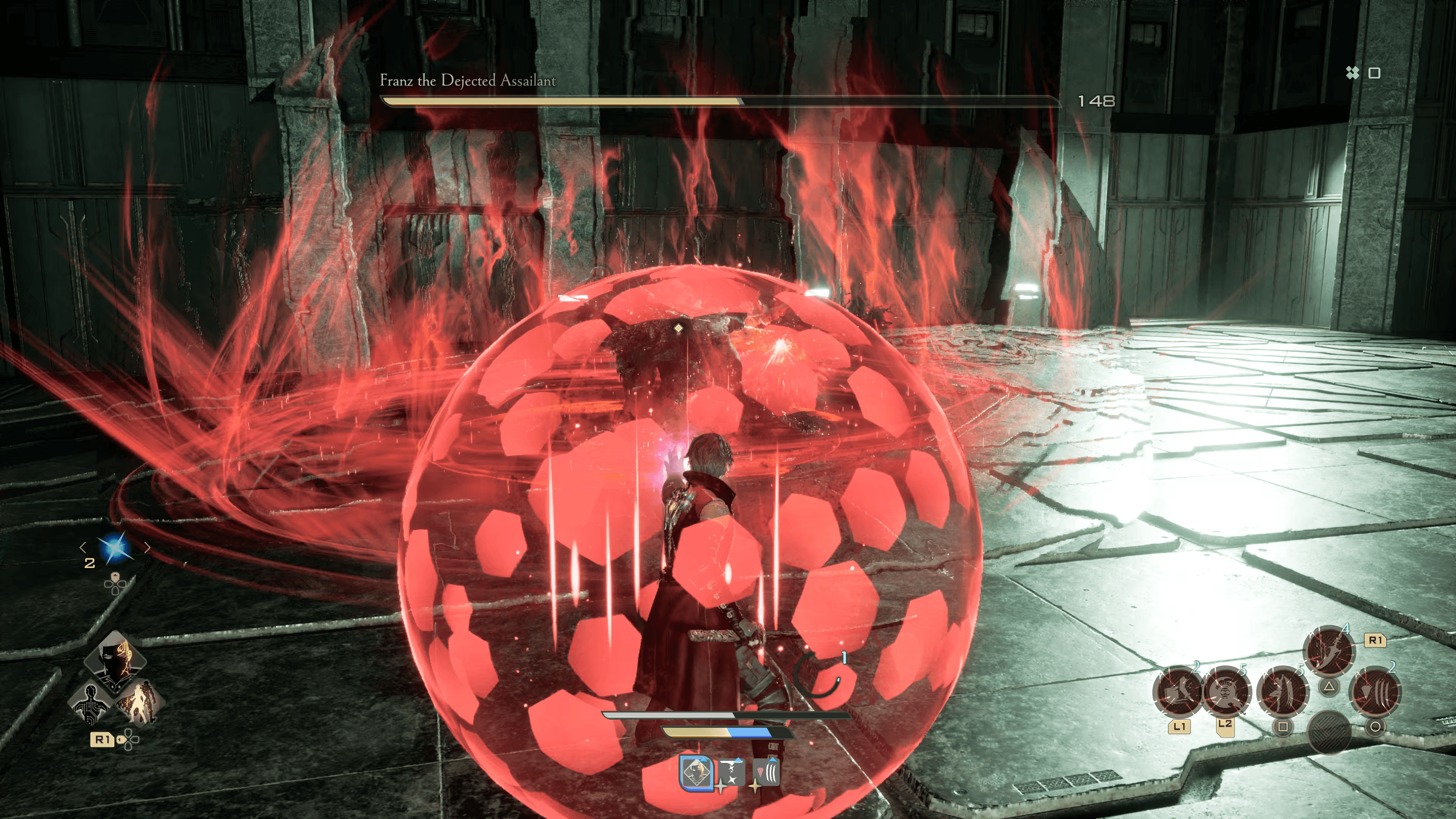
That said, one downside is limited skill transferability: certain weapon-bound abilities can’t be freely moved across weapon types, which slightly restricts build flexibility in ways that feel counterintuitive.
Farmae skills consume Ichor — effectively MP, framed through the game’s blood lore. Enemies build a “bleed gauge” when damaged, which players can exploit to extract blood and replenish Ichor. This creates a self-sustaining combat loop: deal damage, trigger bleeding gauge on the enemy hp bar, drain blood using draining, get Ichor and cast abilities again, one of the series’ most distinctive and satisfying systems.
Another core mechanic is the “Jail” system, which governs the protagonist’s transformation abilities and combat identity. Different Jails affect survivability and determine the style of Drain Attacks, which convert enemy bleed into large Ichor gains — rewarding high-risk, high-reward aggression.
Executing downed enemies grants bonus Ichor, and finishing foes with Drain Attacks triggers extra-stylish cinematic executions with massive resource recovery. This risk–reward rhythm remains one of Code Vein’s most stylish and compelling design pillars.
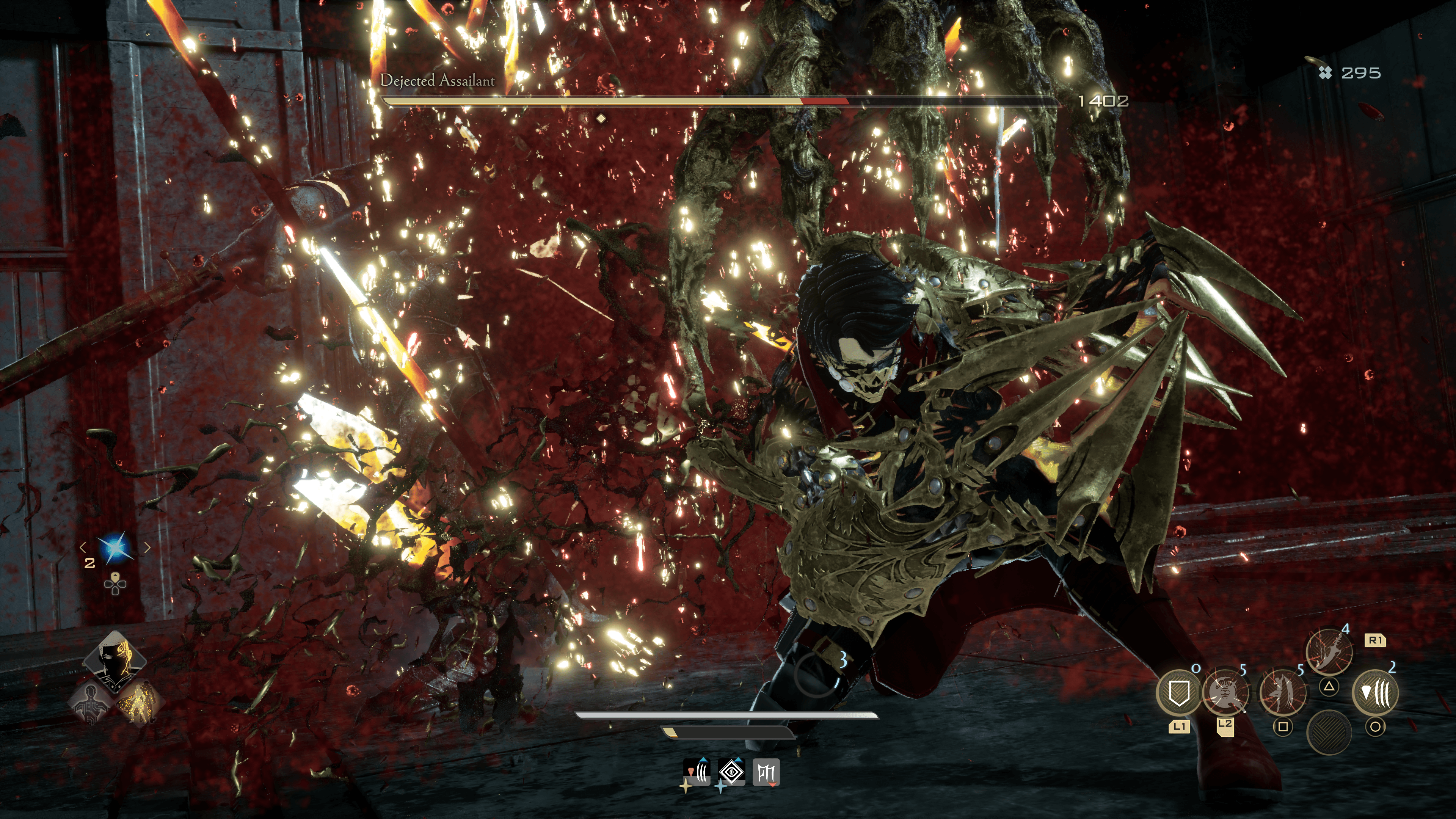
The new Bequeathed Formae system adds another layer of customization, functioning more like tactical equipment than standard skills. Defensive variants include shields, parry tools, and counter gear, each offering different defensive traits and handling. Offensive variants allow players to summon special weapons — such as ranged bows or heavy AoE axes — mainly as situational support tools rather than primary damage dealers.
This system further diversifies playstyles, reinforcing Code Vein II as a build-driven action RPG rather than a single optimal-solution game.
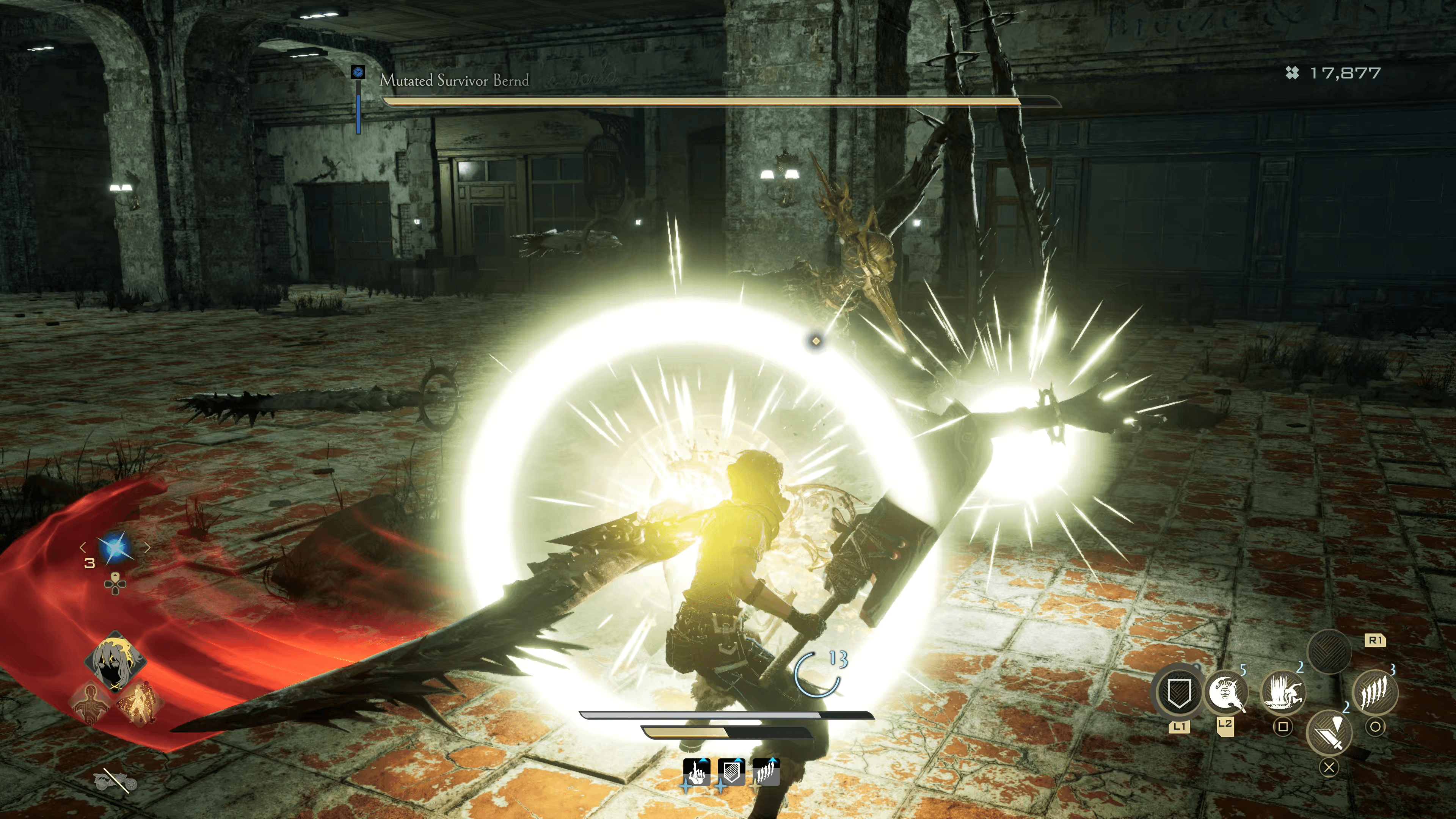
As someone who values combat impact feel, I always had high expectations — but like the first game, Code Vein II still struggles here. Hit feedback remains light and floaty, largely due to weak sound design that reduces the sense of weight behind attacks. Improvements exist, but they’re modest.
That said, animation quality has clearly improved. Combat flows more smoothly, transitions feel more natural, and the over-the-top anime flair remains irresistibly stylish. Some attacks suffer from long recovery frames, which can interrupt combo flow — especially noticeable in high-difficulty encounters.
Visually, however, combat remains excellent. From glowing revenant abilities to Jail-based executions, cinematic kill shots, dramatic blade draws, and blood-draining camera angles — Code Vein II consistently delivers style, flair, and spectacle.
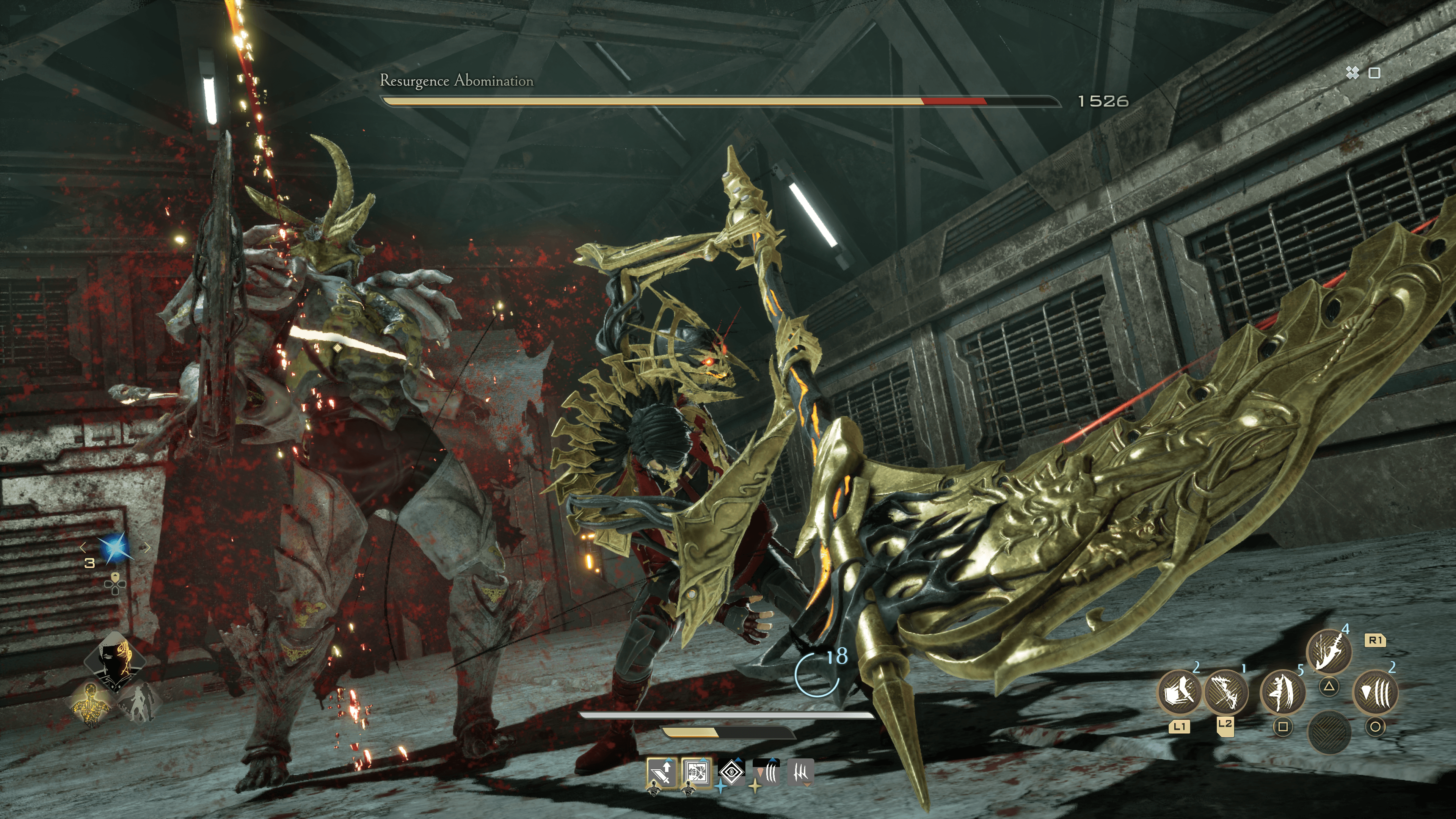
A small nitpick: the running animation still feels awkward, just like in the original, but hey maybe it's just me.
On the plus side, jumping and crouching are now fully integrated into combat. Jump attacks deal high stagger damage and offer low-risk offensive options, making them surprisingly effective in many encounters (yes — it feels familiar). Crouch-based stealth allows backstab-style Drain assassinations, adding tactical flexibility to combat openers — even if stealth isn’t a core focus of the genre.
These additions make combat more dynamic, layered, and expressive than before.
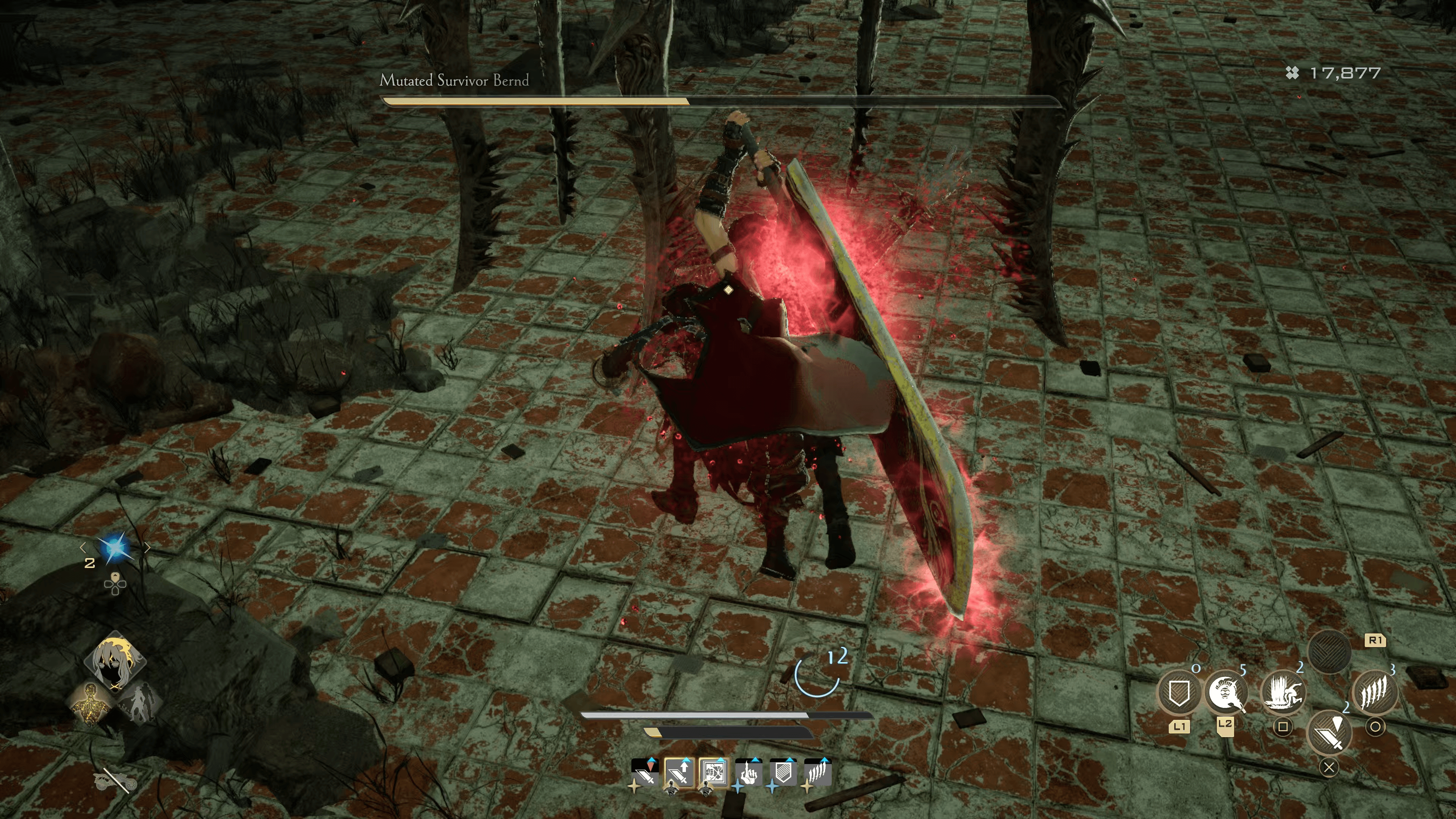
Code Vein II still hasn’t fully solved its impact and weight problem, and its combat feel doesn’t yet rival top-tier action RPGs. However, system depth, build freedom, stylish executions, and the signature blood-drain loop compensate for much of that shortfall.
The risk–reward rhythm of Drain Attacks remains the game’s most iconic and engaging mechanic. If you can accept that the hit feel isn’t industry-leading, Code Vein II still delivers a deep, flashy, unapologetically edgy, and satisfying action combat experience.
Code Vein II’s Deep and Expansive RPG Build System
Compared to its predecessor, Code Vein II takes its RPG systems to an almost excessive level of expansion — but in a deliberate, meaningful way. Rather than inflating stats, the game overhauls its character progression framework, pushing players to engage deeply with equipment synergy, stat caps, burden management, and build identity.
At its core, the RPG structure revolves around six interconnected systems: Level, Weapons, Jail, Blood Code, Inherited Formae, and Boosters — forming a layered and highly complex progression network.
Unlike traditional Soulslike games, leveling no longer involves manual stat allocation. Each level automatically increases HP, stamina, and attack, simplifying progression and reducing beginner mistakes. However, offensive and defensive stat scaling (such as STR and DEX) is now largely governed by Blood Codes, shifting character growth from raw stat investment to build-driven identity, a deliberate design trade-off.
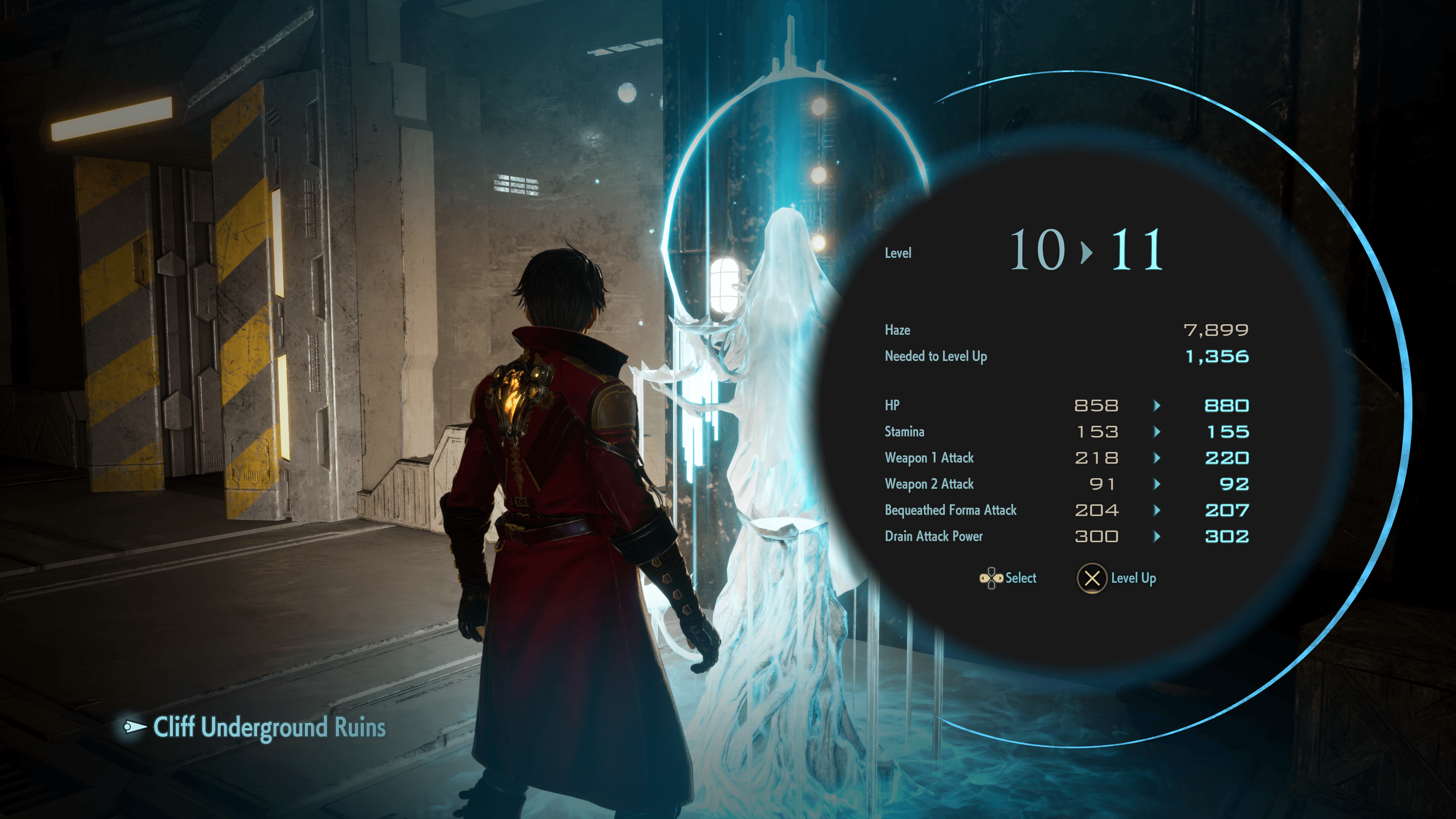
Weapons still fall into seven categories, but now operate under a stricter Capacity system. Players can equip up to four Formae, each consuming multiple capacity metrics, meaning builds must balance weapon limits, skill cost, and playstyle priorities, rather than simply stacking the strongest abilities. This significantly increases strategic depth in loadout planning.
The burden system has also been expanded into a multi-stat constraint tied to attributes like STR, DEX, MIND, and VITALITY. Exceeding stat thresholds results in an Overburden state — but interestingly, this isn’t always a pure downside. Some builds can intentionally leverage overburden effects, turning burden into a risk–reward mechanic rather than a simple penalty.
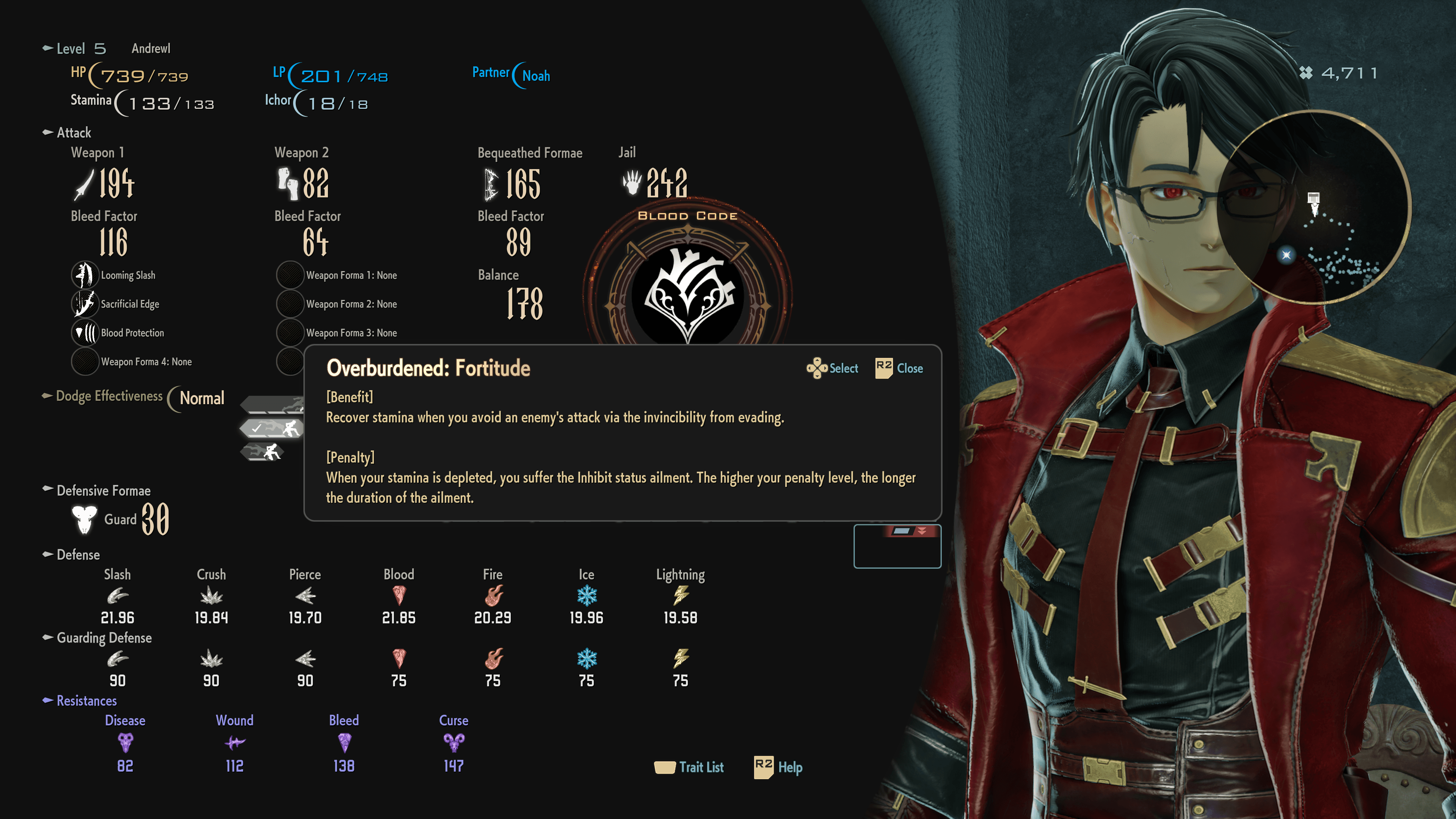
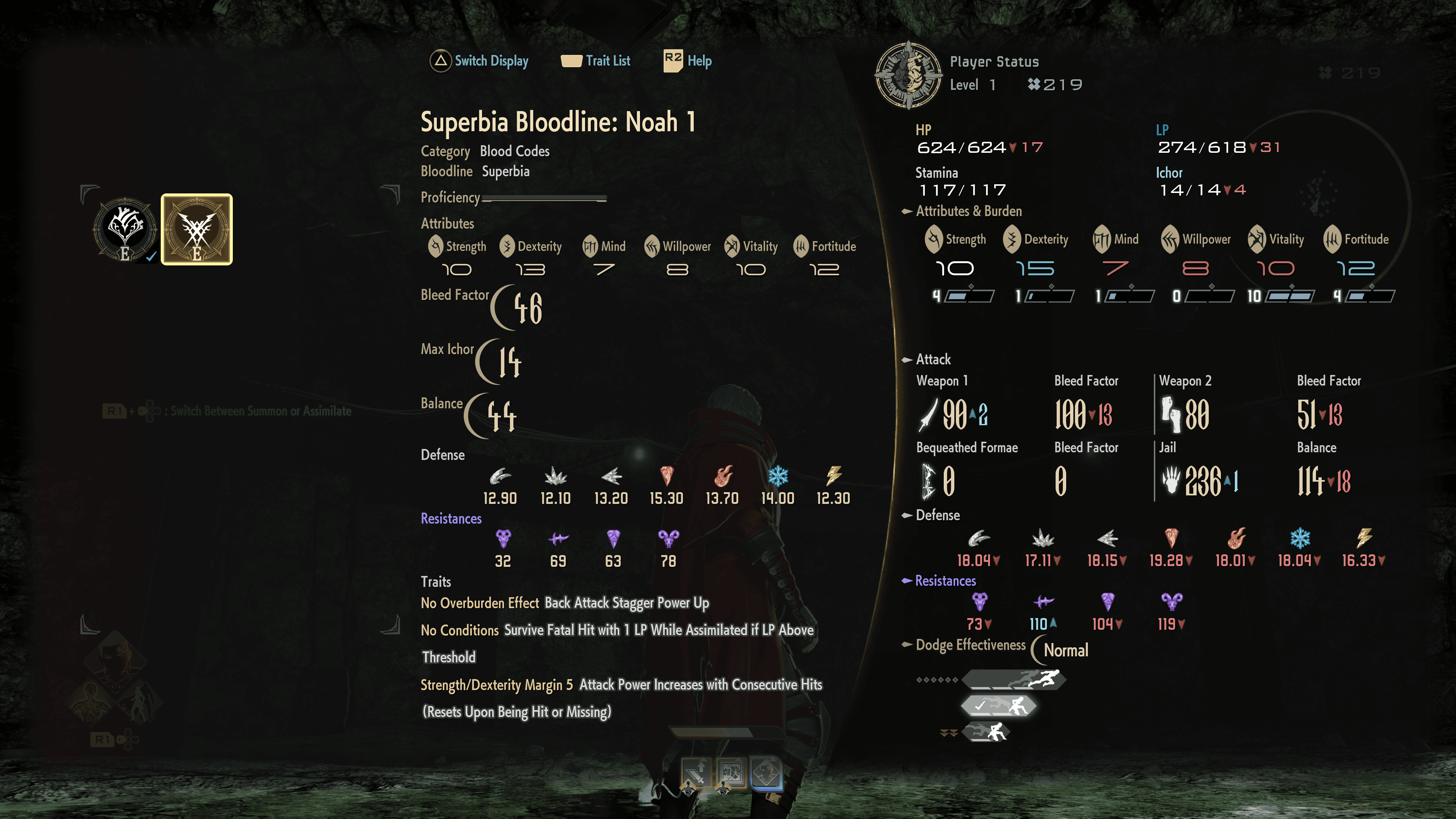
If one system defines Code Vein II’s build identity, it’s Blood Code. Blood Codes determine stat caps, load capacity, and overall combat role, meaning choosing one effectively locks in your build direction.
Cleverly, Blood Codes are also woven into character relationships — each companion provides unique Codes tied to their personality and combat style. As bonds deepen and mastery improves, Blood Codes evolve into stronger variants, linking story progression with mechanical growth in a smart and meaningful way.
Beyond primary gear, Bequeathed Formae add another tactical layer — functioning like specialized combat modules rather than standard abilities. Defensive options include shields and parry tools, while offensive variants offer situational weapons such as ranged bows or AoE heavy arms, reinforcing playstyle diversity.
Meanwhile, Boosters act as a four-slot rune system, granting passive stat bonuses without affecting burden. Simple, efficient, and intuitive, they serve as the final layer of optimization for min-maxers.
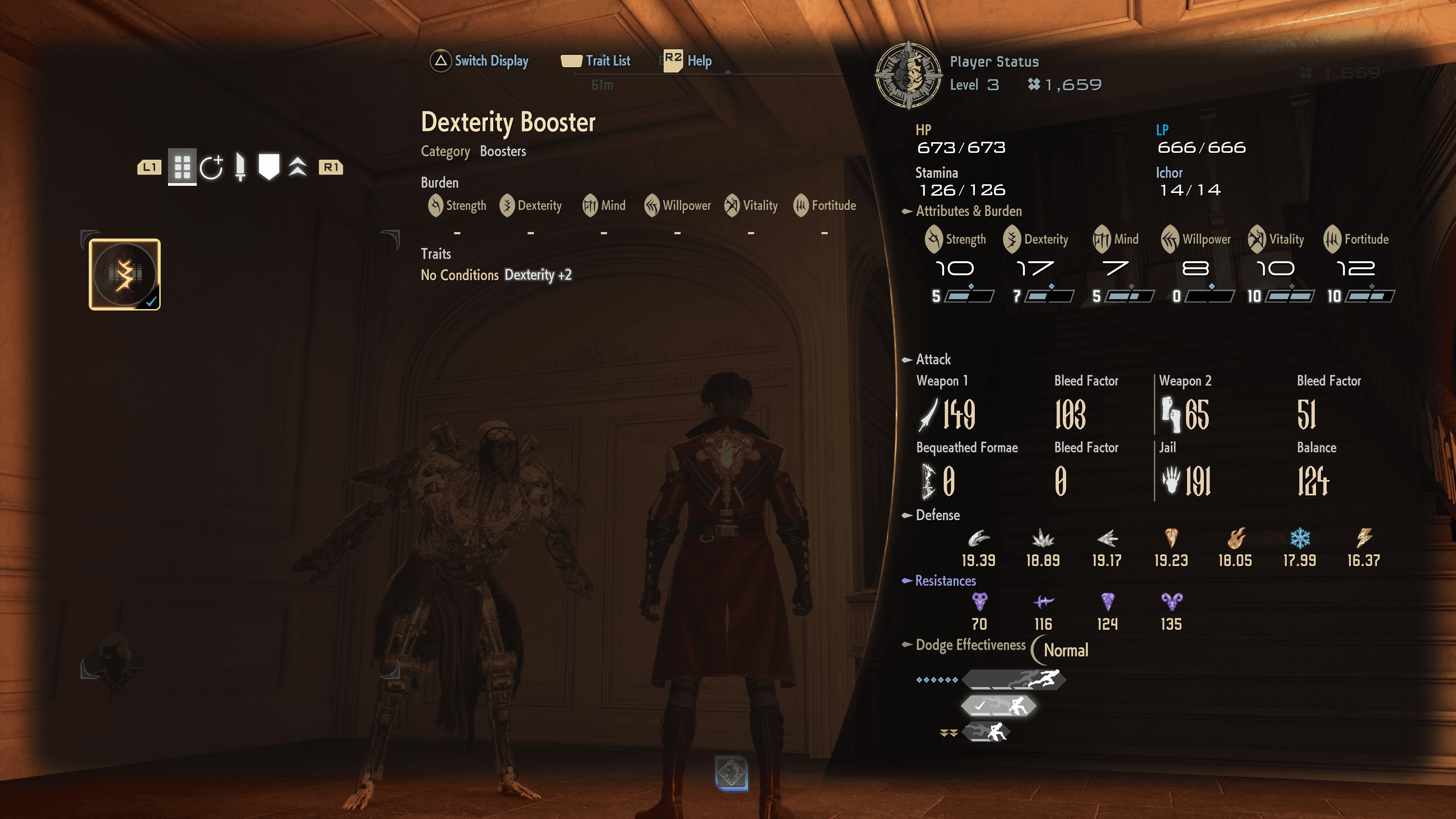
When factoring in Leveling, Weapons, Jail, Blood Code, Bequeathed Formae, and Boosters (which also had four Booster slots), players are effectively managing six major build layers simultaneously, resulting in one of the most system-heavy RPG frameworks in the genre.
It’s clear that Code Vein II goes all-in on RPG depth, surpassing its predecessor in both scope and complexity. Blood Code stands out as the game’s smartest design choice, acting as the true foundation of build identity, but the sheer density of systems can feel overwhelming at first, like being buried in a flood of numbers.
That said, once everything clicks, the payoff is extremely satisfying. The moment a build finally comes together delivers a powerful sense of mastery, and for players who love theorycrafting, optimization, and deep stat systems, Code Vein II offers a rich, rewarding RPG sandbox.
Code Vein II’s Evolved Partner System
Beyond combat and RPG mechanics, Code Vein II introduces a standout system that arguably defines the experience: its dramatically evolved companion system. If there’s one feature that impressed me the most, it’s this — an upgrade so significant it feels less like iteration and more like a full-scale reinvention.
The biggest innovation lies in how companions can be used. Players can either summon NPC allies to fight alongside them or have companions merge into the protagonist, transforming the experience into a solo playstyle enhanced by passive buffs, with just one button click to switch between. Unlike the first game’s binary choice of “with or without a partner,” Code Vein II turns companions into a tactical resource, not just a difficulty modifier, a design choice I genuinely appreciate.
Crucially, the combat balance is handled with care. Summoning a companion doesn’t trivialize encounters: doing so reduces certain player buffs, and companion damage serves more as support rather than direct DPS, meaning players must still actively contribute. The result is a system where allies assist without overshadowing, preserving tension and mechanical engagement.
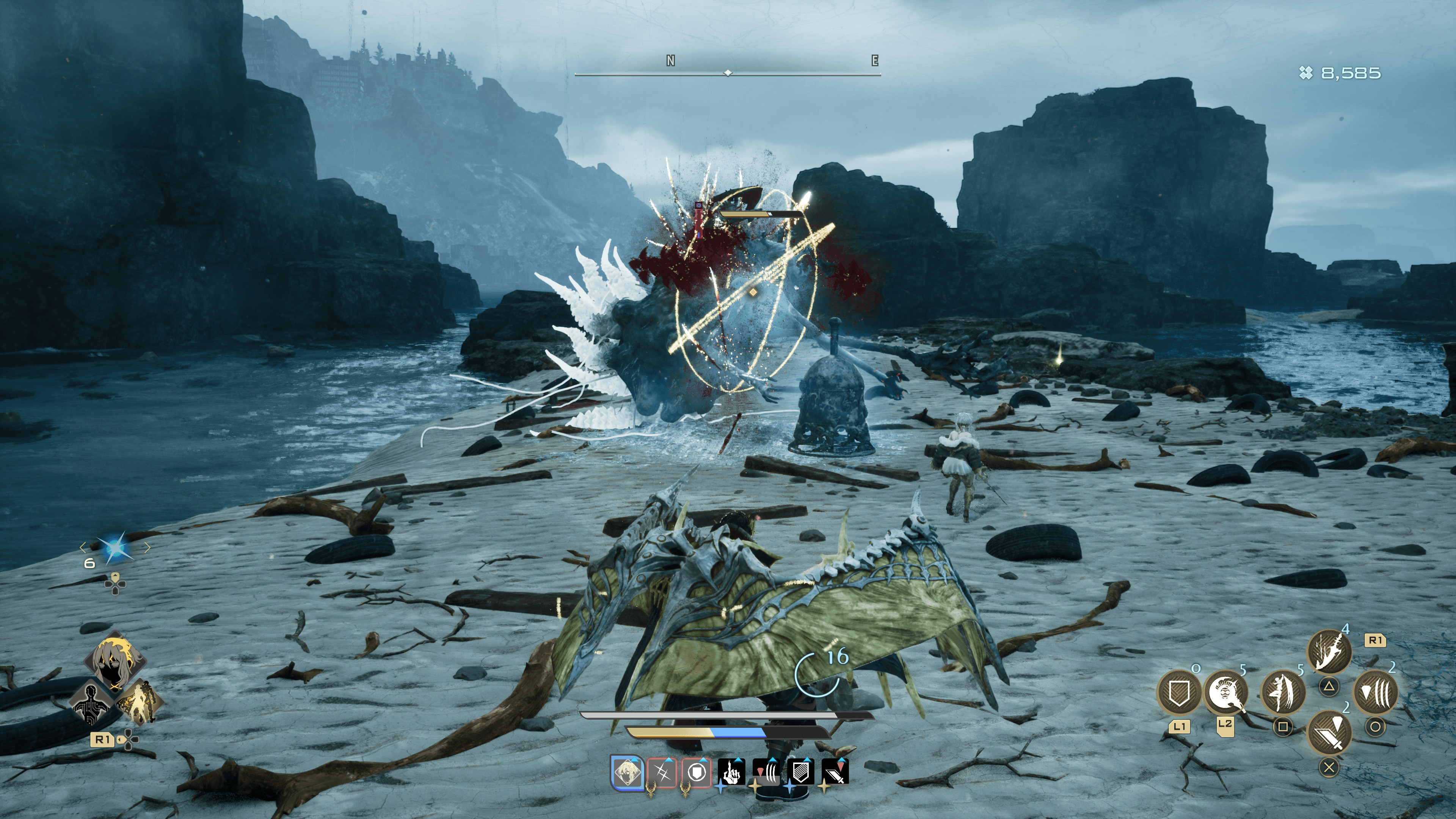
Companions also play a major role in revival mechanics. After death, allies can revive the player remotely with no distance limit, theoretically infinite uses, but gated by a cooldown. If you die again during cooldown, it’s game over, making companion survival and timing strategically critical.
That said, the system isn’t flawless. The post-revival recovery animation feels too slow, and invincibility frames can be too short, occasionally leading to frustrating moments where you’re revived only to be killed again instantly. At times, I honestly found myself thinking, “Maybe I should’ve just stayed dead.”
What truly elevates this system beyond mechanics is its emotional and narrative integration. The story heavily centers on vampire companion characters, and they no longer feel like AI tools, they feel like actual partners on a shared journey. Whether fighting together, empowering you through possession, or interacting in downtime scenes, these characters grow into meaningful emotional anchors.
By the later stages of the game, you may find yourself developing genuine reliance and chemistry with specific companions that “we’ve survived hell together” feeling that many action RPGs fail to achieve.
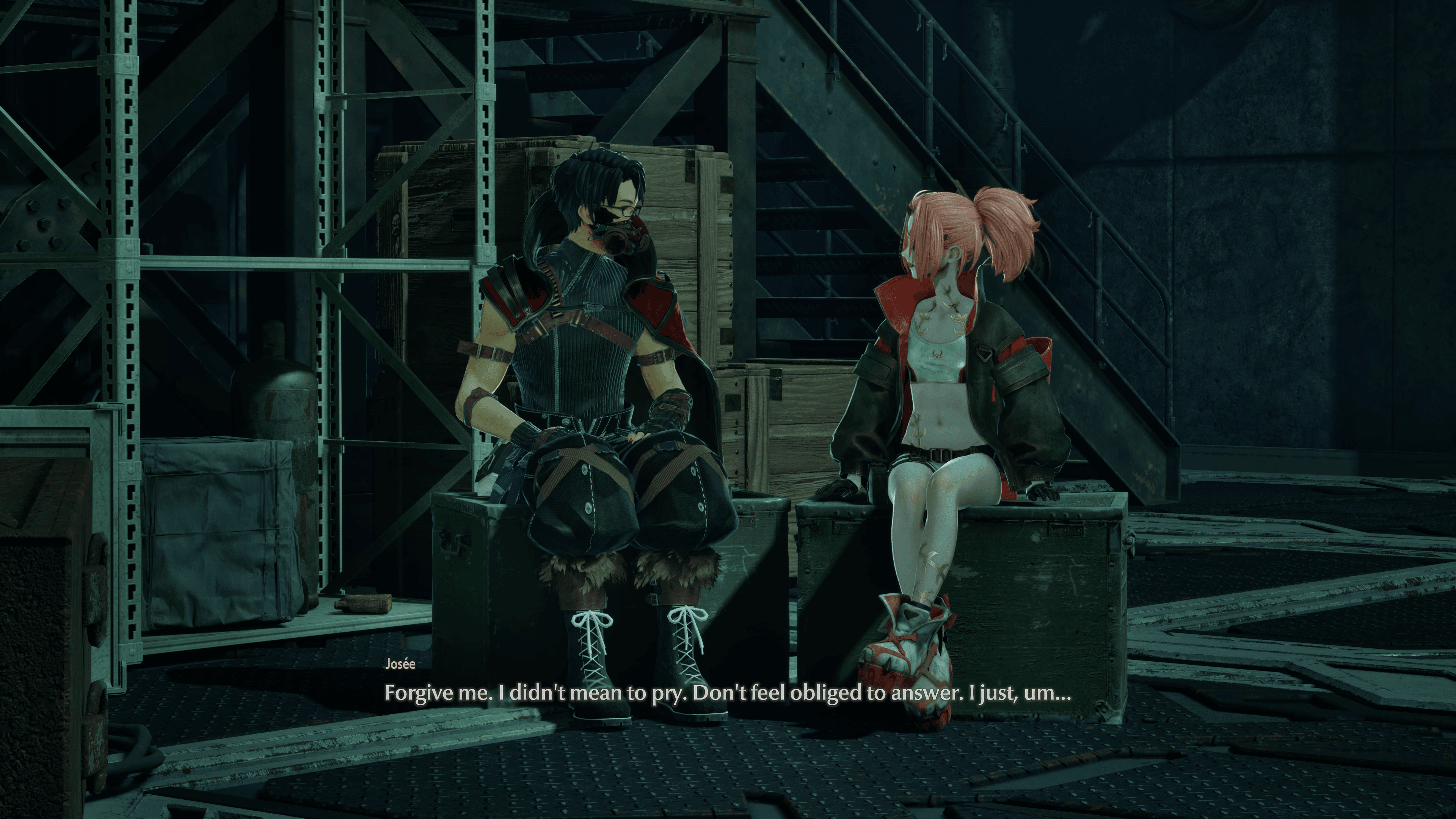
Interestingly, Code Vein II removes the original game’s online co-op, which may disappoint some players, but this appears to be a deliberate choice to strengthen the single-player companion bond. Instead of emotional investment in real co-op partners, the game ensures its in-world characters become your true allies — and in my view, it succeeds.
This companion system feels like a case of “they finally got it right.” Not only does it add greater tactical flexibility, but it also deepens character writing, emotional engagement, and gameplay identity. The seamless ability to switch between partner combat and possession buffs, combined with carefully tuned support damage, strikes a rare balance where companions feel helpful but never overpowering.
While sacrificing online co-op, the game gains something arguably more meaningful: a cast of companions who stay with you from beginning to end. For players like me who value story-driven bonds and shared struggle, this system delivers one of Code Vein II’s most memorable and emotionally resonant strengths.
Code Vein II’s Visuals and Audio Presentation
Code Vein II delivers a steady yet meaningful upgrade in both visuals and sound, preserving the series’ signature anime-inspired aesthetic while noticeably improving detail, texture quality, lighting, and overall presentation. The result is a polished and visually striking audiovisual experience.
Visually, the game looks genuinely impressive. Its art direction — reminiscent of anime-styled titles like The First Berserker: Khazan — may appear similar to the original at first glance, but actual gameplay reveals a clear leap in quality, not just surface-level refinement. Color saturation, character detail, lighting depth, and material rendering all feel more mature, giving scenes a stronger sense of depth and dimensionality.
Previously criticized background texture quality has been significantly improved. Environments no longer feel flat or cheap — instead, they present richer spatial depth and atmosphere, especially in open-world ruins and massive urban structures, where environmental composition and immersion feel carefully crafted. Exploration itself often becomes a visual reward.
On PS5, performance is fairly stable. I chose to play in Quality Mode, while it sacrifices some smoothness, the experience never feels broken or unplayable. In indoor or enclosed areas, the game maintains close to 60 FPS most of the time. However, in large open-world environments, framerate drops become more noticeable, especially during rain or heavy weather effects, with performance often dipping to around 30 FPS.
That said, even when framerate decreases, it remains relatively stable, avoiding major fluctuations that could disrupt gameplay or cause visual discomfort. Honestly, with visuals this good, lowering settings feels like a waste — players who value presentation should confidently stick to higher visual modes.
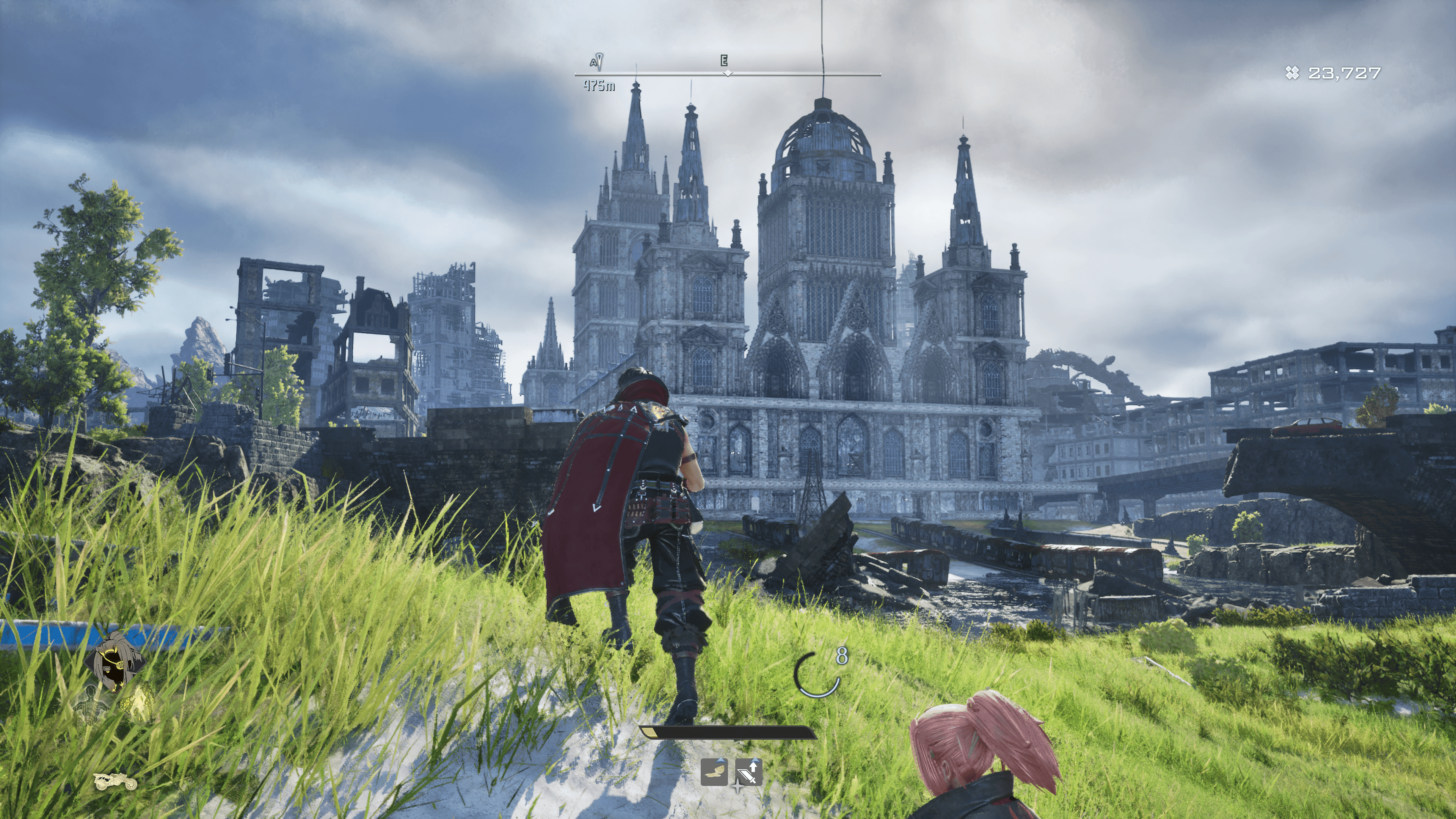
Character modeling is bluntly right in my strike zone. Designs retain the series’ appealing anime style but now feature improved proportions, facial detail, and expressive animations. I already loved the original’s aesthetic, and Code Vein II only deepens that appeal, making character visuals one of the game’s strongest and most iconic assets.

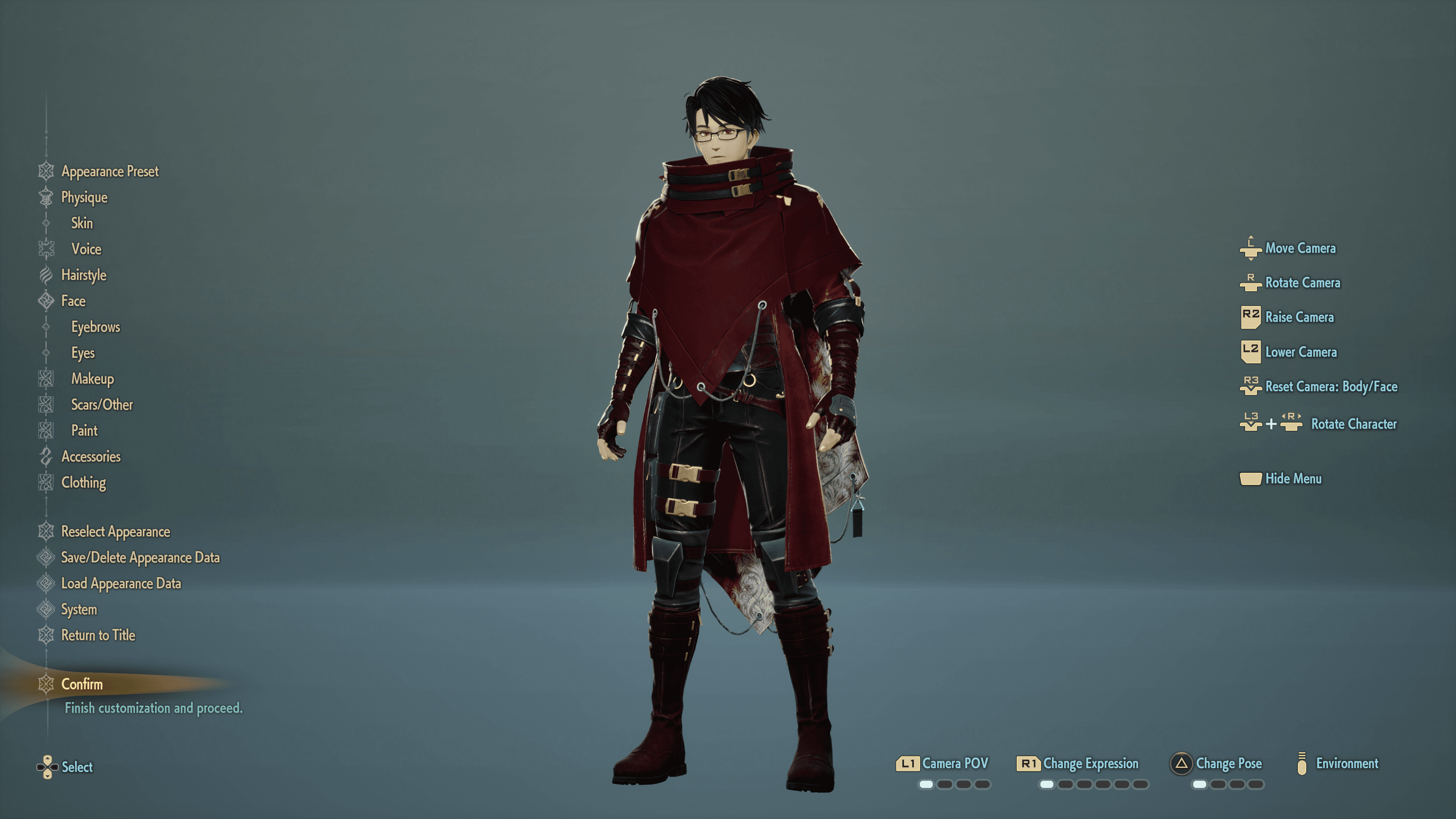
And yes — the character creator returns in legendary form. If the original set the standard for anime-style customization, this sequel feels like a graduation project. Expanded facial options, hairstyles, outfits, and accessories make it a dream playground for players who love crafting their ideal edgy anime protagonist.
The music remains a major strength. Boss battles are once again backed by grand operatic themes that instantly elevate tension and drama, while emotional story sequences benefit from subtle, atmospheric compositions that land perfectly on key narrative beats. The piano-led memory themes, in particular, stand out — soft, melancholic, and emotionally resonant, they rank among the game’s most powerful musical moments.
Combat sound design, however, remains serviceable rather than standout. Hit impact and motorcycle audio still lack weight, echoing earlier criticisms, though overall sound clarity — weapon swings, explosions, and ability effects, remains solid. Compared to the visuals, audio leaves a smaller impression.
Voice acting continues to be reliably strong, especially in Japanese. Performances carry both casual character banter and emotional story climaxes with convincing intensity, strengthening character depth, especially given the game’s heavier focus on companion relationships.
That said… the protagonist remains a silent nodding machine, responding to life-altering decisions with head tilts. Players may be used to it by now, but it can still feel unintentionally comedic during dramatic moments.
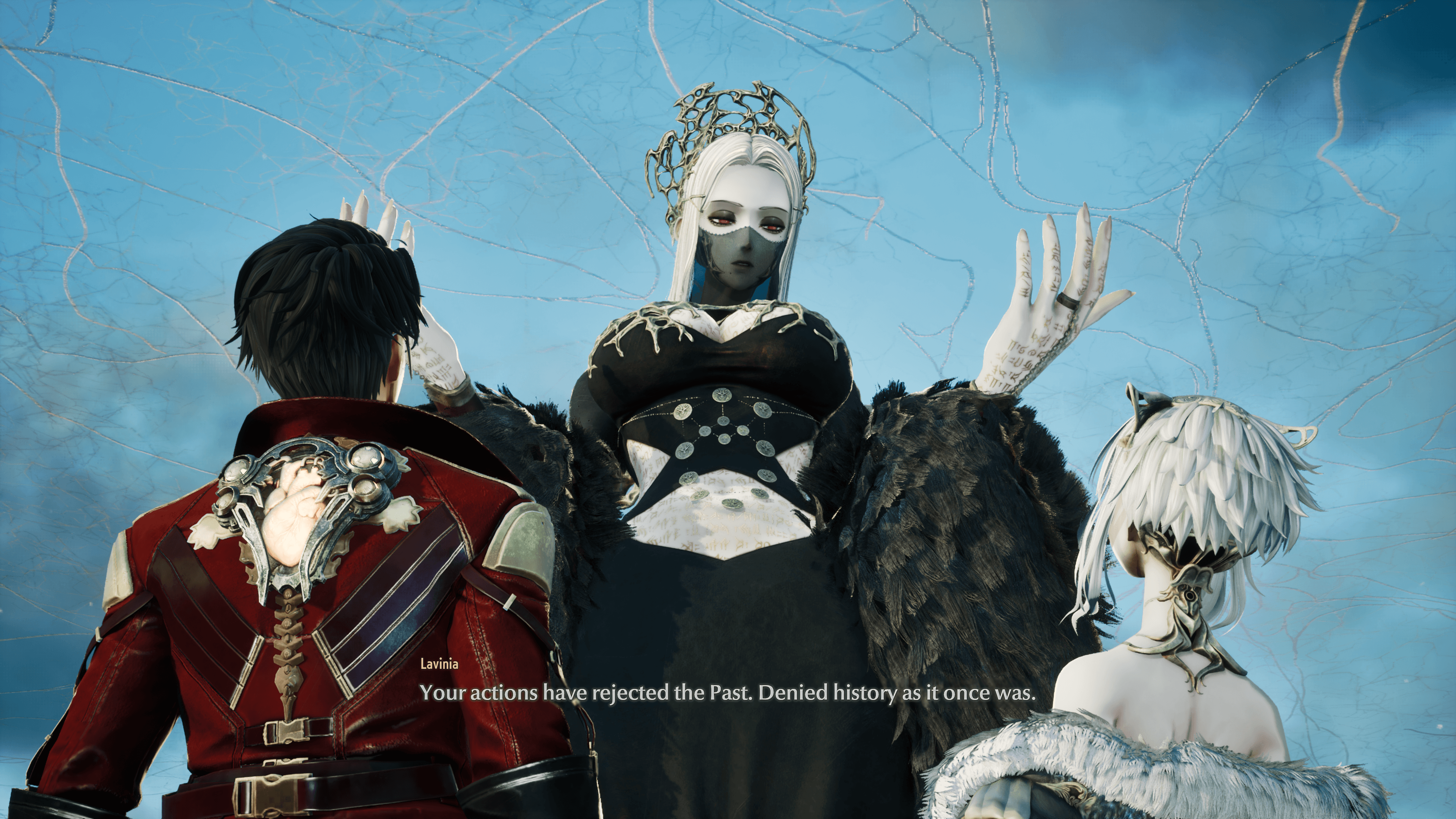
Code Vein II refines its anime-fantasy identity to a higher level of polish. From character design and lighting to environment composition and music, the game offers a stylish, atmospheric, and consistently beautiful audiovisual experience.
While hit sounds and some technical elements still have room to improve, the art direction, mood, and character customization more than make up for it. Between the striking visuals, emotional soundtrack, and dangerously addictive character creator…
All I can say is: art team, you cooked — this one’s a full score.
CODE VEIN II’s Final Verdict
After spending around 70 hours with Code Vein II, I can confidently say I enjoyed the journey. By placing time travel at the center of its narrative, the game reframes the origins of its apocalypse and character destinies, injecting new momentum into the familiar post-apocalyptic vampire world. While it doesn’t completely reinvent the original formula, it succeeds in delivering a more mature, emotionally resonant story — one not only about saving the world, but about choices, bonds, sacrifice, and fate. The cast of scarred yet determined characters is compelling enough to make you want to stay with them until the very end.
Introducing open-world exploration to a Soulslike structure inevitably invites comparisons to Elden Ring, but Code Vein II manages to carve out its own identity through thoughtful guidance design, strong visual language, and engaging exploration pacing. Riding a gothic metal motorcycle through blood-moon ruins, traveling alongside companions, and uncovering the stories of fallen heroes creates a journey that feels stylish, atmospheric, and immersive — even if the mid-to-late game suffers from pacing slowdowns and repetitive enemy placement.
Some legacy issues remain. The game’s hit impact and combat feedback still feel light and floaty, and players seeking top-tier action responsiveness may be disappointed. However, the depth of its combat systems, build freedom, and anime-styled visual flair go a long way in compensating. It may not feel perfect to play, but it’s undeniably flashy, expressive, and fun.
The RPG systems are more complex than ever — almost to an excessive degree. With six interconnected progression layers, the equipment and stat structure can feel overwhelming at first, flooding new players with numbers. But for those who enjoy theorycrafting, min-maxing, and build experimentation, this becomes one of the game’s most rewarding strengths. I especially appreciated how character relationships are woven into progression, giving the RPG mechanics added narrative meaning and emotional weight.
The system that left the strongest impression, however, is the super-evolved companion system. Far beyond simple AI helpers, companions now function as both tactical assets and emotional pillars — whether fighting beside you, empowering you through possession, or sharing the story’s emotional burden. Even without online co-op, the game delivers something arguably more meaningful: a cast of partners you can genuinely trust, rely on, and grow attached to — a depth many action RPGs fail to achieve.
Code Vein II is not a perfect sequel. Its combat feel and pacing still need refinement, and hardcore action purists may find it lacking. But it remains a passionate, ambitious, and clearly directed continuation, showcasing meaningful growth in worldbuilding, exploration, RPG depth, character writing, and system design.
If you enjoy stylish Soulslike action, story-heavy experiences, edgy anime aesthetics, and a cast of emotionally engaging characters, Code Vein II is an easy recommendation — a strong 8/10 vampire fantasy journey well worth dozens of hours.
Game reviewed on PS5. Review copy provided by Bandai Namco Entertainment
Review Score
Pros
- Gorgeous visuals
- Deep and intricate systems that make impressive builds
- One of the best character creators in the genre
Cons
- Lack of online co-op may be a turnoff for some fans from the first game
- Some combat animations could use work