 Slimepress

Card games are fun, and that extends to the Hololive TCG. From the beginner-friendly Pokemon TCG to the slaughter fest of games like YuGiOh every game has its own speed, and its own permutation of core building blocks to give players a fresh experience. Over at Level Up Play, I got to try out the [...]
Card games are fun, and that extends to the Hololive TCG. From the beginner-friendly Pokemon TCG to the slaughter fest of games like YuGiOh every game has its own speed, and its own permutation of core building blocks to give players a fresh experience.
Over at Level Up Play, I got to try out the upcoming Hololive TCG– a bespoke card game featuring Cover Corporation's Hololive Vtubers. Given the pedestal idol otaku put on their favorites, how exactly do you make a competitive game about collecting so many virtual anime girls?
Make Your Idols Fight In The Hololive TCG
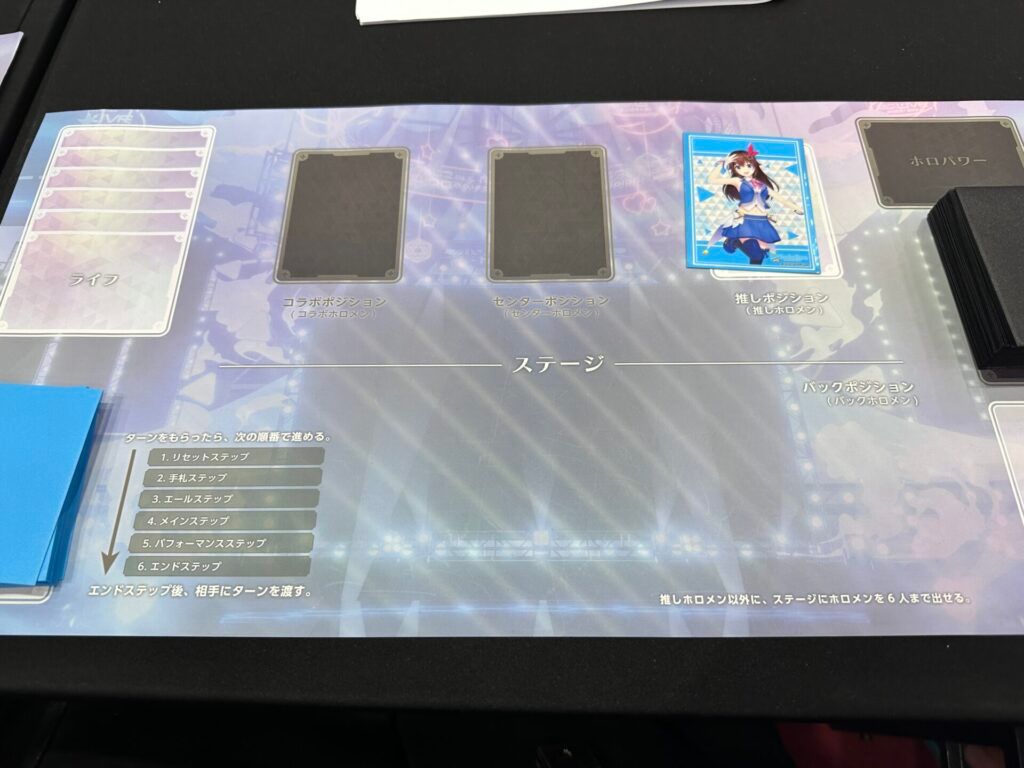
The best comparison point for the Hololive TCG would be Pokemon. It's got the same core fundamentals- evolving characters (called Bloom, here) into better versions, a color-based resource system to use skills and passive abilities. However, if you've playerd any card game with resource management the biggest trouble is, well, managing that resource. I curse the MTG games where I get all the combo materials in my hand and not a Mountain to cast them.
Hololive TCG has a simple solution to this- you get a deck of energy (called Cheer) and every turn, before you draw, you get one Cheer card which you must attach to something.
There's also the case of your Oshi- these act not unlike a permanent Commander in Magic: The Gathering, with a really interesting dynamic. For one, your life total is determined by said Oshi- in the starter decks we tried out, you get to see that AZKi has more life than Sora, meaning she can afford to lose more idols before the game ends, but also having more of her cheer deck committed to prize cards.
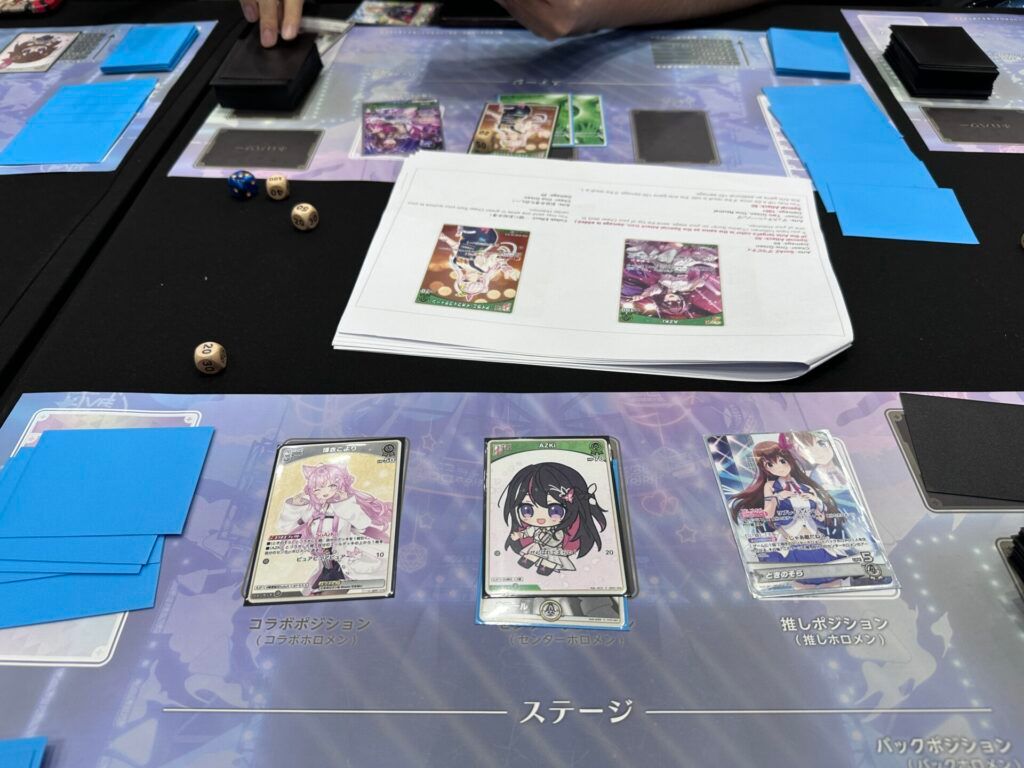
However, they also have activated abilities called Oshi Power, which have a unique cost- basically, as you set and deploy cards from the back row to the stage, you chuck cards from the top of your deck into a separate pile. These become the Holo Power pile, and activating Oshi Powers will ultimately discard the cards.
What's this about a backrow you ask? well, your field has three slots- one for your Oshi (always there), a Center card and a Collab slot for the Spot cards. In a sense, it's kind of honest- Center cards are way better than Spot cards, with more realized abilities and the ability to Bloom.
Spot cards tend to be valuable for having abilities that trigger when you put them on Stage, but they also need to cycle out every turn (at the start of every turn they go backstage tapped, taking a total of 2 turns before you can do anything with them again).
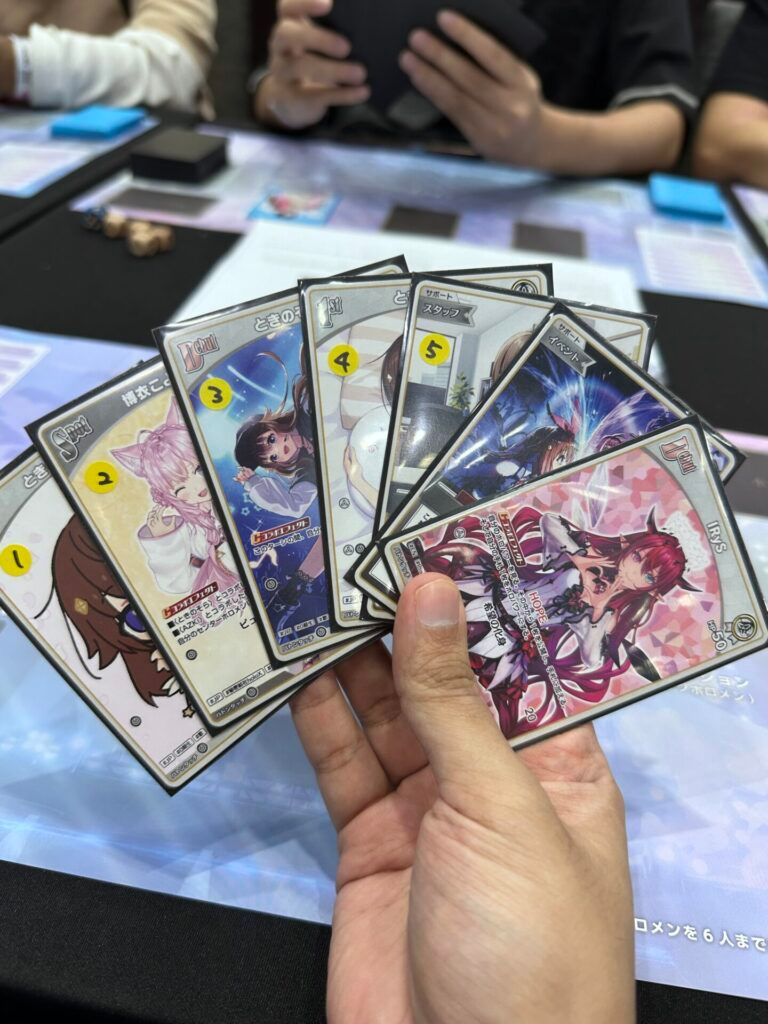
If it sounds like a lot of rules and systems, it is- but that's kind of the joy in it. While games like Magic and YuGiOh tend to be simple on paper then work their way down in complexity, the Hololive TCG seems to be confident in starting off complicated.
From the decks I've tried it feels like the decks are pretty standard in complexity- the Tokino Sora cards tend to play more around draw power while AZKi seems built more around extracting Cheer for some big damage plays, thus playing into every Green deck stereotype I've ever seen.
I Sense The Presence Of Combo Shenanigans
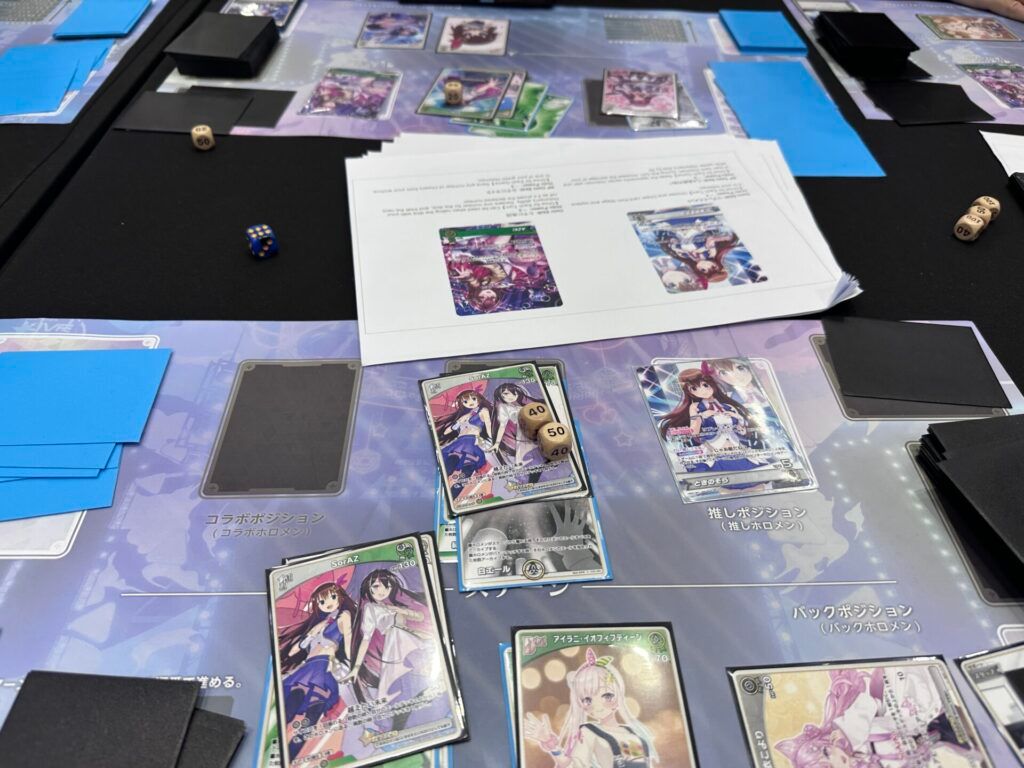
That being said, a lot of the characteristics of the game, I feel, will ultimately come from what's in the first booster set. The game ultimately prioritizes deckbuilding- idols from the same unit all synergize better with each other, which means having characters from HoloPromise or HoloID in the same deck is going to be more powerful than a random crack ship.
Still, it's interesting to see Oshi powers interact with the rest of the deck- a 2nd Stage AzKi has an attack built on dice rolls, while the Oshi AZKi has an ability that lets you control the result of your next roll to basically let her one shot almost anything off the board. I'm really interested to see how this might work with other Oshi cards- Sora's more draw-heavy playstyle in particular feels like it's missing a big combo piece to get her off the ground.
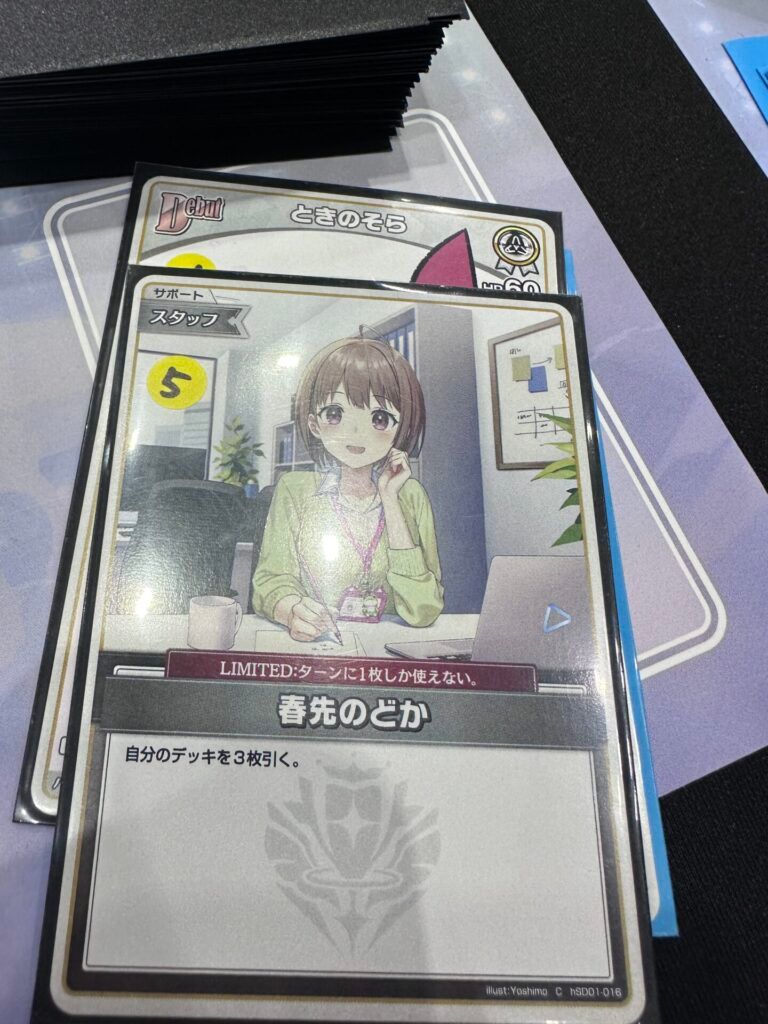
Some things that absolutely pop an alert are the idea of interrupts- not that I'd expect Control to be in a starter deck, but it doesn't look like there's much in the way of stopping your opponent from doing anything. Considering games like MtG and YuGiOh are only allowed their extreme nonsense because there are cards to shut that down completely, I doubt we're going to see the Gawr Gura version of Ash Blossom.
There's plenty of other Cheer colors besides white and Green, the two from the starter deck, though- so there's still a lot of room for me to be wrong there. But from all I've seen so far the game seems much less about interactivity and more about simply building the best game plan with your own deck rather than worrying about what's in your opponent's.
Have Fun Googling Your Cards
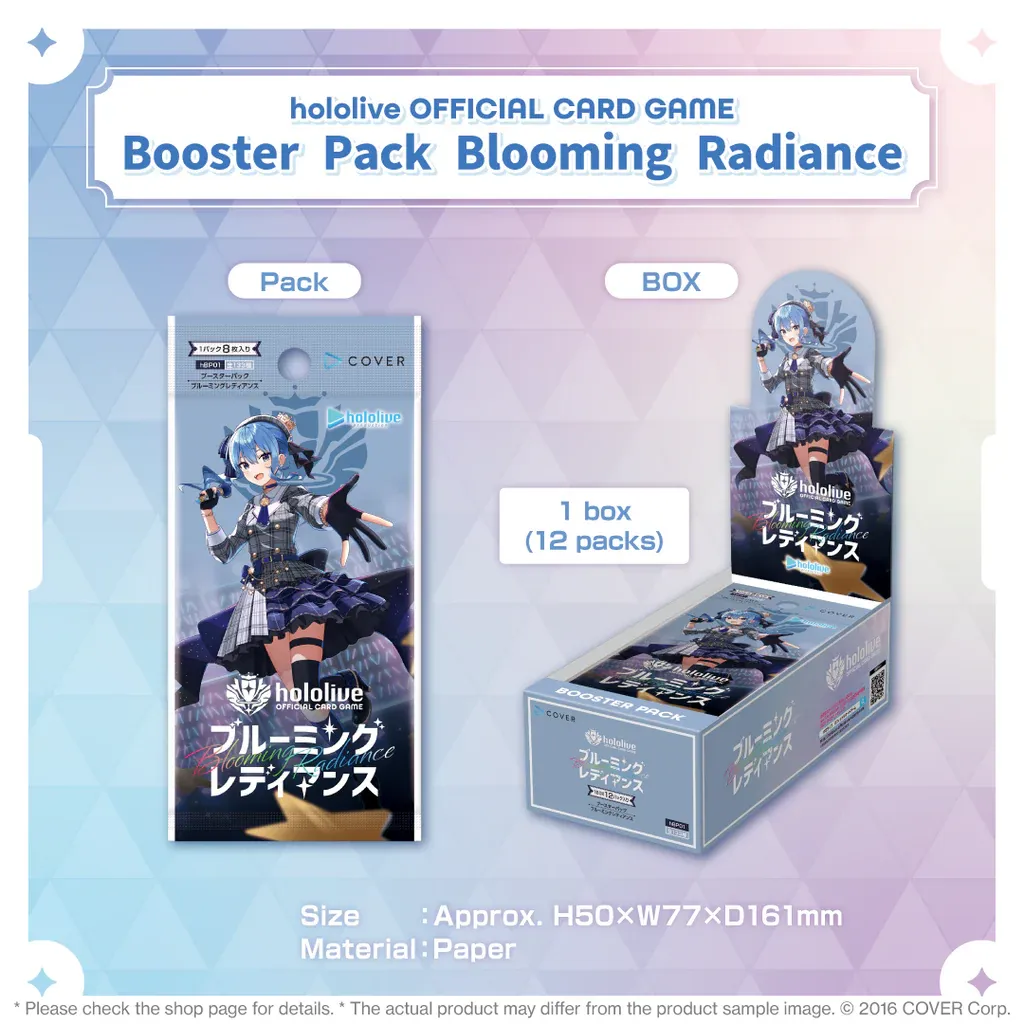
One thing that's absolutely going to get in the way of the Hololvie TCG 's growth, though, is the naming conventions. As is looking up some of these cards to double check is a nightmare- there are at least five Tokino Soras in the starter deck alone, with one for each Bloom stage as well as the idol and a secondary Debut-level Sora. Would an MTG style love of comma-titles help? Maybe, if nothing else so we can get Tokino Sora, Who Has Deemed You An Enemy.
But still, it's interesting to see what is essentially the essence of the Pokemon TCG with a reduced amount of luck on resource management but a greater focus on lineup management. Your Oshi needs you to keep a healthy supply of Collabs to stay strong, and you'll also want to make sure your Centers have enough Cheer since they need a minimum amount to Bloom. There's no release date for the English version of the Hololive TCG- but the Japanese version officially launches September 20th, and will be available at participating card stores in Malaysia.