 Slimepress
Path of Exile 2: The Third Edict Refines and Expands the Entire Game, Ushering in a Bold New Act of Wraeclast
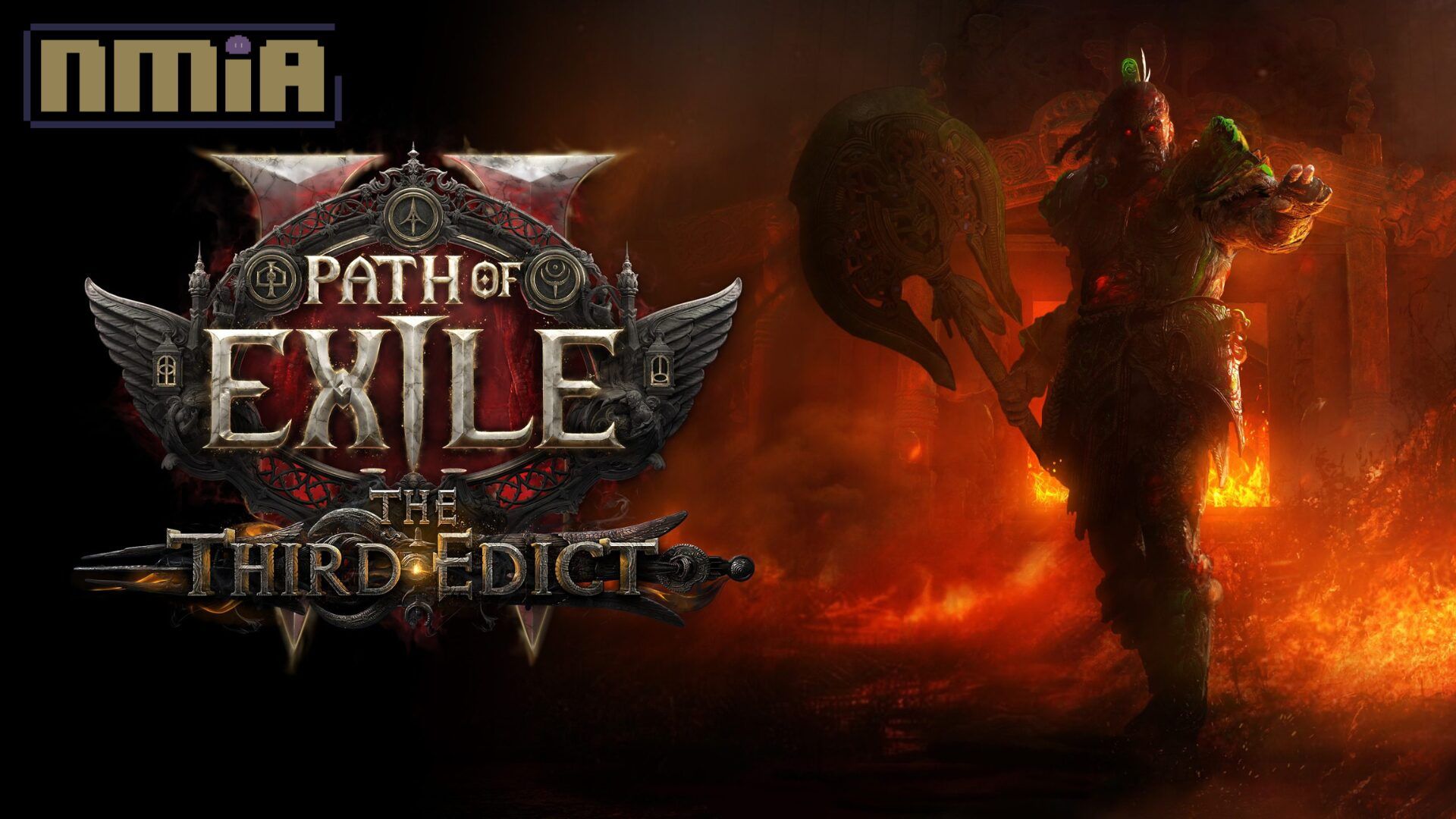
Grinding Gear Games has unveiled Path of Exile 2: The Third Edict, the action RPG’s most ambitious update yet, set to launch on August 29th. Not only does it bring Act 4 and three interlude chapters, but it also overhauls core systems like support gems, introduces sweeping class and skill reworks, debuts the first official [...]
Grinding Gear Games has unveiled Path of Exile 2: The Third Edict, the action RPG’s most ambitious update yet, set to launch on August 29th. Not only does it bring Act 4 and three interlude chapters, but it also overhauls core systems like support gems, introduces sweeping class and skill reworks, debuts the first official league— Rise of the Abyssal, expands the Atlas endgame, revamps crafting, and finally delivers asynchronous trade.
For the first time ever, Path of Exile 2 will also be available to everyone during a free weekend (Aug 29 – Sep 1), marking a turning point for the game’s accessibility!
With so much packed into one expansion, The Third Edict isn’t just another content update, it really feels like a second launch for Path of Exile 2.
Act 4 and the Karui Archipelago
At the heart of The Third Edict lies Act 4, a sprawling new chapter that shifts the campaign into the Karui Archipelago. Unlike earlier acts, this one is fully nonlinear. Players can hire a ship in Kingsmarch and sail between eight islands in any order, each with its own ecology, monsters, and lore.
From the cursed beaches of Whakapanu Island to the volcanic Isle of Kin, every destination offers unique bosses, loot, and over 100 new monster types. In total, Act 4 brings 16 new areas and 12 bosses, designed to feel more open and exploratory than any campaign act before.
The story continues where Act 3 left off, as Doryani seeks the broken weapon tied to the mysterious “third edict.” Alongside the Karui tribes, players must piece together its fragments to confront the rising corruption threatening Wraeclast.

The Interludes: Three Mini-Acts
Because Act 4 pushes the campaign length to the breaking point, GGG is removing the old “Cruel” difficulty loop. Instead, three interlude mini-acts will bridge the campaign to the endgame.
Interlude 1 will see players return to Ogham in Act I to aid Renly. Interlude 2 let players meet up with Asala in the Vastiri Desert, who seeks the vanished Selkari, guardians of sacred waters, as ancient rituals unravel. Lastly, in Interlude 3 player will join Doryani to a hidden vault somewhere in the freezing mountain, where the descendants of sealed Vaal may hold the key to stopping the beast.
Each interlude spans 6–7 areas with four bosses, contributing 35 new campaign zones and 24 bosses in total when combined with Act 4. Though temporary, their monsters and bosses will later be folded into the endgame, ensuring their content isn’t wasted.

Sprinting
A major quality-of-life addition is sprinting. By holding the dodge roll button, characters now break into a sprint, letting players traverse empty areas faster. Sprinting comes with risk— you’ll fall if struck mid-run, but it finally addresses one of the game’s pacing complaints without compromising combat’s weighty feel.
With sprinting, nonlinear exploration, and the removal of Cruel difficulty, The Third Edict should sets a new standard for campaign flow.

Reinventing Support Gems
Support gems, the cornerstones of Path of Exile’s build diversity, are being completely overhauled too.
Previously, only one copy of each support gem could be slotted across your character. This restriction often forced players to focus entirely on a single skill. Now, that limitation is gone: you can use multiple copies of the same support gem across different abilities, massively broadening combo potential.
In addition, supports now scale across multiple tiers, offering more meaningful progression. For example: Double Barrel Support starts by granting an extra projectile at reduced reload speed. At higher tiers, penalties ease, and tier 3 even reloads automatically after stunning an enemy. While Rapid Casting initially boosts cast speed, but its tier 3 version rewards diverse spell usage, granting stacking bonuses for different spells cast.

Lineage Supports
At endgame, players will also encounter Lineage Supports. These unique, build-defining gems dropped by specific bosses, function like unique items, fundamentally altering skills. One example, Ratha’s Assault, reloads attacks while dodge rolling but changes reload mechanics entirely. Around 40 of these supports are being introduced, offering new build-defining synergies.

Big Buffs Across Every Class
GGG isn’t stopping at gems. The Third Edict delivers sweeping skill and defense reworks across all six core classes, aiming to modernize underused archetypes and make combos more rewarding.
Ranger & Huntress
Cold skills for Rangers have been expanded, with new mechanics like ice fragments created by Escape Shot and amplified by Freezing Salvo. Frozen enemies now serve as fuel for powerful nukes, making cold Rangers far more viable for bosses.
The Huntress sees defense improvements with a new “Deflect” mechanic, reducing all damage types. Parry has been reworked to apply to nearly every attack (except telegraphed “red flash” boss moves), making it more reliable than ever.
Warrior
Fire builds receive major love: Volcanic Fissure branches out for better clearing, while Forge Hammer creates molten explosions when paired with Warcries. Shield skills are faster, more explosive, and integrate with Sprint. The Warrior Totem now functions like an ultimate ability, scaling massively with Endurance Charges.
Mercenary
Crossbows are declunked: reloading no longer slows movement, improving run-and-gun play. Shock and elemental ailments last longer, rewarding mixed-element builds. New tools like the Mortar Cannon socket grenade skills for artillery-style play, while banners are reworked for persistent, stronger buffs.
Witch
Melee minions gain accuracy by default, making them competitive with ranged minions. New command skills let Brutes intimidate foes or detonate frozen enemies, while Frostmages provide defensive Ice Armour. Spectres now cost less Spirit and deal far higher damage, restoring their impact. The new Reaping Staff scythe introduces Reap, a culling strike that heals and applies critical weakness.
Monk
The Monk embraces true martial artistry with the Hollow Palm Technique, allowing unarmed combat through quarterstaff skills. Wind skills like Staggering Palm and Wind Blast are streamlined, while a new keystone, Walker of the Wilds, enables elemental mana leech.
Sorceress
Elemental synergy is the focus. Old single-element curses and exposures are consolidated into unified debuffs, making mixed-element builds viable. New Elemental Infusions allow skills to adopt traits of other elements—for example, infusing Spark with cold to create icy novas, or fusing Firestorm with lightning to rain down meteors and bolts simultaneously.

The Passive Tree Expansion
More than 100 new notables have been added, around 20 per class. These nodes are more thematic, tying directly into Ascendancies or archetypes.
For examples, Molten One’s Gift gives fire damage benefits from Armour Break, Crystallised Immunities gives Status ailment immunities tied to dominant gem colors, Archon nodes let player transform into Lightning, Cold, or Fire Archons after certain mana spends, converting all damage accordingly, Great Boar rewards Dexterity stacking with life and stun resistance, ant etc.
Attribute requirements across the board are reduced by 25%, freeing players to invest in impactful notables rather than filler stats.

Crafting Overhauls
Crafting this time also sees sweeping improvements. Essences now function like Regals, applying specific mods with fixed values, making them usable early rather than hoard-worthy. High-tier Perfect Essences act like Chaos Orbs, rerolling modifiers while forcing a chosen upgrade.
A new Karui currency, reveals the exact outcome of your next craft, perfect for mitigating risk on expensive attempts. Also, recombination device can now be used, guaranteeing an item but randomizing modifier transfers. Omens expand in variety, offering new crafting twists in Ritual encounters. The result is a crafting system that encourages experimentation during the campaign, while still supporting high-end chase projects in the endgame.

Rise of the Abyssal League
Every major expansion in PoE comes with a league, and The Third Edict introduces Rise of the Abyssal, the first official league of Path of Exile 2.
The Abyssal are a necromantic race long thought extinct, now emerging from underground fissures. Players encounter pits that consume nearby monsters’ souls, then spew out Abyssal versions infused with amplified modifiers. Closing pits escalates into horde encounters, culminating in boss-tier foes.
Rewards include:
-
Abyssal Troves with loot.
-
Abyssal crafting via the Well of Souls, where players throw in items to choose from hidden mods.
-
Waystone modifiers that supercharge maps with Abyssal-themed chaos.
-
Abyssal Depths—underground dungeons packed with Lichborn and Depths-exclusive loot like Ulliman’s Gaze socketables or new Lineage Supports.
Four Abyssal commanders serve as league bosses, dropping uniques such as Darkness Enthroned (a belt that counts as a helmet slot) or Undying Hate, a jewel transforming your passive tree into an Abyssal-themed version.

Expanding the Endgame
Alongside the league, The Third Edict expands the Atlas of Worlds with 25 new maps, each introducing new bosses and biomes. Some map chains culminate in uber encounters featuring powered-up versions of campaign and interlude bosses, tied directly to Lineage Support drops.
New mechanics also bring variety, like the Sandstorms, maelstroms, and Vaal vaults require map chains or keys to unlock, leading to bespoke bosses, while Summoning Circles spawn multiple bosses at once, escalating endgame challenges. Waystone mods return to the dual-edged style of PoE1, providing difficulty and reward together, rather than cleanly split.
Pinnacle content is also being restructured. Instead of requiring fixed keys, most encounters now use splinters, which scale by difficulty. This lets players engage with endgame sooner and at their preferred challenge level.

The Trade Revolution
Perhaps the most player-requested feature finally arrives in the game— fully asynchronous trade. A feature that has been requested ever since the first Path of Exile launched more than a decade ago, it's finally here for The Third Edict. "This has been a long time coming," game director Mark Roberts admits.
During Act Four, you'll meet trade expert Ange in Kingsmarch, and can invite her to join your hideout. Players can now list items for sale directly with her, Ange sells items on your behalf, even while you’re offline, allowing buyers to instantly purchase goods without interrupting your play.
Buyers can still browse seller hideouts, paying with currency plus a small gold fee. Sellers claim earnings from Ange whenever convenient. Existing Premium Stash Tabs can be converted into Merchant Tabs, ensuring veterans don’t lose investments.
This long-awaited change eliminates one of the most frustrating aspects of Path of Exile’s economy and represents a landmark upgrade for the franchise.

Path of Exile 2: The Third Edict Update is BIG
Path of Exile 2: The Third Edict marks season three of the game, which is more than a regular update— it’s a renaissance for the game’s systems and endgame. Between the nonlinear Act 4, three interludes, the Rise of the Abyssal league, asynchronous trade, sweeping class reworks, and a complete support gem overhaul, GGG has reshaped almost every layer of gameplay.
And with a free weekend from August 29–September 1, newcomers have their first chance to try Path of Exile 2 without restriction. For veterans, The Third Edict offers an enormous playground of new bosses, maps, builds, and crafting possibilities.
Whether you’re sailing across the Karui Archipelago, delving into Rise of the Abyssal pits, mastering massive skill reworks, experimenting with Lineage Supports, or experiencing the fully asynchronous trade, this expansion cements Path of Exile 2 as not just a successor, but a bold evolution of the ARPG genre.
