 Slimepress
Rainbow Six Siege X Review — Ubisoft’s Tactical Shooter Gets a New Lease on Life, Refreshing but Not Revolutionary
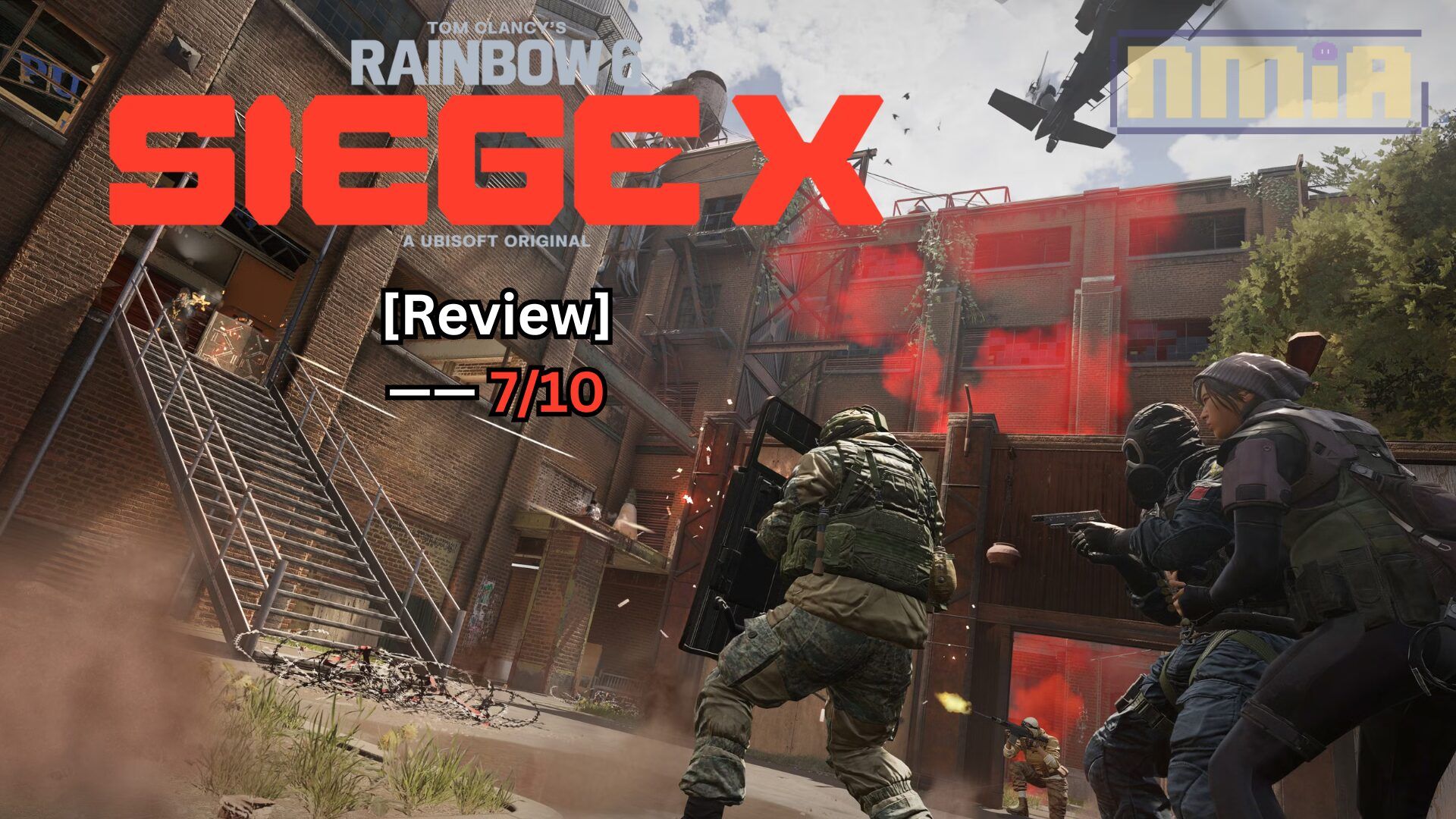
Since its debut in 2015, Tom Clancy’s Rainbow Six: Siege has evolved over a full decade into a more complete, deeper tactical shooter. So when Ubisoft’s Montreal studio announced a free-to-play, large-scale revamp — Rainbow Six: Siege X — the player community naturally held its breath in anticipation. From the high-octane action scenes in its [...]
Since its debut in 2015, Tom Clancy’s Rainbow Six: Siege has evolved over a full decade into a more complete, deeper tactical shooter. So when Ubisoft’s Montreal studio announced a free-to-play, large-scale revamp — Rainbow Six: Siege X — the player community naturally held its breath in anticipation.
From the high-octane action scenes in its trailers, to the development team’s confident claim that “this is a brand-new experience,” plus promises of new modes, visual upgrades, and even a ten-year roadmap — the update certainly launched with plenty of swagger. But such bold words inevitably raised the bar of expectation, and whether it truly lives up to all that hype… is another story.
In essence, Siege X is to the original what Counter-Strike 2 is to CS:GO: at its core, it’s still the same game. The fundamental gameplay remains unchanged, with the main improvements coming from mode tweaks and visual enhancements. That said, this is undeniably the best way to play Rainbow Six: Siege today. The new modes feel fresher and more engaging than the legacy ones; certain maps have seen meaningful graphical upgrades; and audio has been finely tuned for clearer positional feedback, reducing the chaos during matches.
Whether you’re a lapsed veteran looking to return, or a newcomer who’s never touched the series, this update is absolutely worth checking out — especially given that you can now experience such a polished, enduring game for free on its tenth anniversary.
Just keep in mind: if you were drawn in by talk of “revolutionary change,” it’s best to temper your expectations a little. Do so, and you’ll likely have a much more enjoyable time.
※This review is based on the Steam version of the game.
Title: Tom Clancy’s Rainbow Six® Siege X
Genre: PvP, Tactical, First-person Shooter
Developer: Ubisoft Montreal
Publisher: Ubisoft
Platform: Playstation 5, Playstation 4, Xbox Series X/S, Xbox One, PC
Release Date: June 10, 2025 (Original released in 2015)
If you’re a Siege veteran, this update is likely just what you’ve been waiting for. The brand-new “Dual Front” mode undeniably adds a substantial layer of depth to the game. Compared to the fast-paced, jump-in-and-play nature of the classic “Standard” and “Quick Play” modes, “Dual Front” puts more emphasis on strategic planning and sustained engagement, offering a completely fresh tactical experience.
The update also introduces more destructible environmental interactions, such as detonating gas pipes, blowing up fire extinguishers, or triggering metal detectors to reveal enemy positions. These additions make tactical play more varied and fun — though, in reality, few players seem to actually use these environmental mechanics effectively in online matches, leaving some of that potential untapped.
For veteran players who already know every Operator inside and out, the differences between Operators often feel minor, and it’s not uncommon for your preferred choice to be locked in by the enemy team anyway. You’ll still need plenty of skill and experience to adapt on the fly as you swap between offense and defense.
As for newcomers, the update does make a genuine effort to ease you in, offering comprehensive training missions and AI practice modes to help you grasp the fundamentals. But to be frank, nothing quite prepares you for stepping into live online matches, where the intensity and ruthlessness of experienced players can feel like being tossed straight from culinary school into the kitchen of a Michelin-starred restaurant. The training helps — but only so much.
This latest update even shifts the game to a free-to-play model, clearly aimed at attracting a new wave of players. To be fair, Siege X still delivers plenty of compelling competitive shooting action. The matches are fast-paced, fresh, and undeniably addictive. The real question is whether you’re willing to invest the time, because the steep learning curve can be downright frustrating.
What has always fascinated me about Siege as a competitive shooter is its emphasis on strategic, defensive gameplay. But there’s nothing more disheartening than painstakingly setting up your defenses, only to get shot through a wall you didn’t even realize was destructible, watching all your preparation crumble in an instant. The same goes for attacking: you finally catch an enemy head-on, get the first shot off… only to be gunned down yourself. That sense of powerlessness can really kill your morale.
On top of that, new players may struggle at first to distinguish friend from foe, and it takes time to get used to the on-screen indicators and the pacing of matches. Online matchmaking doesn’t help either, as you’re often thrown against highly skilled veterans. So newcomers have to ask themselves: are you ready to endure the frustration, adapt, and grow into the game?
Let’s start with the technical upgrades in Rainbow Six: Siege X compared to the original — primarily focused on visuals and audio.
This update brings noticeable visual improvements to several classic maps, including Border, Clubhouse, Chalet, Bank, Kafe Dostoyevsky, Stadium, and more. Resolution has been significantly increased, and lighting effects have been noticeably enhanced. These changes have a tangible impact on gameplay: players will need to adjust to how light and reflections behave on surfaces. The stronger contrast between light and shadow can even make enemies blend into hallways, making them harder to spot.
However, the higher resolution also revives some old issues. At 4K resolution, you currently can’t cap the frame rate below 120fps to avoid screen tearing. And while the visuals are cleaner and more polished overall, they don’t quite deliver a true generational leap. Lighting on character models, particularly at the start of a match in Dual Front mode, can still look a little odd. That said, environments and character models are noticeably more refined and pleasing to the eye than before — appropriate for an esports-focused title where stable high frame rates and low latency remain the priority.
One lingering concern is Ubisoft’s stated “Year 10 plan” for Siege X. The game continues to support PlayStation 4 and Xbox One, but as the industry moves deeper into current and next-gen hardware, can these legacy platforms realistically remain viable? This would have been an ideal opportunity to sunset last-gen support, especially since players on older hardware are already at a competitive disadvantage in crossplay matches.
All things considered, the upgraded visuals and audio give the game a more modern and polished feel — but not quite a full next-gen overhaul. And whether Ubisoft can continue supporting last-gen platforms for another decade remains an open question.
Beyond the visual upgrades, Siege X introduces one of its genuinely game-changing improvements: overhauled audio technology. Simply put, a good pair of headphones is now more essential than ever. Explosions, gunfire, and footsteps are rendered with true 3D spatial positioning, while sounds echo and reverberate realistically through hallways and off walls, creating a far more immersive battlefield.
Since the game still lacks a minimap, being able to pinpoint enemies purely by sound remains a decisive skill, and knowing when to stay quiet to avoid detection is just as critical. In a team-based shooter, you might assume voice communication would be the most important tool. In reality, though, most matches still feature very little actual voice chat, and the long-standing issue of unreliable in-game voice comms persists, well at least in my experience, it still frequently fails, with no real fallback solution provided.
That said, the improved audio quality deserves high praise. The oppressive boom of explosions echoing down a corridor, or the subtle layers of footsteps just around a corner, make every match feel tense and engaging — and make wearing headphones practically mandatory.
All in all, this isn’t just an audio upgrade. In Siege X, sound has become a core competitive element — often the difference between victory and defeat.
That covers the technical improvements, but what about gameplay?
To be honest, Siege X also introduces several clever new design features that make you wonder: Why weren’t these here all along? My personal favorite is the brand-new advanced rappelling system. When descending the exterior of a building, you can now swing sideways on the rope, fluidly maneuvering around corners without the awkward need to climb down and reattach to a different wall. The movement feels far more intuitive and dynamic, you can even sprint laterally along the wall, adding a sense of agility and flair that’s genuinely satisfying.
Another welcome addition is the introduction of more interactive environmental destruction. For instance, you can shoot a fire extinguisher to create a smoke screen or blast open a gas pipe to spew flames. On paper, these sound like exciting tactical options, and they do feel impressive when you successfully pull them off. In practice, though, most players seem to ignore these features, and unlike more immediate elements like the metal detectors — which loudly alert you when someone passes through — they don’t always have the same clear, tactical impact.
That said, these additions undeniably make the game feel fresher and more engaging. They just need more players to experiment and incorporate them into their strategies for them to truly shine as meaningful tactical tools.
As for the Operators, I’ll be honest — I didn’t dive too deeply into every single one in Siege X. In the original Rainbow Six: Siege, I was most familiar with Clash, so I’ll use her as an example to highlight some of the changes in the new version.
In Siege X, many Operators, including Clash, Blackbeard, Tachanka, and more, have received significant reworks that noticeably change their playstyles. For me, the most impactful update was how much more versatile and practical Clash’s CCE Shield has become. She can now sprint while holding the shield, bash through wooden barriers, and even deploy it on the ground as cover. This allows her to crouch behind it, peek out to shoot, and generally opens up more tactical options than before.
Of course, these improvements come with some trade-offs. Her CCE Shield’s shock ability no longer deals damage — instead, it slows enemies and makes them emit loud, distinct screams to help teammates locate them. The shock ability has also been moved to a different button, since the left mouse button now lets you turn your head while keeping the shield facing forward. Finally, the shock effect is now a toggleable ability and can even function when the shield is deployed on the ground, a much more logical and useful design than the old handheld-only mechanic.
Perhaps the best gameplay improvement in Siege X is that the rules for Standard and Ranked modes are finally unified. In Siege X, Standard mode now follows the exact same format as Ranked: best-of-six rounds, with the first team to four wins. If the teams tie 3-3, the match goes into a three-round overtime to decide the winner.
On top of that, both modes now feature a brand-new Operator Ban system. At the start of each match, both teams can ban one Operator from the opposing team’s lineup. After the side switch, bans don’t apply to your own team, giving the opponent a chance to adjust and target an Operator they find particularly troublesome in your composition. If the match goes into overtime, your bans on the enemy lineup are reinstated.
This is a very clever design. Compared to the old system, where each team would simply ban one attacker and one defender at the start, usually targeting Operators who excelled on specific maps, the new system feels far more dynamic. Teams can now make tactical bans based on which players or Operators have been performing well or causing problems in earlier rounds. This forces players to diversify their Operator pool and avoid relying too heavily on a single pick, adding more depth, variety, and challenge to every match.
For me personally, the most praiseworthy addition in Siege X is hands down the new game mode: Dual Front. Instead of sticking to the traditional round-based format: one side attacking, the other defending, Dual Front takes the core rules, breaks them apart, mixes them up, and adds a refreshing twist.
Each match pits two teams of six on a large map filled with multiple fortified buildings for each side. Players must constantly choose: stay back to defend your own territory, or push forward to assault the enemy stronghold? The main objective is to plant a demolition device in enemy buildings while protecting your own, with matches lasting up to 30 minutes, or ending early if one team captures the entire map. Adding to the tension are optional side objectives, like rescuing hostages, that can completely turn the tide if completed.
Frankly, I really enjoy this mode. Compared to the classic core mode, it feels more inclusive and varied, yet still stays true to the heart of Siege. Dual Front also introduces respawns, unlike the traditional one-life-per-round system. Here, respawning has tactical weight, not just as a second chance, but as part of the ongoing push-and-pull of territory control.
There are plenty of other highlights, too: a shared attacker/defender Operator pool, longer time limits, more destructible environments, all of which give Dual Front a sandbox-like feel and help break up the repetitive rhythm of the old round-based matches. The 6v6 format also fits the scale of current maps perfectly. If Ubisoft ever releases a faster-paced variant — perhaps 4v4 on maps with even more buildings — it could be even more thrilling.
One last thing worth mentioning: Siege X now uses a level-based progression system, with many features and content unlocking gradually as you hit milestones at levels 20, 50, and beyond. You’ll need to invest a fair amount of time to grind your way up. For example, at level 7 you unlock a deathmatch mode that limits you to firearms only. However, since Siege was designed as a tactical shooter at its core, operator movement feels awkward and clunky in such a chaotic mode, and without a minimap, the experience isn’t exactly ideal.
As you continue leveling, you’ll unlock various training modes designed to help new players learn the ropes, though they’re by no means a guarantee of success in live matches. For high-level players, the main menu now includes a dedicated esports section, making it easy to check tournament schedules whether you’re competing or just spectating — a very handy addition.
It’s also worth noting that your experience with Siege X will vary depending on which version you purchase. The big update includes a free-to-play edition that gives access to Quick Match, Standard, and Dual Front modes, but operator unlocks are very slow — you’ll need to grind hard to expand your roster. To jump straight into Ranked mode or the competitive Siege Cup tournament, you’ll need to pay $19.99 (RM89) for the Elite Edition, which instantly unlocks 16 operators. If you’d rather unlock all 52 operators at once, along with exclusive cosmetic bundles, the Ultimate Edition is available for $39.99 (RM169).
On the bright side, all your progress from the original Siege carries over seamlessly to Siege X, and Ubisoft has even prepared some exclusive veteran rewards for returning players — a thoughtful touch for long-time fans of the series.
All in all, Siege X is an intriguing and much-needed overhaul. As a reimagining of Rainbow Six Siege, it may not fully live up to its “brand-new” billing, but thankfully it doesn’t undermine the strong foundation of the original either — instead, it thoughtfully builds upon it in meaningful ways. This is an update the game sorely needed… though it arguably could have gone even further.
The new Dual Front mode is undoubtedly the highlight, and my personal favorite addition, because it delivered a fresh, immersive experience that will keep veteran players hooked for hours. The visual upgrades are solid, if not groundbreaking, which is understandable given this is still a competitive title that prioritizes high frame rates, low latency, and support for last-gen consoles. On the other hand, the completely overhauled audio system deserves the highest praise: it significantly enhances immersion and situational awareness on the battlefield, making it the most impactful improvement in the entire update.
Overall, these changes feel more like long-overdue refinements than revolutionary leaps. At its core, this is still the Rainbow Six Siege we know and love: veterans will feel right at home, while newcomers may still struggle with the steep learning curve and punishing intensity. Make no mistake — pulling off a clutch in the final minute of a round, using your tools and wits to turn the tide, delivers an unmatched sense of accomplishment. But just as easily, painstakingly setting up your defenses only to get one-tapped through the floor while your team ignores you can still make you question your sanity.
You could say this update is commendable, though it doesn’t fundamentally reinvent the game. That said, when one of the most iconic competitive shooters returns in a better, more complete free-to-play version (with paid options to unlock Ranked and all Operators upfront), and you already love tactical shooters — or are even just a little curious about them — I honestly can’t think of a good reason not to give it a try.
In the end, I’d give Rainbow Six Siege X a solid 7/10, crediting it for delivering a smoother, more polished tactical shooter experience (for comparison, I’d probably have rated the old version around a 6.5). At the very least, the new Dual Front mode rekindled my appreciation for the enduring appeal of this now decade-old tactical shooter — proof that Siege still has plenty of fight left in it.