 Slimepress
Saros Review — A Bullet Ballet Through Endless Eclipses, Pushing Each Cycle to the Limits in a High-Pressure Spectacle
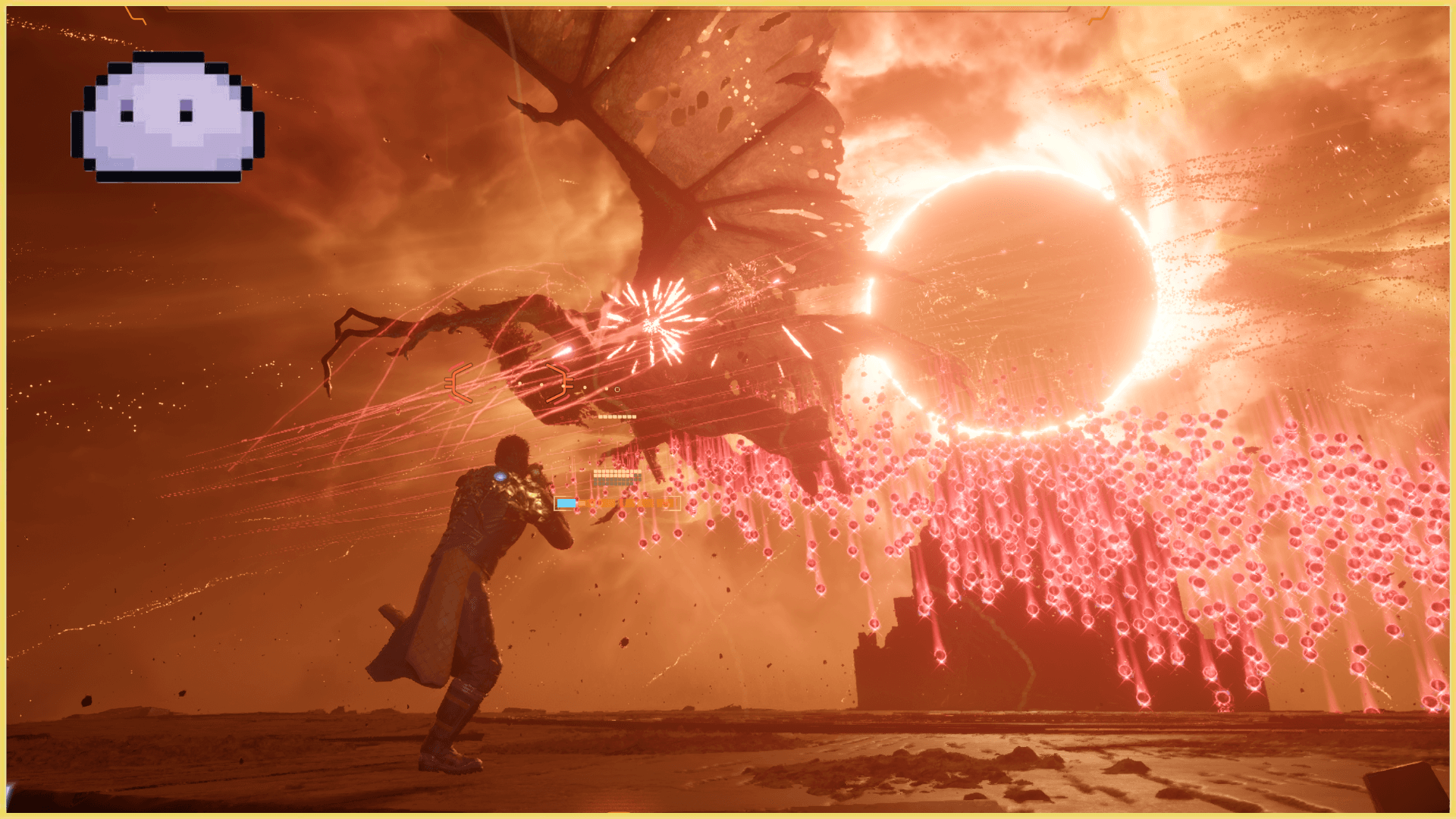
On a planet shrouded by eclipse, every death is a deeper awakening.
For many players, including myself, Returnal can easily be seen as the first game that truly captured what “next-gen” felt like. It blended third-person shooting, bullet-hell design, and roguelike structure into something both elegant and brutally unforgiving, wrapped in an atmosphere of mystery and near self-punishing difficulty.
Now, Saros, a brand-new IP from Housemarque, is on the horizon. As a clear spiritual successor to Returnal, it doesn’t just carry forward its core ideas, it amplifies and reinterprets them. In many ways, it feels like one of PlayStation’s most defining first-party titles in recent years, the kind of heavyweight release fans have been waiting for.
From the moment I first set foot on the planet Carcosa, Saros immediately pulled me in with the kind of production quality you’d expect from a top-tier PlayStation title. At its core, it’s a roguelike action shooter built around precision, rhythm, and control, an evolution of Returnal, yet unmistakably its own thing. This isn’t just about pushing “gameplay first” to its limits, ming you. Saros weaves together mechanics, narrative, and structure into something cohesive, a looping, ever-progressing cosmic cycle that constantly resets, yet never truly stands still.
For players familiar with Housemarque, Saros feels almost inevitable. The intense “bullet ballet” combat, the razor-sharp responsiveness, and the sense of gradual progression through repeated deaths all reflect the studio’s long-standing design philosophy. As a spiritual successor, Saros pushes progression and replayability to the forefront, giving players a reason to keep coming back, to keep improving. The developers themselves define its relationship with Returnal in three key ideas: preserve, evolve, and innovate. It retains the studio’s signature audiovisual identity and tight combat feel, while expanding its narrative ambition and fully embracing the potential of the PlayStation 5 hardware. So how does it all come together?
In the sections ahead, I’ll break down my impressions across worldbuilding, narrative structure, combat design, roguelike systems, enemy design, difficulty curve, and overall presentation, based on roughly 50 hours of playtime (and still not finished).
Because Saros isn’t just a game you play to complete. It’s one you keep coming back to, again and again, to understand, to master, and to experience in full.
Title: Saros
Developer: Housemarque
Publisher: Sony Interactive Entertainment
Platform: PlayStation 5
Release Date: April 30, 2026
Worldbuilding and Narrative in Saros
For players familiar with Housemarque, especially those who’ve played Returnal, it doesn’t take long to notice a familiar DNA running through Saros. As a studio that has long championed a “gameplay first” philosophy, they once again place mechanics at the center, letting the story unfold more subtly over time.
Rather than laying everything out upfront, Saros builds its narrative through the act of playing, through exploration, death, and repetition. The more you experience, the more the pieces begin to fall into place.
And honestly, the pacing feels… almost surreal, in the best way.
It’s cryptic, but not fragmented. Layered, but never messy. You can clearly tell the developers want players to experience the world, not just read about it. Much like Returnal, Saros adopts a similar structural approach, but at the same time, it carves out its own identity with a completely new and independent setting.
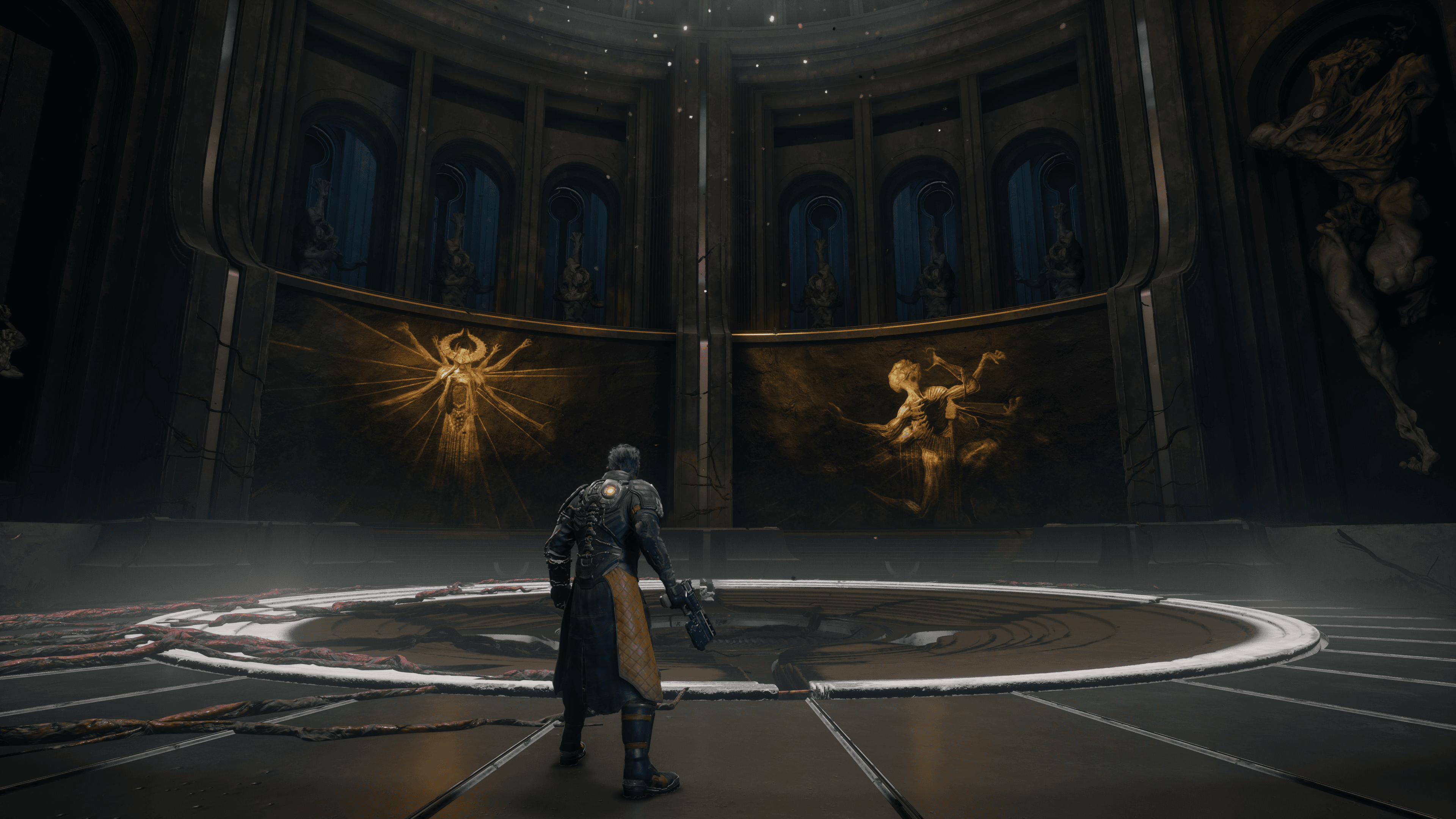
The game takes place on a shifting planet known as Carcosa, a world that constantly reshapes itself through time, space, and perception. It feels ancient, filled with traces of lost civilizations, yet unmistakably decayed. What remains are fragments: broken machinery, forgotten ruins, and strange, almost unknowable lifeforms.
It’s a world that feels like it’s already ended, and yet, somehow, still hasn’t let go.
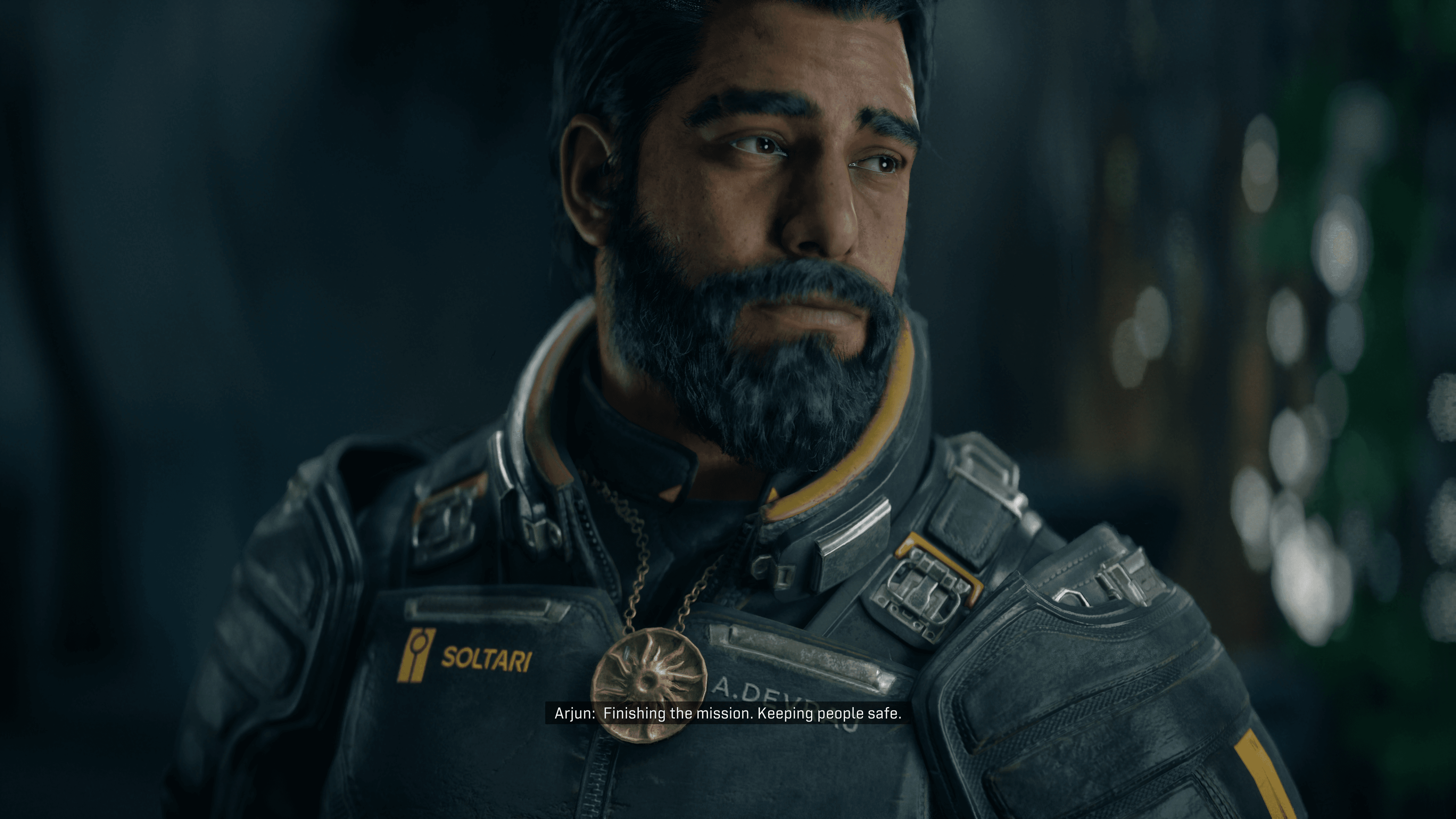
The story follows Arjun Devraj, a member of the Fourth Fleet. His squad is deployed by the Soltari corporation to investigate the disappearance of three earlier starships sent to Carcosa. These advance expeditions were originally tasked with extracting a resource known as Lucenite and assessing the planet’s potential for human colonization, but all contact was lost.
It quickly becomes clear that Arjun’s mission isn’t purely official. Beneath the surface, there’s something deeply personal driving him forward. He isn’t just carrying out orders, he’s searching for someone who means a great deal to him.
The game truly begins the moment you experience your first “death” on Carcosa. When Arjun awakens again, several days have already passed in the world, even though it only felt like a few hours to you. This idea, that the world continues to move on after death, turns failure into something more than just a reset. It becomes a core part of both progression and storytelling.
With each new expedition, every encounter with enemies, and every fragment of logs or messages left behind by other crew members, the truth of Carcosa slowly unfolds. You begin to piece together not just what happened on this planet, but the true nature of these colonization missions, the final choices made by those who came before, and ultimately, the emotional weight and fate of Arjun himself.
Much like Returnal, the game is structured into three clearly defined chapters, each ending with a major narrative shift or emotional impact. Some players might find the pacing a bit abrupt at times, but the overall atmosphere and psychological tension remain consistently strong throughout.
One of the biggest differences in Saros, however, is that you’re not quite as alone anymore.
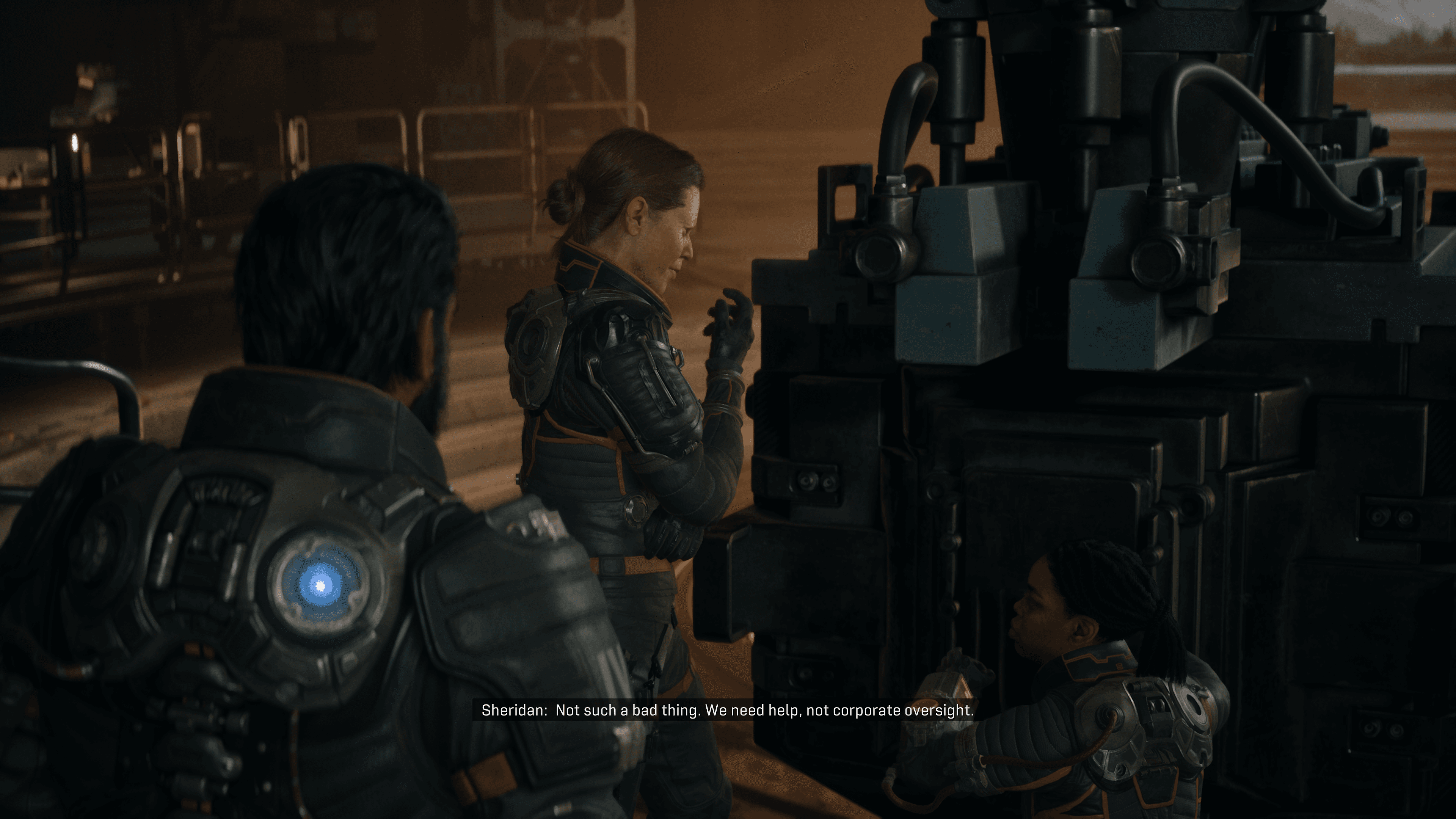
While most of the journey is still spent fighting on your own, the base allows you to interact with other members of the Fourth Fleet. Through conversations, you gain a better understanding of the situation and see how their mental states gradually change over time.
These NPCs may not serve much of a gameplay function, since they won’t join you in combat, but their dialogue and emotional presence help create a subtle yet important feeling: That you’re not the only one still trying to make sense of all this.
They may come across as little more than yapper or mystery figures, but each of them carries their own mission and beliefs. Through their brief lines and subtle cracks that begin to show, you can sense how their understanding of this mission, and their attitude toward it, shifts over time. It’s a restrained form of character writing, but one that gradually expands in a really interesting way.
Outside the base, exploration brings you across a wide range of audio logs, mission reports, and fragmented documents scattered throughout each biome. Sometimes they reflect your own squad’s thoughts, sometimes they’re notes from hostile factions, and at other times, they’re remnants left behind by the planet’s long-lost civilizations.
Combined with the system where defeating enemies unlocks their codex entries, Saros turns storytelling into something you don’t just read, you actively uncover through combat and exploration. This creates a rare sense of cohesion, where narrative and gameplay are tightly interwoven within its roguelike structure.
Overall, the story in Saros isn’t meant to be its most immediate or dominant element. Instead, it acts as a strong, compelling framework, one that invites players to immerse themselves through exploration and combat. What stands out, though, is that the worldbuilding isn’t just there for flavor. It clearly echoes and reinforces the game’s core mechanics, making it feel like an integral part of the experience rather than just background lore.
You could say that while Saros isn’t a traditionally narrative-driven game, the way it builds atmosphere and paces its storytelling completely pulled me into this strange, unsettling planet. You’re not just reading a story, you’re stepping into it. Into a past that’s been forgotten, fractured, and perhaps impossible to change.
It’s a form of storytelling built on experience and discovery, on piecing things together bit by bit, and honestly, it works really well for me.
World Atmosphere and Level Design in Saros
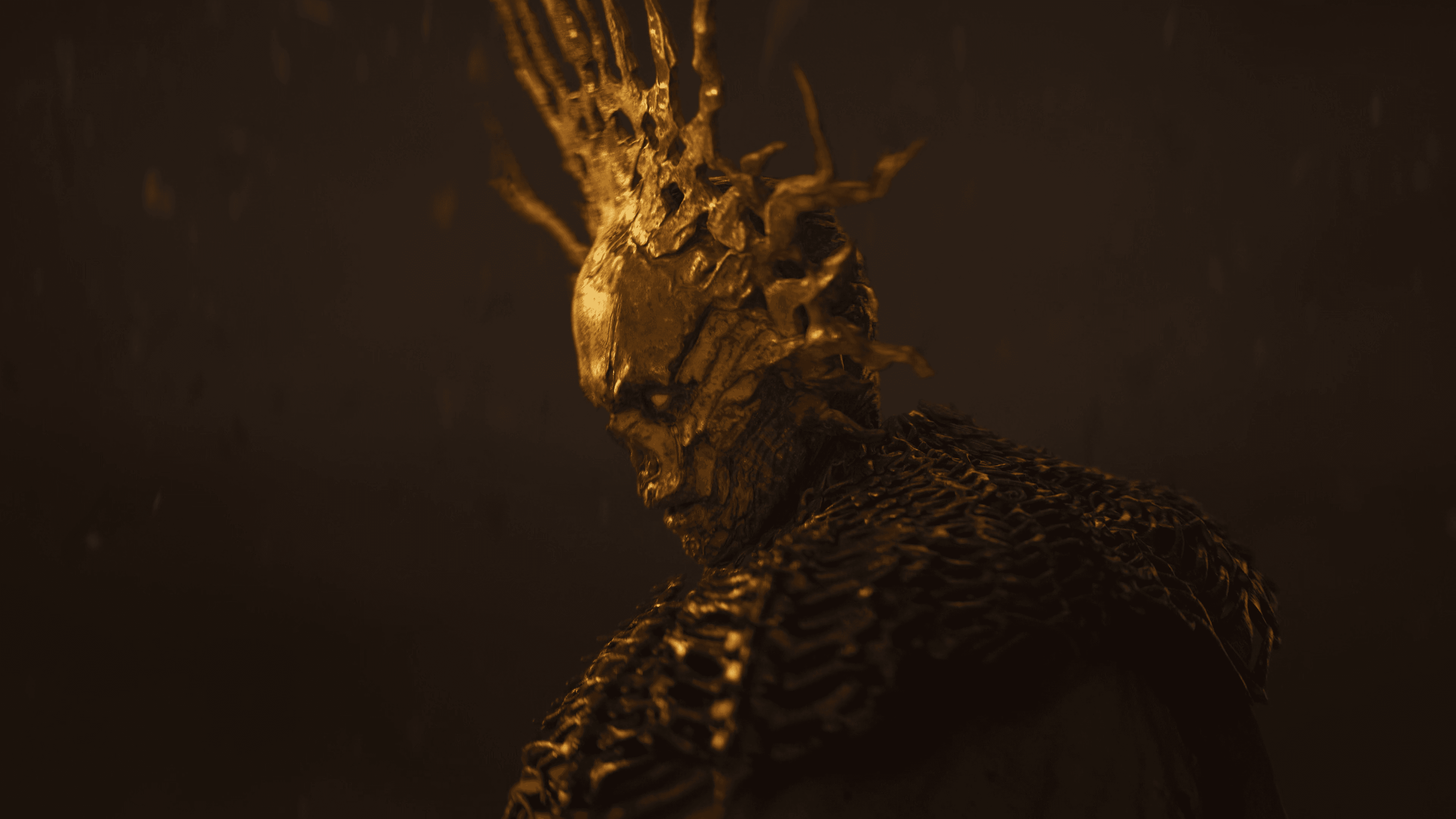
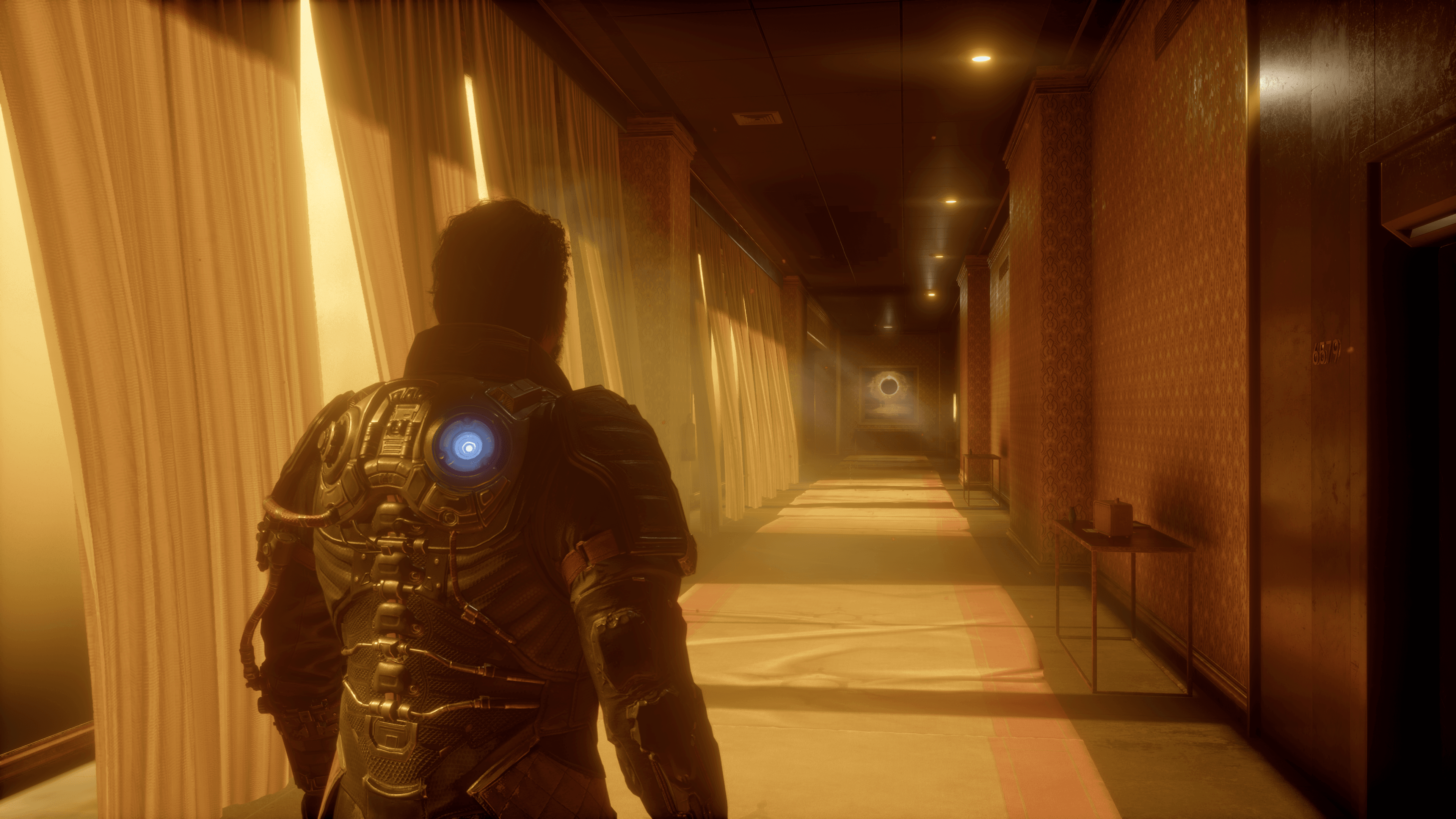
Honestly, if you ask me what the most compelling “character” in Saros is, I wouldn’t point to any person, I’d say it’s the planet itself: Carcosa. From beginning to end, it’s the most mysterious, oppressive, and strangely alive presence in the entire game.
Carcosa blends roguelike procedural design with incredibly strong visual storytelling. The terrain reshapes itself with every run, and combined with its distinct art direction and heavy, suffocating atmosphere, it never feels like just a backdrop. It feels… alive. Like something that’s aware of you. That sense that “the world is breathing”, honestly, it borders on something artistic.
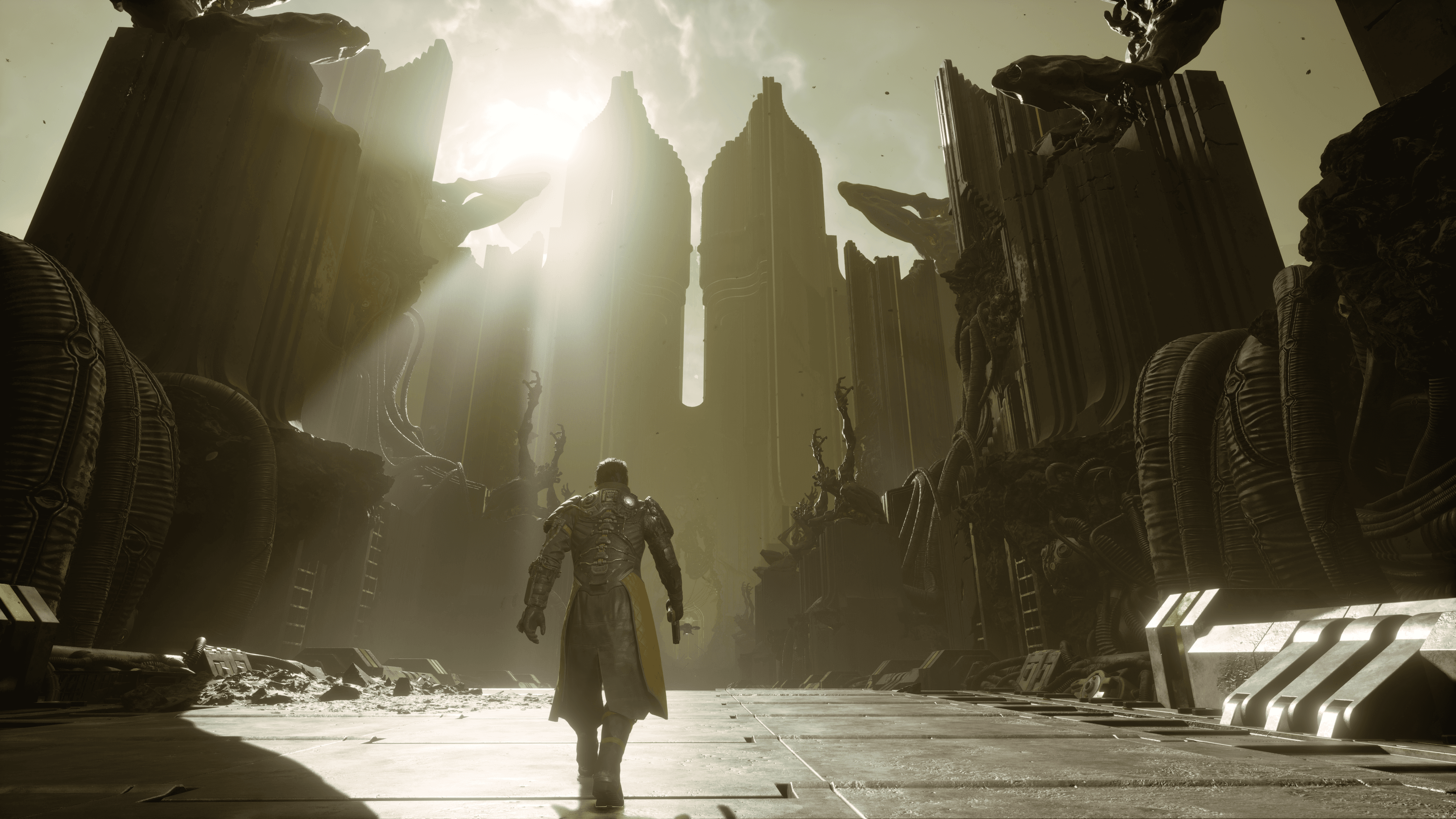
The planet is divided into seven major biomes, each with its own unique visual identity and exploration feel. Despite sharing the same world, they feel drastically different. Almost every area reminds me of that massive, intricate sci-fi aesthetic you’d see in Warhammer 40K, mixed with a touch of Lovecraftian distortion and cold, alien otherworldliness. It’s grand, but also deeply unsettling, the kind of spaces that make you stop for a few seconds, just to take it all in.
From a technical standpoint, Saros’s 3D roguelike level design is noticeably more refined than Returnal. Whether it’s the winding spatial layouts, the way platforming and combat intersect, or the clear distinction between main paths and side routes supported by the map system, exploration feels more intuitive while still remaining challenging.
Each run is built from modular sections that are randomly assembled. At any given moment, you’re making decisions: Do you detour into side areas for resources and take on more risk, or push forward along the main path?
That constant decision-making gives every run a clear rhythm, rather than feeling like simple repetition. Side areas, in particular, tend to throw you into higher-pressure situations, like jumping, dodging, and fighting all at once. It’s intense, and it really tests your control.
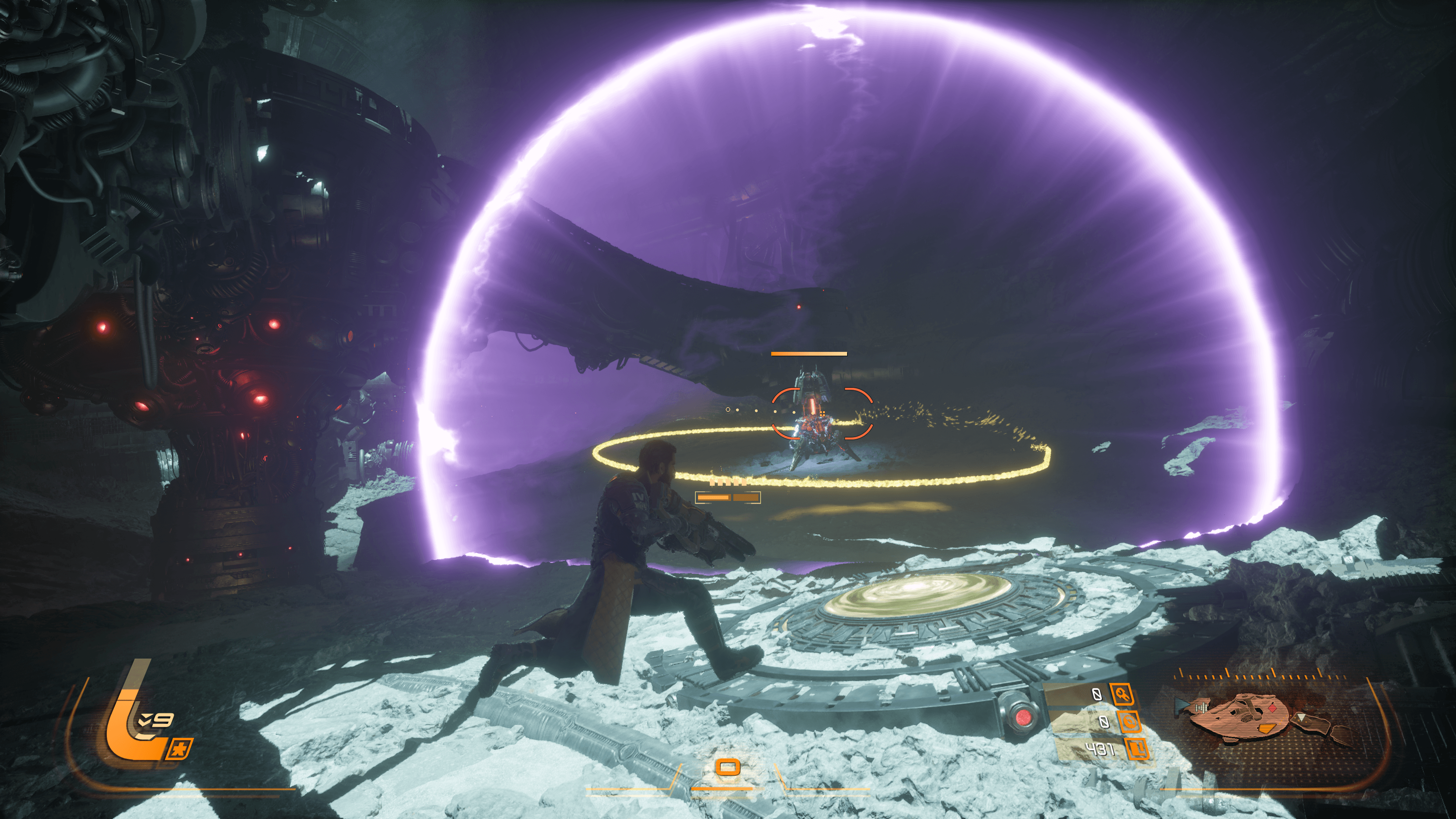
The game also leans heavily into the idea that “death isn’t a reset.” Through a core resource called Lucenite, you gradually unlock permanent upgrades and exploration tools. Every run builds on the last, failure becomes progression. It ties directly into the game’s core philosophy: death has meaning here.
On top of that, Saros introduces light Metroidvania-style elements. As Arjun progresses, he gains new movement abilities, things like traversal tools and enhanced mobility, that allow you to revisit previously inaccessible areas. This turns the world into something that isn’t just pushed forward, but constantly reinterpreted.
Even areas you’ve already cleared can draw you back, whether for collectibles, upgrades, or hidden narrative details. It gives the game’s exploration and worldbuilding a stronger sense of cohesion, and a reason to keep coming back.
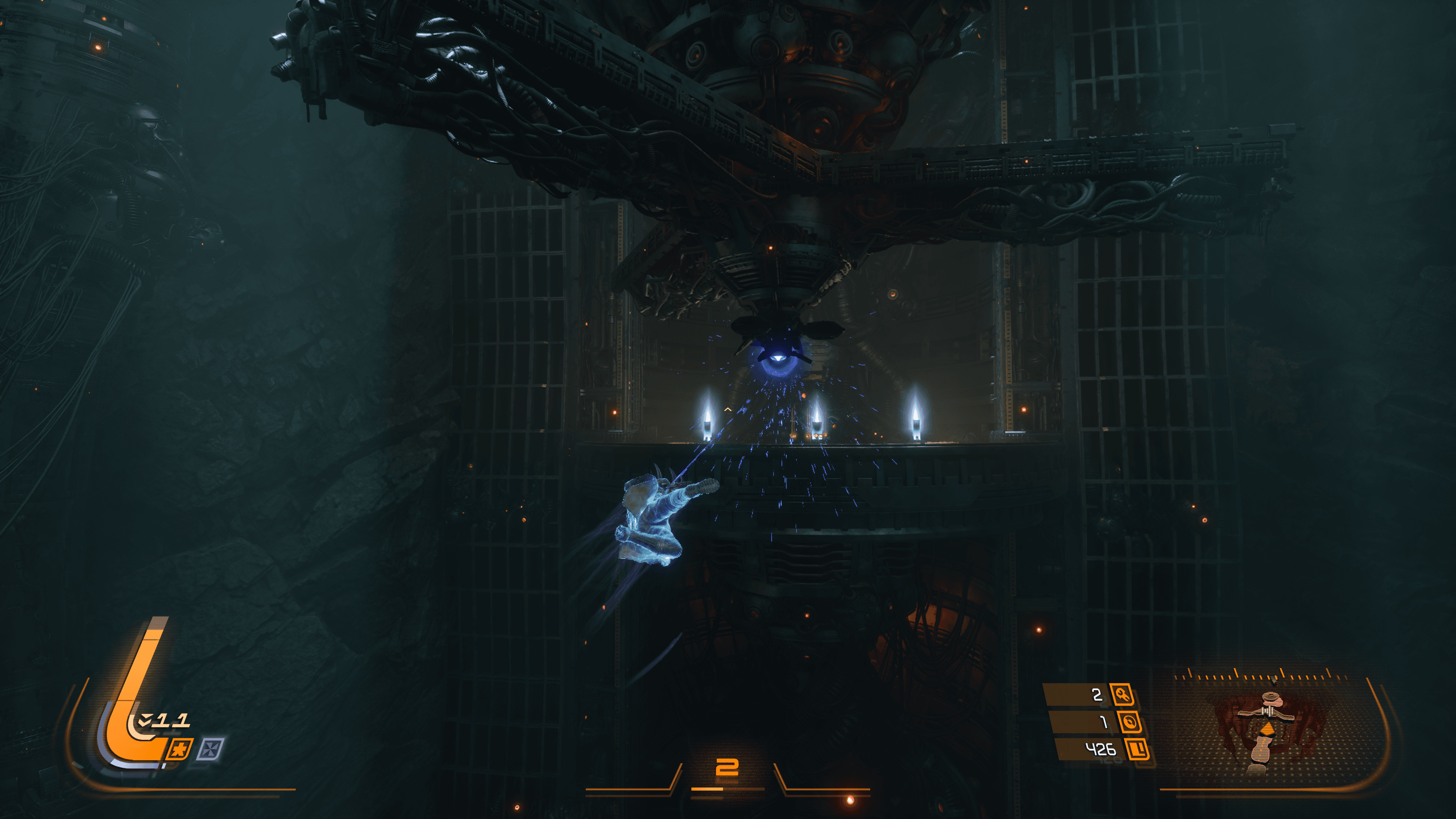
While the maps are procedurally generated, after spending enough time with the game, you’ll start to recognize certain repeating patterns. The randomness isn’t as wildly varied as something like Remnant II, after a few runs in the same biome, you’ll more or less get a feel for the layout.
That said, one thing that really stands out in the level design is how often the game sets you up to fall. And honestly… maybe a bit too often.
In high-pressure combat situations, a single mistake, falling off a ledge or into a pit, doesn’t just cost you health. It completely breaks your momentum and interrupts your build-up, which can be pretty frustrating in the moment.
Another noticeable design choice is the frequent use of one-way level structures. You’ll often encounter situations where, once you drop down from a higher platform, there’s no way back. Or the game forces you to choose between two paths, locking you out of the other and its rewards.
On paper, this definitely strengthens decision-making and gives your choices more weight. But after extended play, that feeling of “I can see the loot, but I can’t get it” starts to creep in. It’s not a dealbreaker, but it can be a bit irritating.
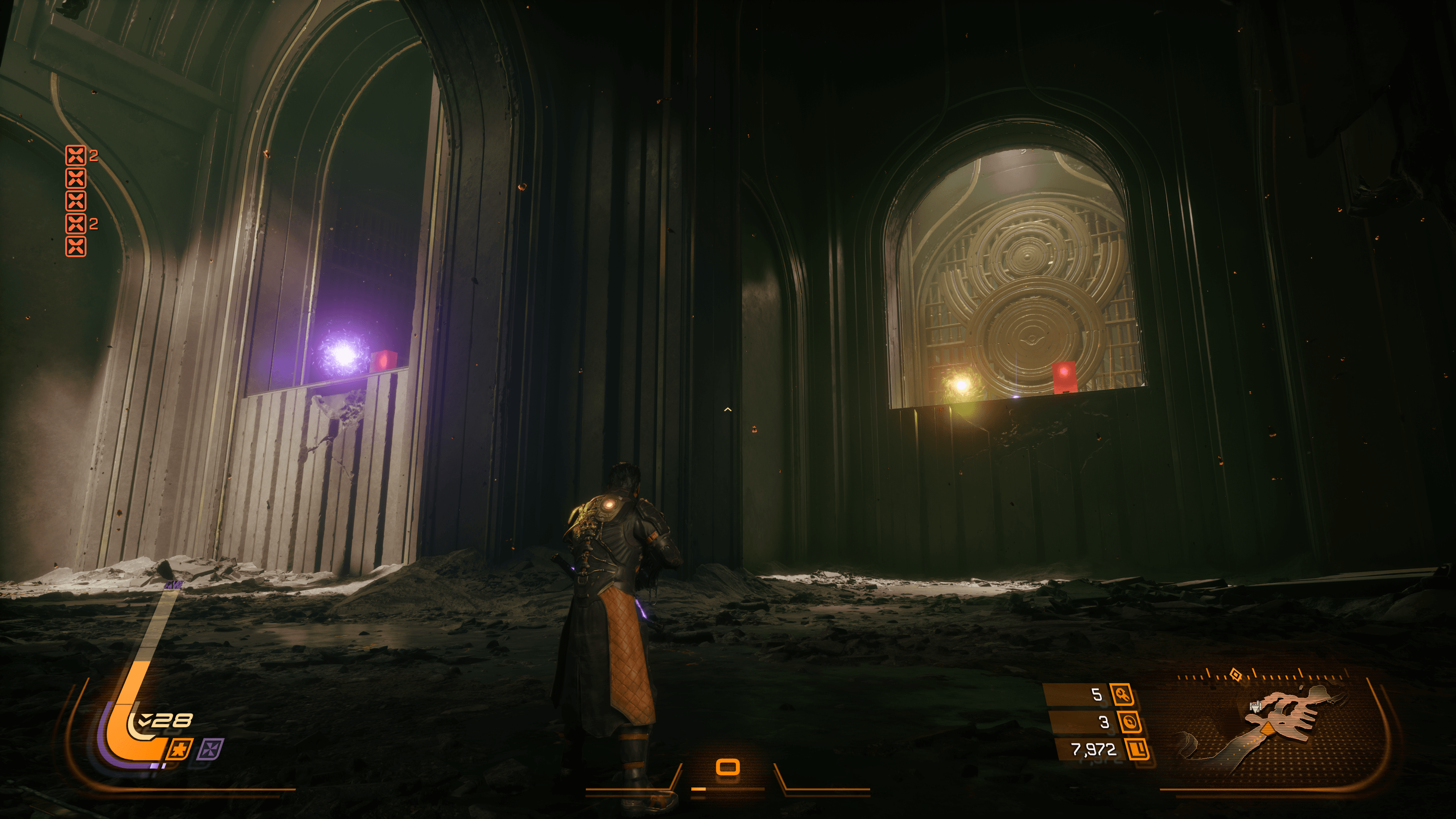
And of course, being a roguelike, the game heavily leans on randomized collectibles and side content. For most players, this is nothing new, but for completionists, it inevitably comes down to luck. Sometimes you’ll get what you need in just a couple of runs. Other times… you’ll be grinding endlessly, wondering if the game is messing with you. It fits the roguelike philosophy, every run carries uncertainty and variation, but over time, especially when your goal shifts from experiencing the game to completing everything, that randomness can turn from excitement into pressure.
That said, despite these frustrations, the overall execution of Saros’s atmosphere and level design is still incredibly strong. The way visuals, pacing, and gameplay come together shows a clear level of care and craftsmanship.
Yes, there are rough edges, the unpredictable terrain, the occasional reliance on luck, but within the context of a roguelike action game, Saros doesn’t just meet expectations. It feels refined and mature. It succeeds in making every run feel purposeful, and every failure feel like part of the journey.
The Core Roguelike Loop in Saros
At its core, Saros delivers a refined and incredibly satisfying 3D roguelike action shooter loop. It’s fast-paced, layered with systems, and constantly keeps your adrenaline high through relentless combat and exploration. If I had to sum it up in one sentence, it would be this: “Die. Get stronger. Return. Repeat.”
First things first, Saros is very much a roguelike action game. Death isn’t just part of the experience, it’s one of the things you’ll encounter most often. But unlike Returnal, it doesn’t carry that same feeling of diminishing returns. At least for me, it doesn’t.
In Returnal, there were moments where progress felt distant, where each death could feel heavy, even discouraging. In Saros, however, every failure brings back something tangible. It’s not just about improving your skills or gaining experience, it’s about making real, measurable progress that carries forward into your next run.
And more importantly, as you keep playing, it becomes clear that these carefully crafted environments and level designs aren’t just there for gameplay, they resonate with the mechanics, and even with the game’s broader narrative and worldbuilding.
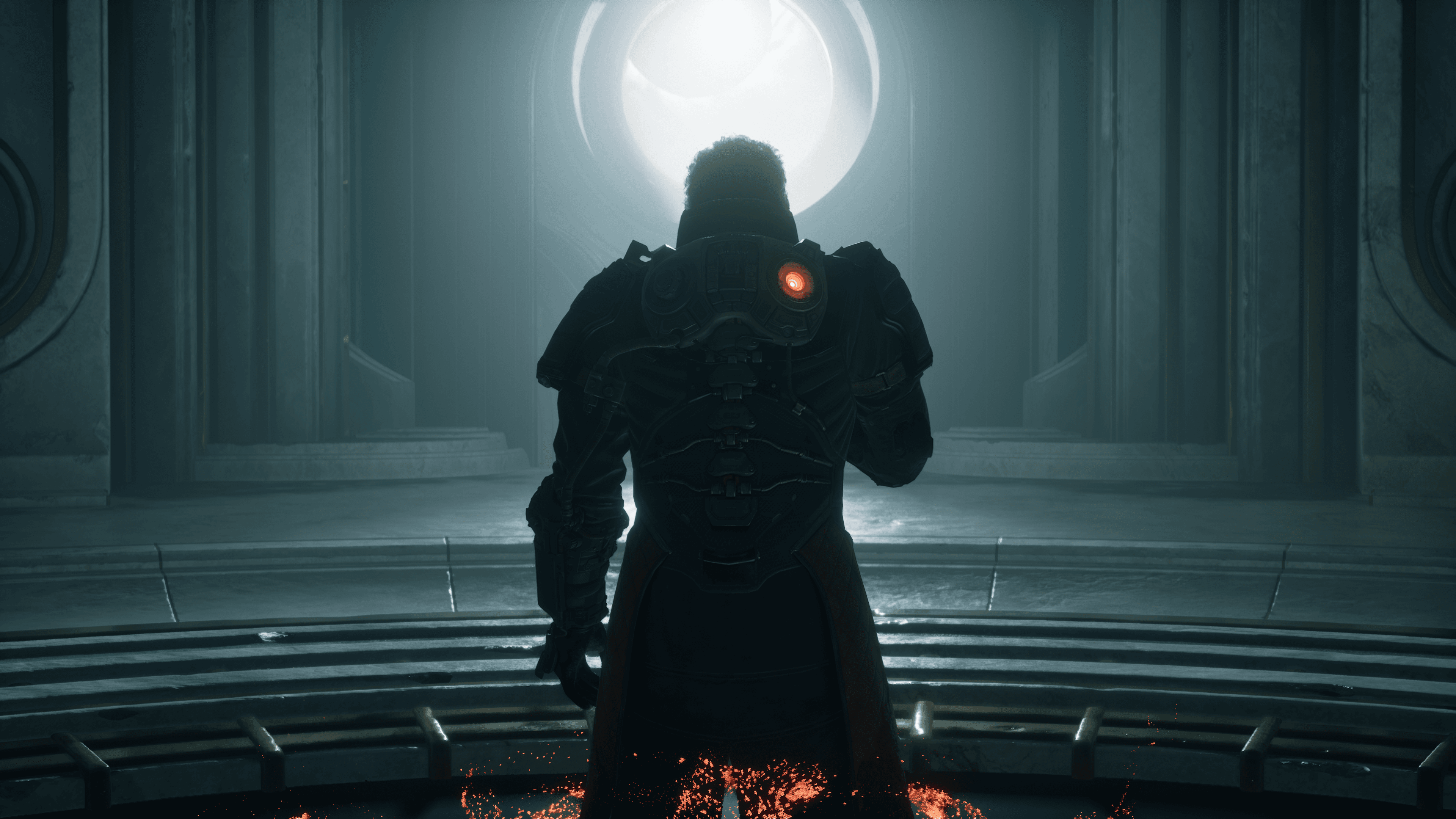
Every run feels like stepping into a new cycle, familiar in structure, yet always slightly different in experience. The overall roguelike loop is highly refined, and as you continue gathering resources, your character steadily grows stronger alongside it.
At the center of this loop is one core objective: collecting Lucenite. This resource is the backbone of the entire game. Not only does it strengthen you during a run, but more importantly, it can be brought back to the base for permanent upgrades. Yes, permanent progression!
And this is where Saros truly sets itself apart from Returnal. It embraces a system more commonly seen in lighter roguelikes, introducing a clear and intuitive meta-progression layer. Every attempt leaves you faster, stronger, and more efficient than before.
Through a Soltari facility known as the “Primary,” you gain access to a skill tree where Lucenite can be spent to permanently upgrade your suit. This includes unlocking passive abilities and enhancements that significantly improve both survivability and combat performance.
At its core, Saros has a very clear goal: to make death meaningful. Just as the game itself emphasizes “Every return makes you stronger.”
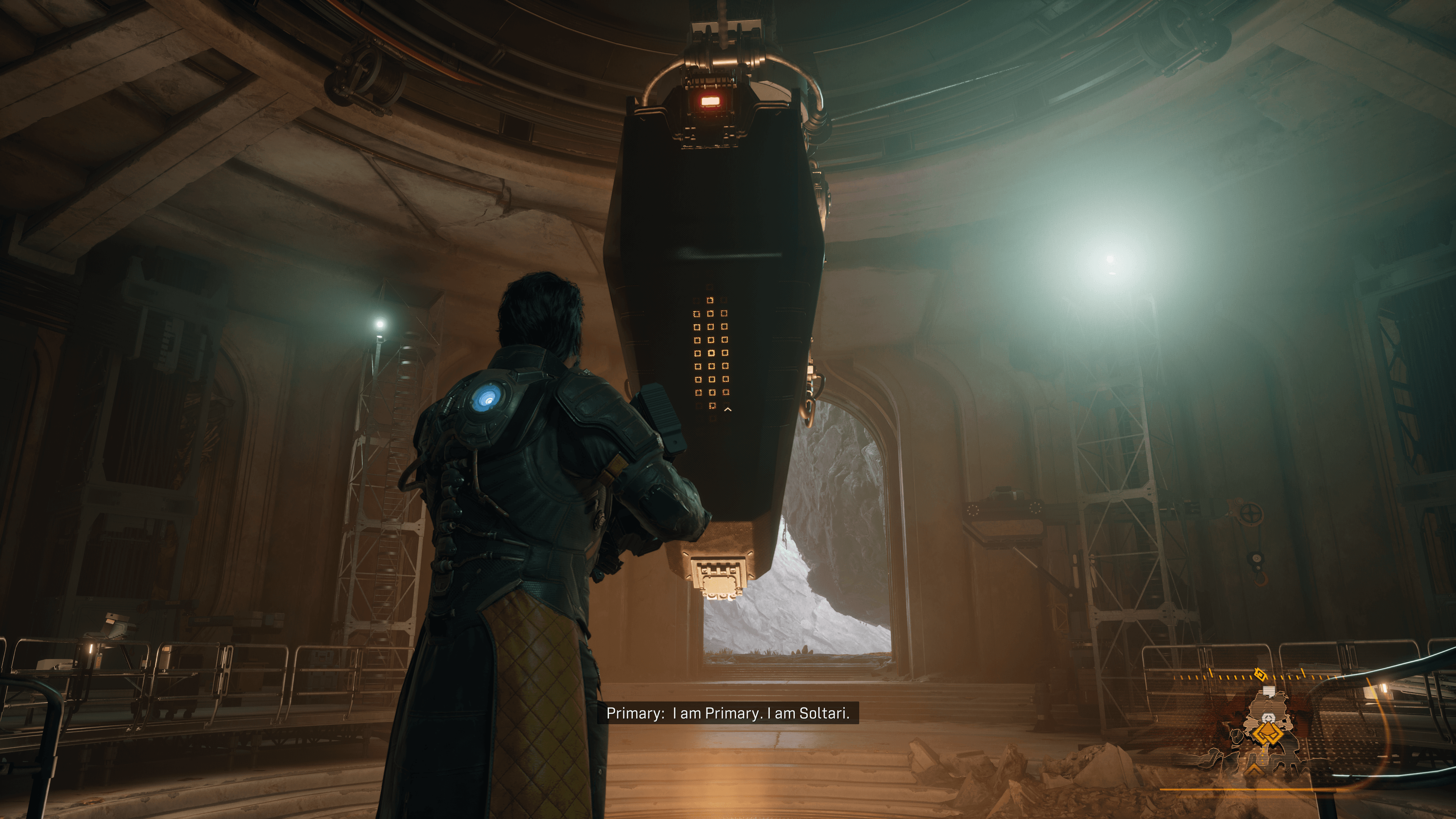
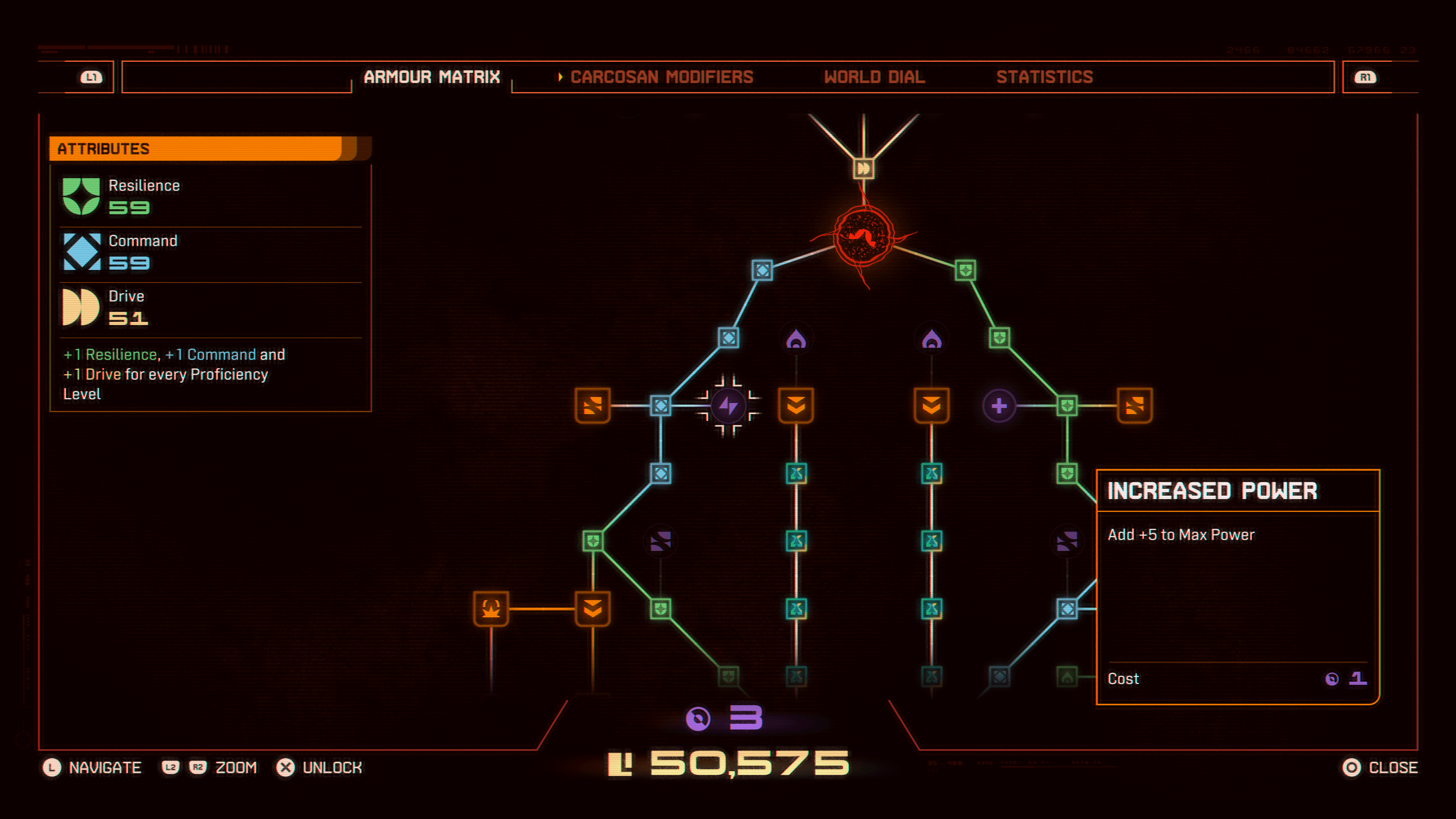
Every bit of Lucenite you bring back can be invested into the skill tree. While some upgrades are immediately intuitive and highly impactful, like starting with a key or gaining an extra revive upon death, the overall progression branches are built around three core attributes: Resilience, Command, and Drive.
This is also one of the biggest differences from Returnal. Saros introduces more RPG-like stat systems tied directly to gameplay: Resilience affects your health and survivability, Command determines your alien weapon capacity, Drive influences how efficiently you collect Lucenite.
These three pillars form the backbone of the entire gameplay loop. For players struggling in high-pressure combat, upgrades that directly improve survivability will naturally take priority. That said, the skill tree also offers more strategic unlocks, such as starting runs with a key or gaining an extra chance to revive upon death, options that can significantly shape how you approach each run.
Another smart design choice is how progression is gated. Key upgrade paths are locked behind major boss encounters, meaning you’ll need to defeat area bosses to unlock higher-tier upgrades. It’s a well-balanced system, one that preserves the positive feedback of progression, while preventing players from simply grinding resources to overpower the game.
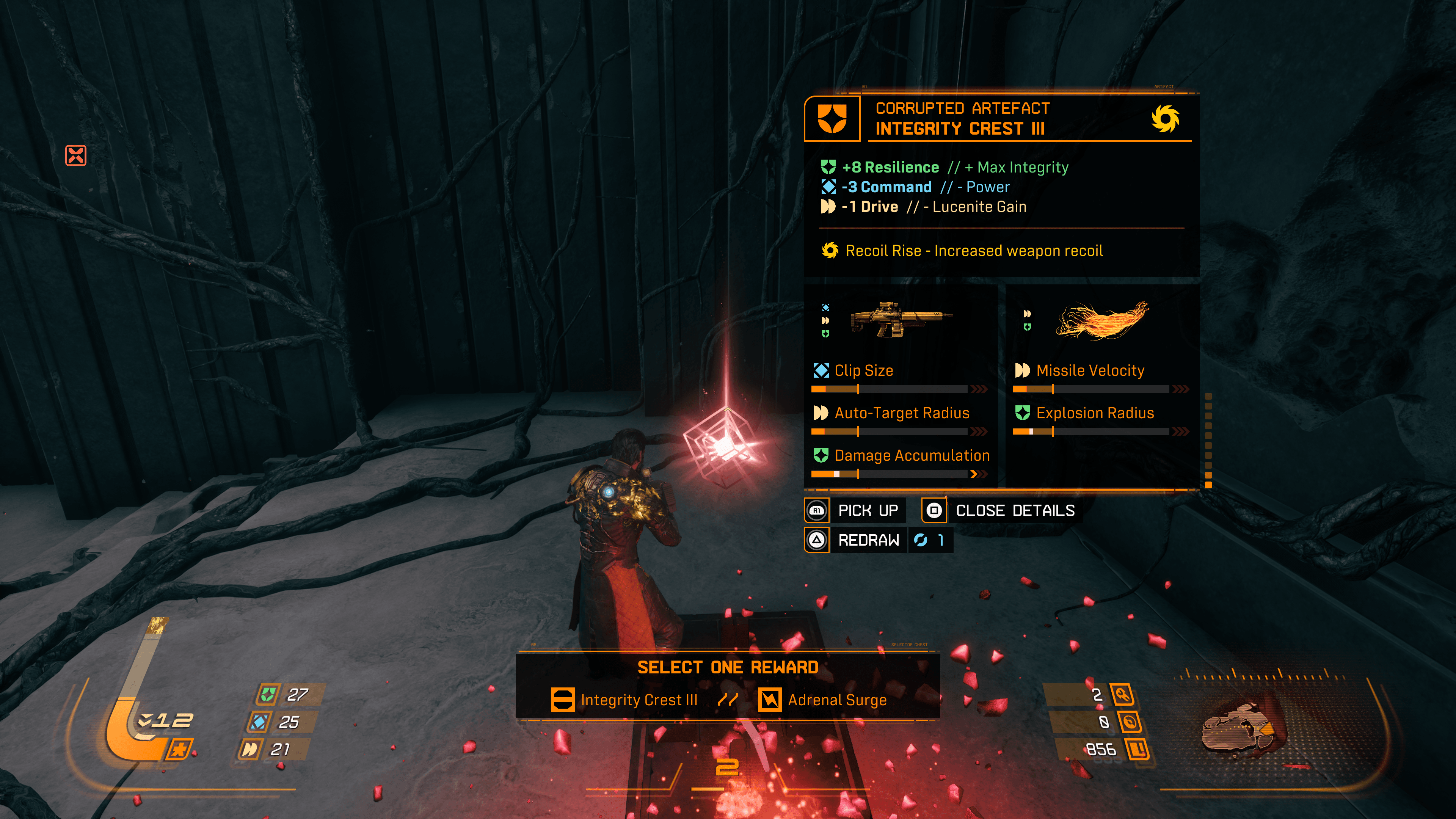
These Artefacts are one of the key factors that determine your overall efficiency in a run. There’s a wide variety of them to equip, but your slots are limited, and once they’re full, you can’t swap them out. That’s a major difference from Returnal.
Because of this, every pickup becomes a real decision point. You can’t just grab everything that appears, you have to commit to a direction for that run. It does mean sacrificing a bit of flexibility. For example, once your slots are full, if you come across a better Artefact later on, all you can do is leave it there… glowing on the ground. And yeah, that does sting a little.
That said, compared to the parasites in Returnal, Artefacts in Saros are generally more powerful and more impactful, and you can eventually equip more of them as you progress. You can even unlock additional slots over time, so if there’s one thing worth prioritizing your Lucenite on early, it’s definitely expanding those slots. It makes a huge difference.
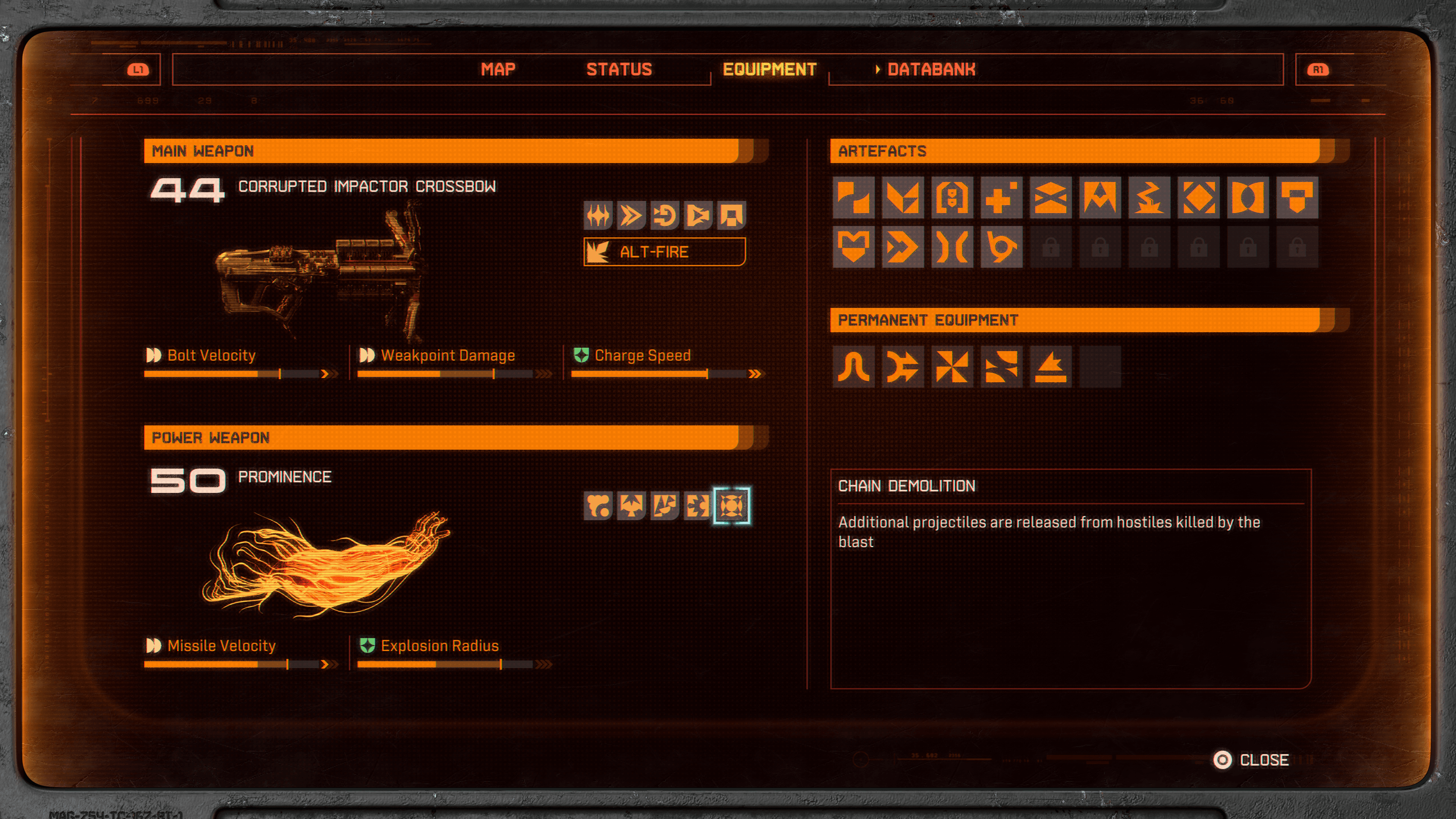
Of course, no roguelike would be complete without randomly generated weapons, and Saros delivers here with a wide variety of well-designed options.
Both primary and secondary alien energy weapons feel great to use, each with clearly distinct playstyles. Every weapon comes with its own firing rhythm and intended use (more detail in the combat section later), and their randomized nature ensures that every run feels different in terms of loadout and strategy.
One interesting twist is how the game handles weapons upon death. When you fail and return to base, your weapons are actually brought back with you. While their power level resets, their type and functionality are retained, adding a subtle layer of strategic continuity between runs.
As you progress through the main story, you’ll gradually unlock more weapon types. These are then added into the overall loot pool, meaning future runs have a chance to roll them as well. In other words, the further you get, the more tools you gain, and the more varied and flexible your playstyle becomes.
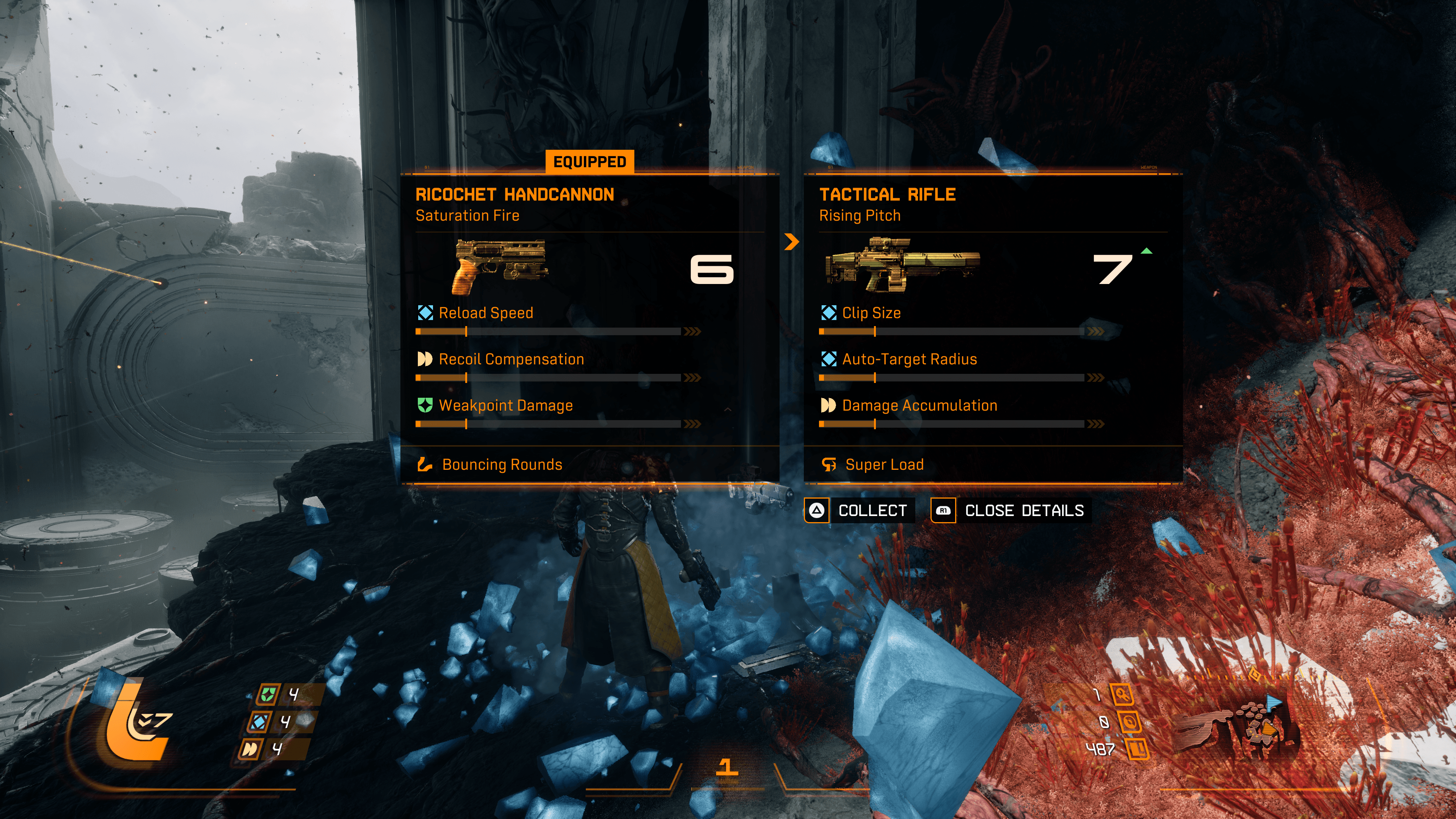
One aspect of the overall gameplay loop that feels a bit… tricky, though, is how Saros leans more heavily on a key-based system compared to Returnal. Many chests require keys to open, and keys themselves are also randomly generated rewards. This can sometimes lead to situations where you keep running into locked chests with no keys in hand, which, admittedly, can feel a little frustrating.
That said, once the full loop clicks, the experience is incredibly smooth and satisfying. This was already true in Returnal, but Saros pushes it even further.
And this is where it gets interesting, because it constantly forces you to make a choice: Do you keep pushing forward with your current high-level gear and strong build, or do you return to base, bank your resources, and start fresh with a safer baseline?
For some players, that kind of forced decision-making can feel stressful. You can’t have everything, you can’t carry everything forward. Saros makes you choose, and it makes you live with those choices. But honestly, that’s exactly what I love about it.
Every descent into Carcosa feels like a calculated gamble, and every successful return feels like coming back with hard-earned spoils. That clear sense of risk and reward gives each run real weight. In the end, if you enjoy that cycle of failing, learning, and gradually overcoming challenges through incremental growth, this game delivers in the best way possible.
For someone like me, who thrives on that process of refinement and steady progression, Saros feels like a perfectly crafted loop of controlled chaos. It’s intense, rewarding, and relentlessly challenging. And most importantly, you can clearly feel how the game’s core gameplay loop, level design, and narrative all resonate with one another, forming a cohesive experience that goes beyond just moment-to-moment action.
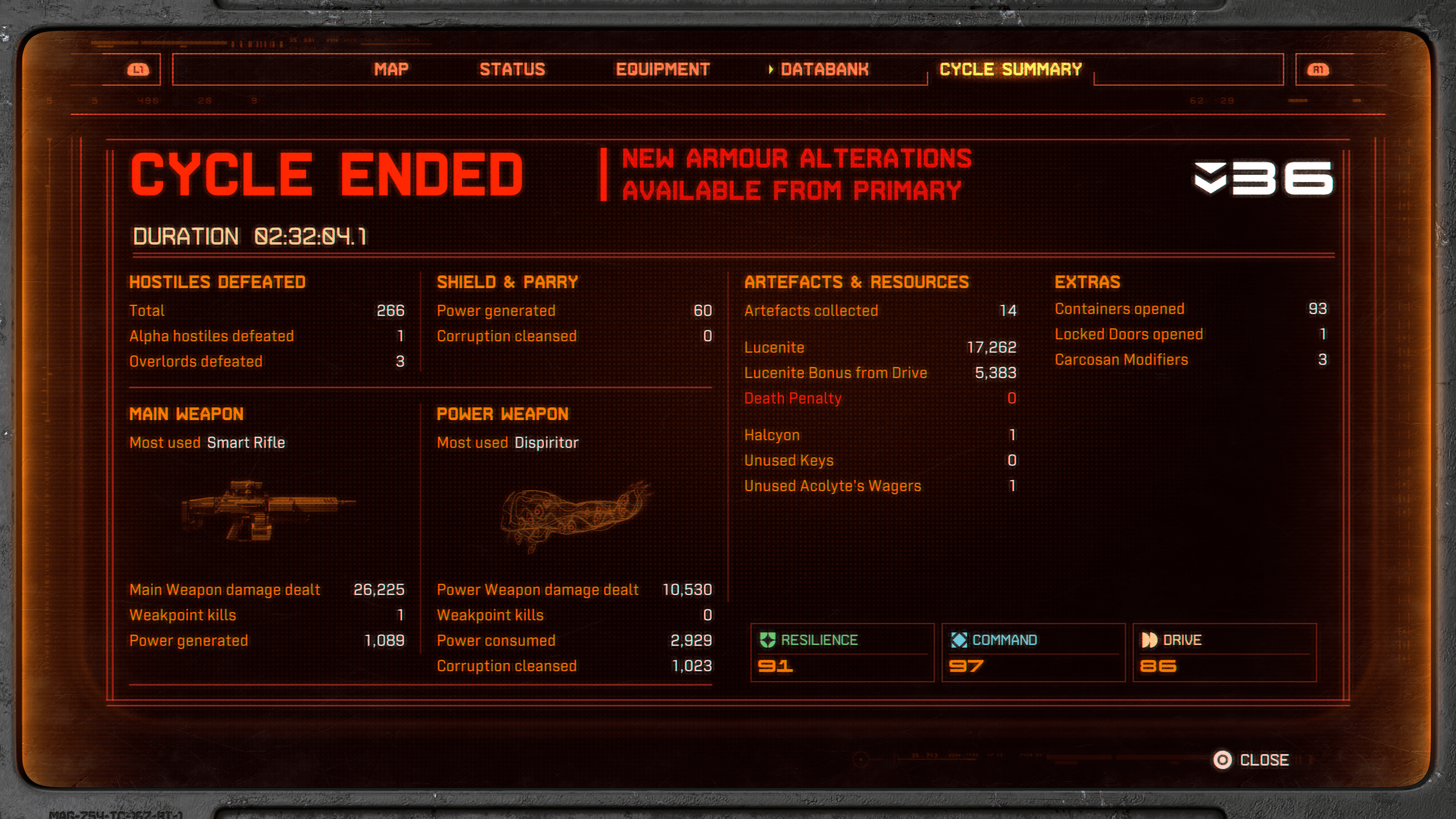
It’s immediately obvious that Saros is an extremely difficult game, very much a classic, unapologetic high-difficulty roguelike action experience.
Enemy bullet patterns hit incredibly hard, and unlike games where you can comfortably memorize attack sequences, many encounters here feel far less predictable. Getting overwhelmed by projectiles flying straight at your face happens constantly, forcing you to react and adapt in real time. The problem is that these decisions almost always happen at blistering speed, making the game especially punishing for players who struggle with high-pressure action combat.
And once the screen fills with enemies, layered bullet patterns, and environmental hazards all at once, there’s barely any room to breathe. A lot of the time, you enter that state where your brain hasn’t fully processed what’s happening yet—but your body already has to react instinctively.
One thing worth mentioning is that the game doesn’t really let you heal on demand. At least, not in the traditional action-RPG sense where you can simply chug a healing item whenever you want. But that’s fairly common within the roguelike genre, and much like Returnal, Saros turns healing into a strategic resource.
You need to keep track of randomly scattered healing spots across the map, survive long enough during combat, and find the right opportunity to circle back and recover. If you happen to discover a healing point while already at full health, you can even intentionally leave it untouched and save it for later when things get desperate.
Because of this, you naturally start memorizing where you’ve seen healing stations, which areas still contain unused resources, and how to route yourself through the map efficiently. Resource management becomes surprisingly strategic.
That said, Saros handles healing a little differently from Returnal. Here, as long as you’ve taken even the slightest amount of damage, simply walking past a healing point will automatically restore your health. The game doesn’t ask whether you want to use it or not. So there are plenty of moments where you accidentally consume a major heal just because you were missing a tiny sliver of HP—making it impossible to fully “save it for later” the way you sometimes could in Returnal.
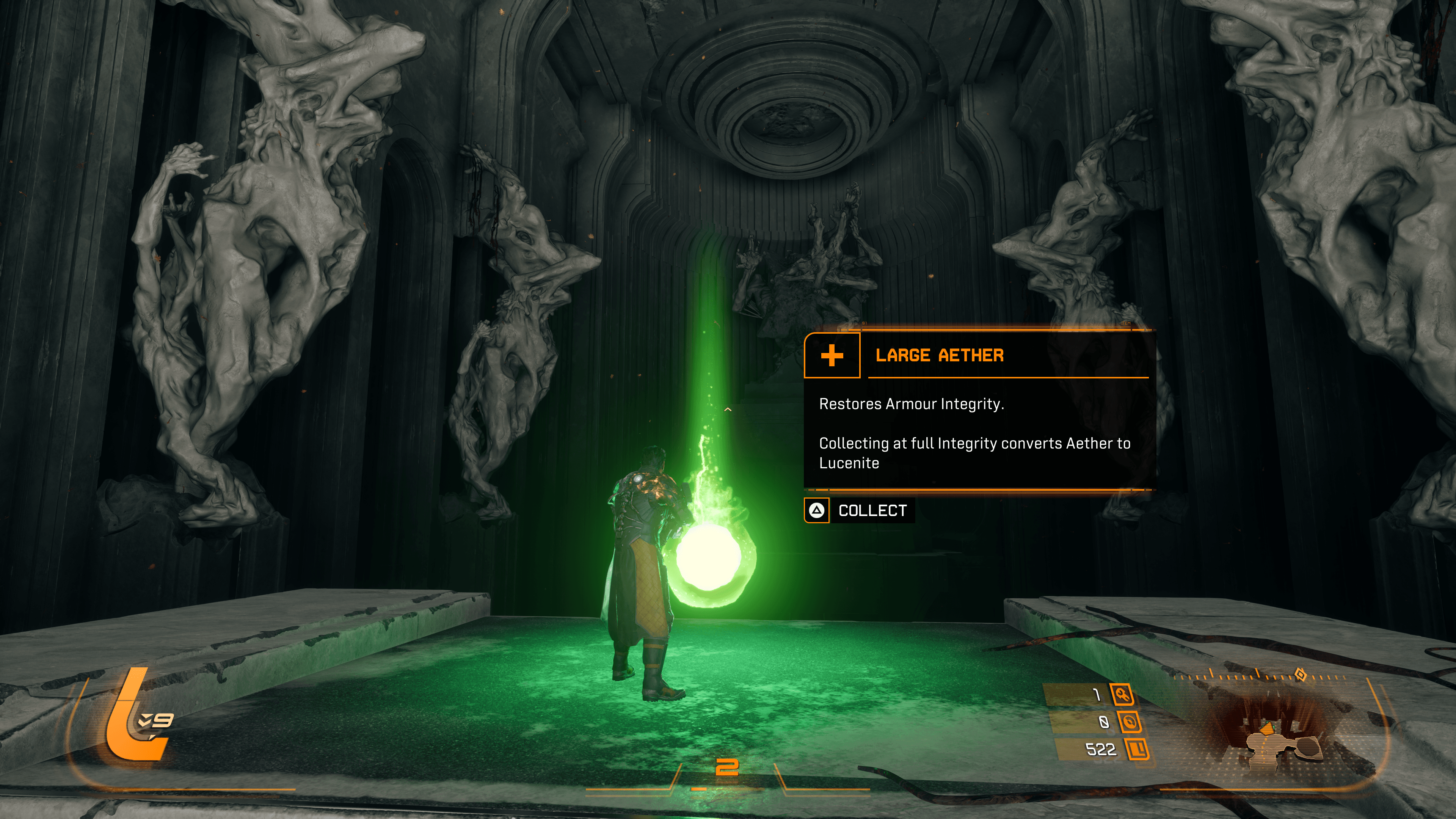
At the same time, Saros also introduces a really smart improvement: if you activate a healing point while already at full health, it gets converted into Lucenite instead. That means healing resources never truly go to waste. Because of this, any ability or Artefact that improves survivability, restores health, or reduces the risk of mistakes becomes incredibly valuable throughout the game.
Another major difference compared to Returnal is that Saros lets you freely choose which biome to start your run from. The overall progression order itself remains unchanged, you still move through the world sequentially from Biome 1 to 2 to 3 and so on, but the game completely hands over the choice of where to begin each run to the player.
This creates two very different approaches. You can choose a speedrun-style route and jump directly into your current progression zone, but the trade-off is obvious: you’ll be tackling those areas with far fewer resources, weaker growth, and minimal setup. You really need confidence in your own skills to challenge a biome’s Overlord boss under those conditions.
On the other hand, you can restart from earlier biomes and gradually build yourself back up. If you begin from biome 1 and push all the way through without dying or returning to base, by the time you reach your current progression point, you’ll likely have accumulated massive amounts of Lucenite, stacked multiple Artefacts, and significantly increased your weapon proficiency. The power growth becomes extremely noticeable, and your chances of success rise dramatically.
The downside, however, is equally clear: you’re committing yourself to a very long, extremely high-pressure combat run where concentration can almost never slip. And if you fail near the end, the frustration hits much harder because of everything invested into that attempt.
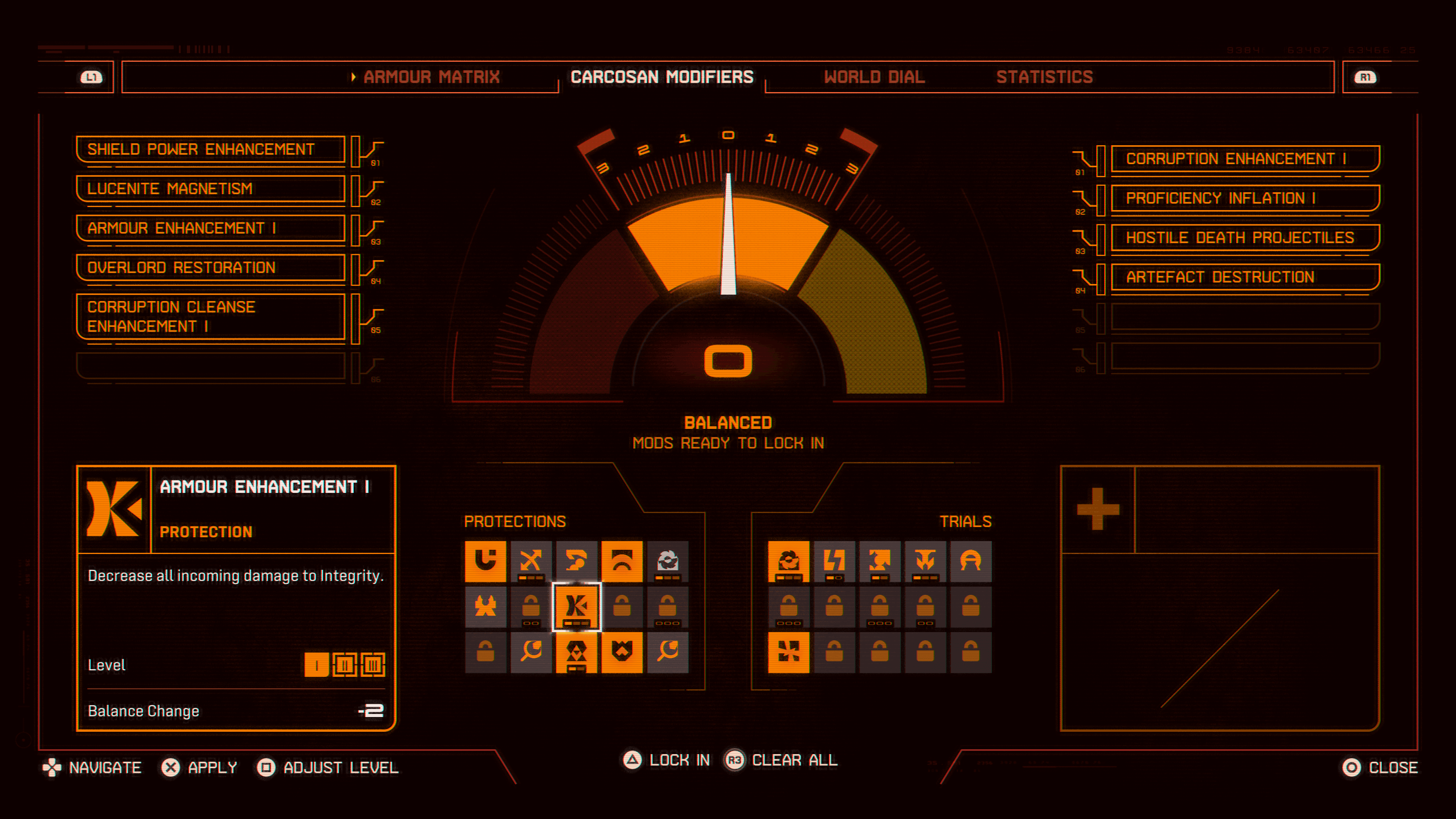
Interestingly, the game later unlocks a Modifier system, allowing players to customize additional conditions and difficulty adjustments for each run. You can tweak things like enemy strength, resource drops, and other gameplay variables, effectively giving players more control over how punishing, or rewarding, the roguelike experience becomes. It’s a genuinely great feature that adds a lot to replayability.
Even with those options, though, Saros remains a game that will absolutely make you “die until you question your existence.”
This is a full-on, unapologetically high-pressure roguelike action game. If you don’t enjoy fast-paced combat, bullet-dodging gameplay, or maintaining intense concentration for long stretches of time, or if you simply dislike the core death-loop philosophy of roguelikes, then there’s a good chance this game just fundamentally isn’t for you.
The Dynamic Combat System in Saros
The action combat in Saros is, quite simply, top-tier. From the very first input, you can immediately feel how responsive everything is. There’s virtually no input delay, every action, from running, dodging, jumping, and shooting, to switching between weapons and activating alien abilities, feels incredibly sharp. The level of control is so tight that it almost borders on being too responsive.
This kind of snappy, no-friction gameplay is very much a signature of Housemarque, and once again reinforces their long-standing “gameplay first” philosophy.
Building on that foundation, Saros pushes the already fast-paced, arena-driven combat of Returnal even further. With enemies unleashing dense waves of bullet patterns, combat transforms into what the studio likes to call a “bullet ballet.”
And the speed here is honestly a bit insane. It feels even faster than Returnal, and that heightened pace comes from a few key design choices. Dodging has almost no cooldown, allowing for continuous chaining, while your character is already moving at full speed without needing to manually trigger sprint. You’re constantly in motion, weaving through attacks at a relentless pace.
Of course, that kind of speed comes with a cost. You’ll often find yourself reacting just a fraction too late, mistiming a dodge, or simply getting overwhelmed. And sometimes, it’s not even the enemies that get you, but the environment. The pace can be so intense that you misjudge your footing and end up falling off a ledge.
Yeah… I’ve definitely learned that the hard way.
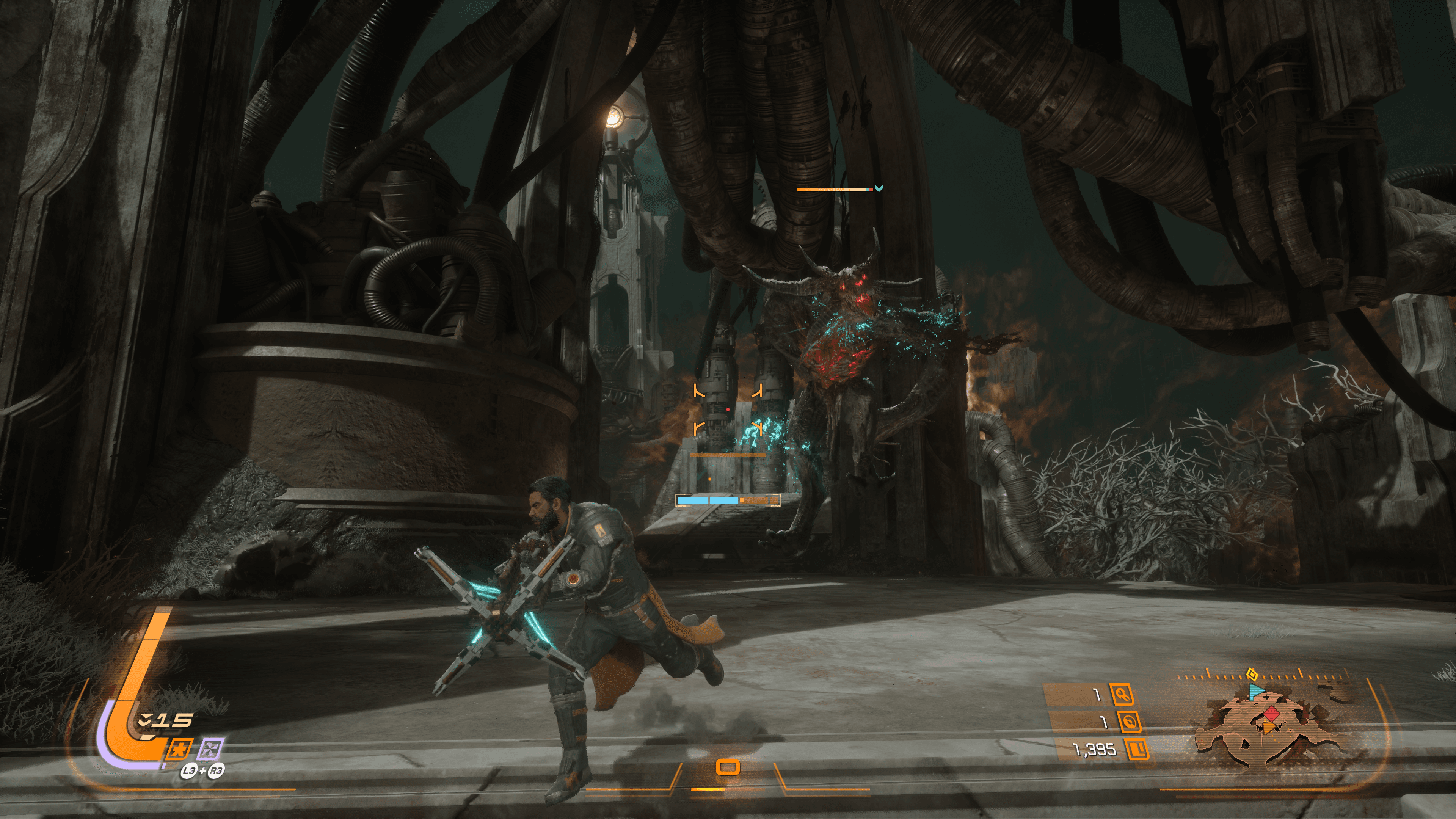
In Saros, you’re basically in combat 80% of the time. Every system revolves around it. You’re either fighting, or on your way to the next fight.
Outside of major boss encounters, most engagements throw multiple enemies at you all at once. You’re expected to snap into rhythm immediately: shoot, reposition, melee, shield, reposition again, shoot again, dodge… It sounds repetitive on paper, but in practice, it’s anything but. Every action is tied to timing and decision-making, and a single mistake can cause everything to fall apart.
What’s really worth highlighting is just how many tools the game gives you, and how each one genuinely matters. Your primary weapons are mostly ranged, but each one feels distinct, with its own firing rhythm and playstyle. On top of that, every weapon features two firing modes, and with the DualSense adaptive triggers, half-press and full-press inputs can be mapped to different functions. Switching between them feels intuitive, and honestly, just really satisfying to use.
Weapons also roll with randomized modifiers that directly affect gameplay. So when choosing a weapon, you’re not just looking at raw damage, you’re asking yourself: “Does this actually feel good to use?”
And yes, Returnal’s perfect reload timing mechanic makes a full return here. Once you lock into that rhythm, the flow of combat becomes noticeably smoother, pushing the entire experience to another level.
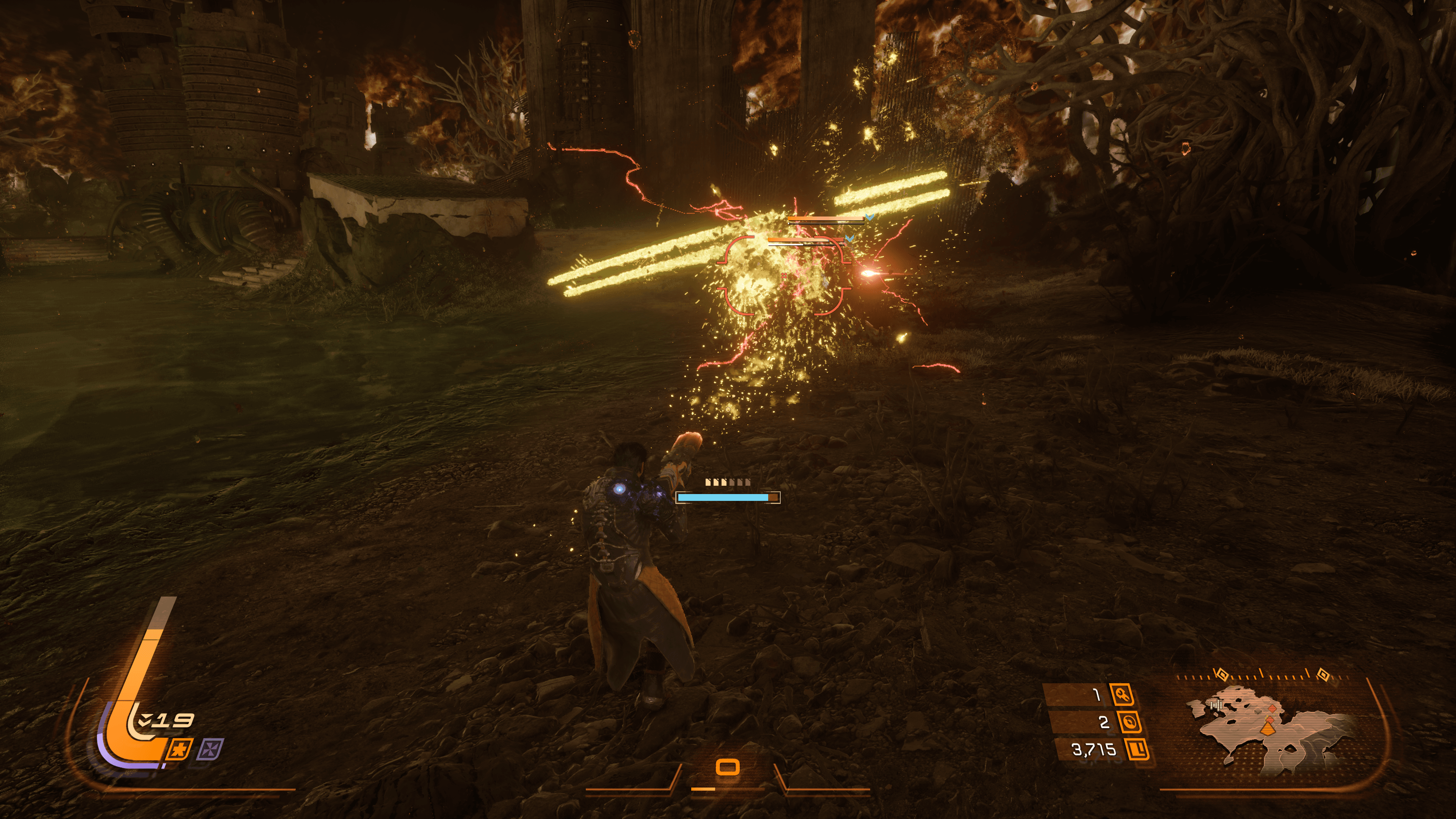
Beyond your primary weapons, you also have access to charged secondary abilities, or what are essentially high-impact alien “magic”… I mean, Power Weapons. These abilities pack serious firepower and are often your go-to tools for clearing the field or bursting down enemies in critical moments.
Replacing the katana-style melee from Returnal is the protagonist’s left-hand heavy punch, built into the suit. At first glance, it might seem like it’s mostly used for interacting with certain objects or unlocking specific paths, but in combat, it’s far more important than it appears.
When enemies are pushed into a staggered state after sustained fire, closing the distance and landing that punch will almost instantly execute them, regardless of how much health they have left. In practice, it becomes a key combat tool, not just an afterthought.
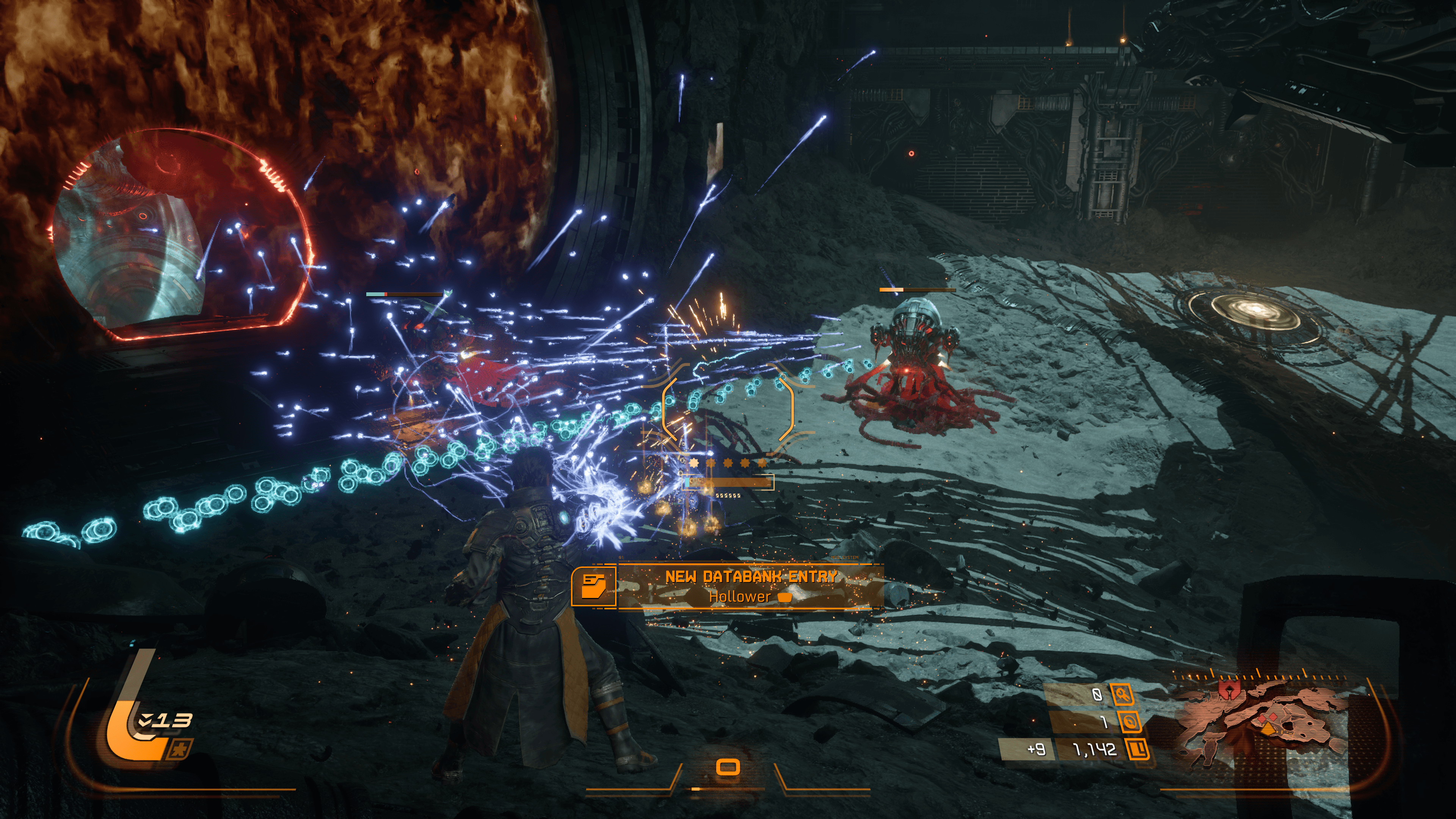
What makes it even more interesting is how this punch ties directly into the Soltari shield system.
The shield can absorb incoming bullet patterns and convert them into energy, which is then used to charge your Power Weapons. This turns defense into something far more active, it’s no longer just about surviving, but about resource management and rhythm control.
Mechanically, the shield requires a press-and-hold input to activate, which adds an extra layer of decision-making. When do you absorb? When do you dodge? Those choices become part of the flow of combat. For someone like me, who tends to play aggressively, I’ll admit I kept forgetting to use it at first, and definitely paid the price for it.
But once you get used to it, you start to realize just how much depth this system actually brings.
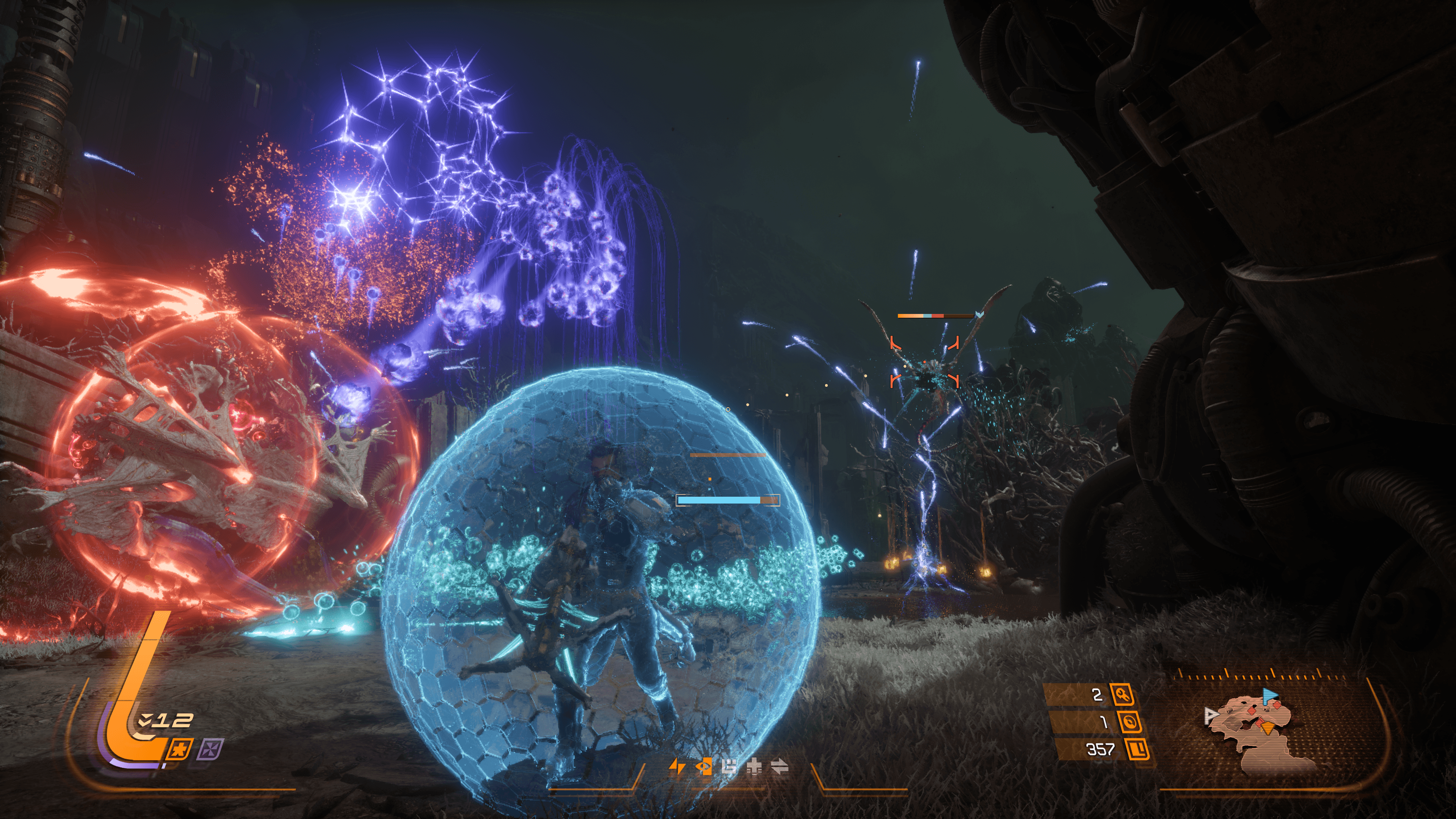
As you progress into the mid to late game, you can even unlock a parry mechanic tied to your punch, one that lets you reflect incoming projectiles, no kidding!
This is especially useful against those high-threat attacks that can’t be dodged or blocked. A successful parry doesn’t just neutralize the danger, it also deals massive counter damage based on the number of projectiles reflected. The payoff feels immediate and incredibly satisfying.
Then there’s the return of Returnal’s Adrenaline system. As long as you avoid taking damage and keep up your offense, your Adrenaline level continues to build, up to a maximum of five tiers. Each level grants additional bonuses, and at max stacks, you genuinely feel like you’ve become unstoppable.
But the downside is just as real. The moment you take damage, or even a fall, you lose everything of those adrenaline gave you. And considering how easy it is to fall off ledges or into pits in this game, it can feel pretty unforgiving. Sometimes it’s not even a mechanical mistake, you just get caught by the terrain, and suddenly your entire momentum resets.
Honestly… that part can be a bit frustrating. So, I learnt to not give a care about the adrenaline system, let it be a bonus if I'm good in combat.
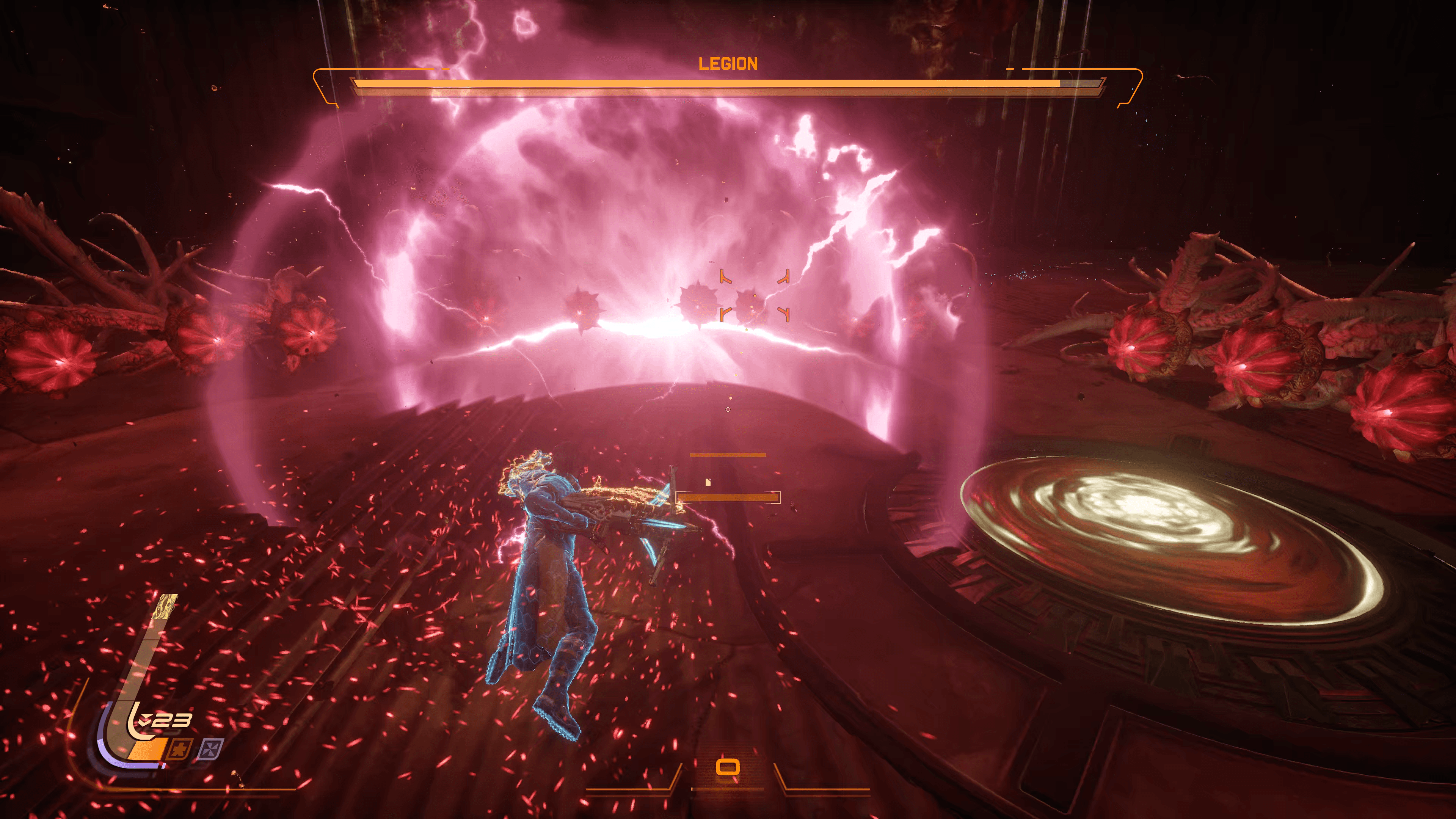
What really surprised me is that later on, Arjun’s suit can unlock an Overdrive ability, a powerful ultimate that charges through sustained damage output. The timing for this is crucial. It builds up slowly, but the payoff is huge. You’ll definitely want to save it for major encounters, especially boss fights, where it can instantly chunk down a massive portion of their health bar.
Of course, beyond weapons and mechanics, stats also play a major role in combat. Everything ties back to the three core attributes mentioned earlier: Resilience, Command, and Drive.
Most Artefacts provide bonuses aligned with these stats, but many also come with trade-offs, like weapon jams or reduced dodge capacity. This turns every pickup into a meaningful decision. It’s no longer just about pushing forward, you’re constantly thinking: “How do I want to approach this run?”
And honestly, as someone who’s always loved high-intensity action games, especially ones that demand speed, precision, and quick reactions, I genuinely feel like Saros’s combat system is almost tailor-made for players like me.
It doesn’t just carry forward the chaotic, bullet-heavy thrill of Returnal, it builds on it with layers of depth. Whether it’s the synergy between primary and secondary weapons, the split-second decisions between absorbing or dodging projectiles, or even the tactile satisfaction of landing each punch… Everything comes together in a way that kept me playing for hours without even realizing it.
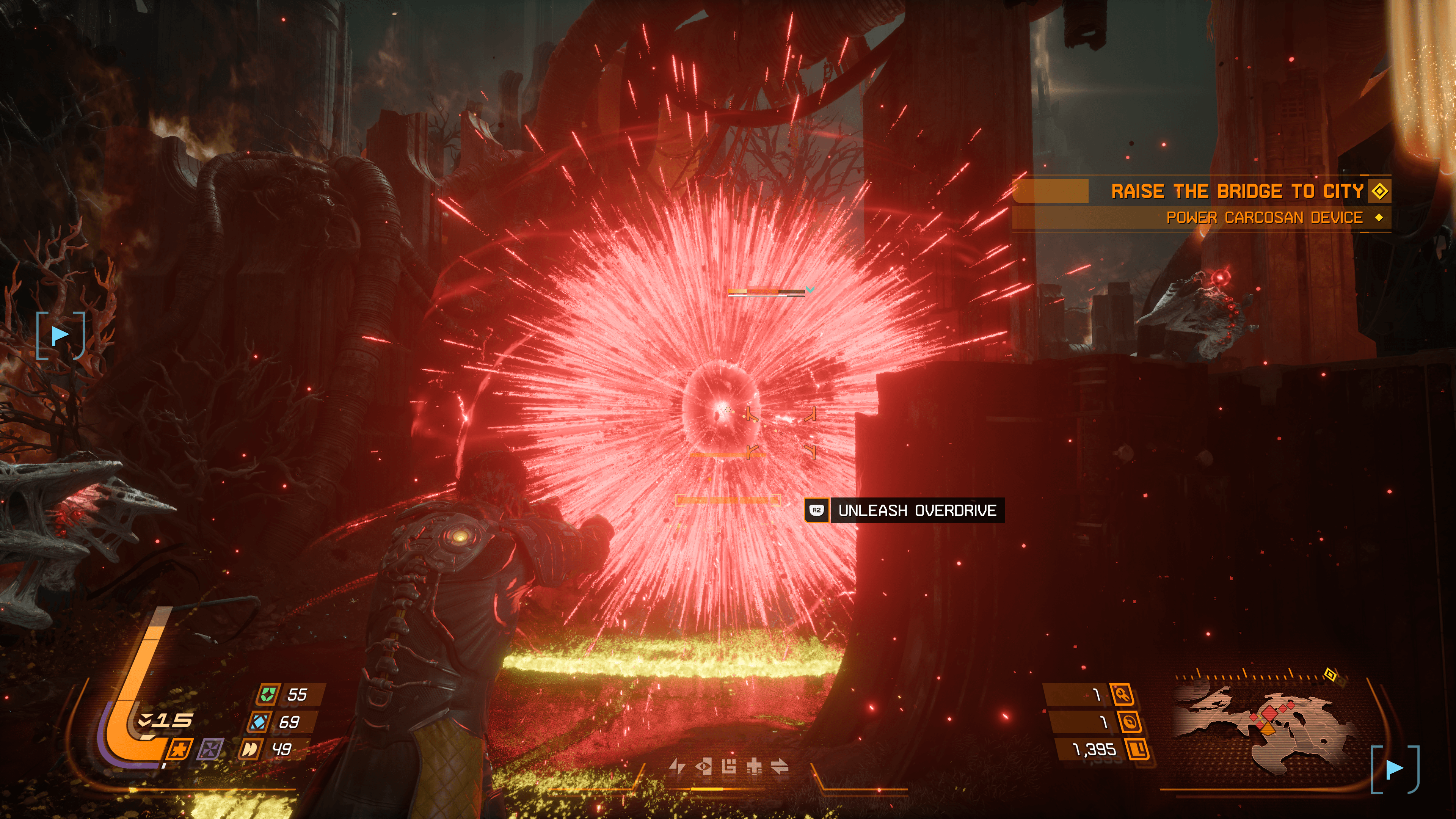
This combat system is honestly top-tier, there’s very little to nitpick. Everything tied to combat, movement, weapons, tools, progression, and stats, feeds into each other seamlessly, forming a system that’s engaging from start to finish. It’s the kind of design that keeps you hooked without even realizing how much time has passed.
That said, because it’s so fast, so dense, and so intense, I can also understand why it might be a bit overwhelming for some players. Whether it’s the execution difficulty or the sheer amount of combat information being thrown at you, if you’re not someone who enjoys staying constantly on edge, it can feel like a lot. But for me, that’s exactly the appeal.
That feeling where the pace is so fast your brain can’t fully keep up, and your body just reacts on instinct, that’s where Saros shines the most. At its core, the combat feels like dancing through danger. Every step could go wrong, and every moment keeps your heart racing.
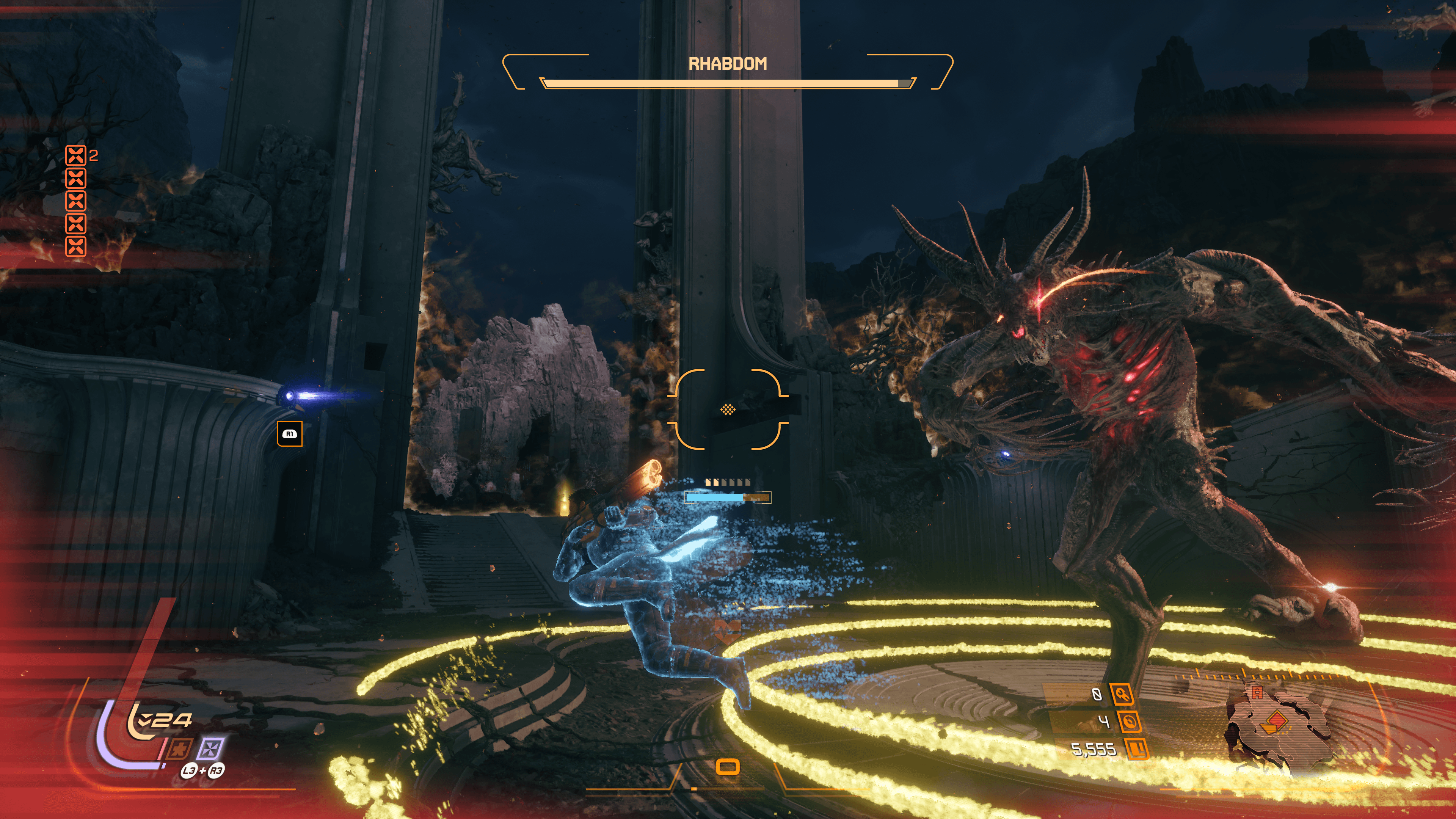
Enemy Design and the “Bullet Ballet” in Saros
The enemy design in Saros fully inherits, and further elevates the bullet-hell combat style established in Returnal. The developers call it “Bullet Ballet,” and honestly, that description couldn’t be more accurate.
Carcosa may be a planet shaped by the collapse of a once-great civilization, but the creatures and machines that remain are anything but lifeless. On the battlefield, they exhibit a terrifying sense of aggression, paired with an almost overwhelming visual spectacle of firepower.
Yes, this is a bullet hell. A high-pressure arena where movement and decision-making are everything. Enemies here don’t just fire projectiles at you, they choreograph them. Each encounter feels like a carefully constructed pattern, a sequence of attacks that demands both quick thinking and precise execution. Almost every enemy has its own “bullet language,” a distinct rhythm you have to learn and adapt to.
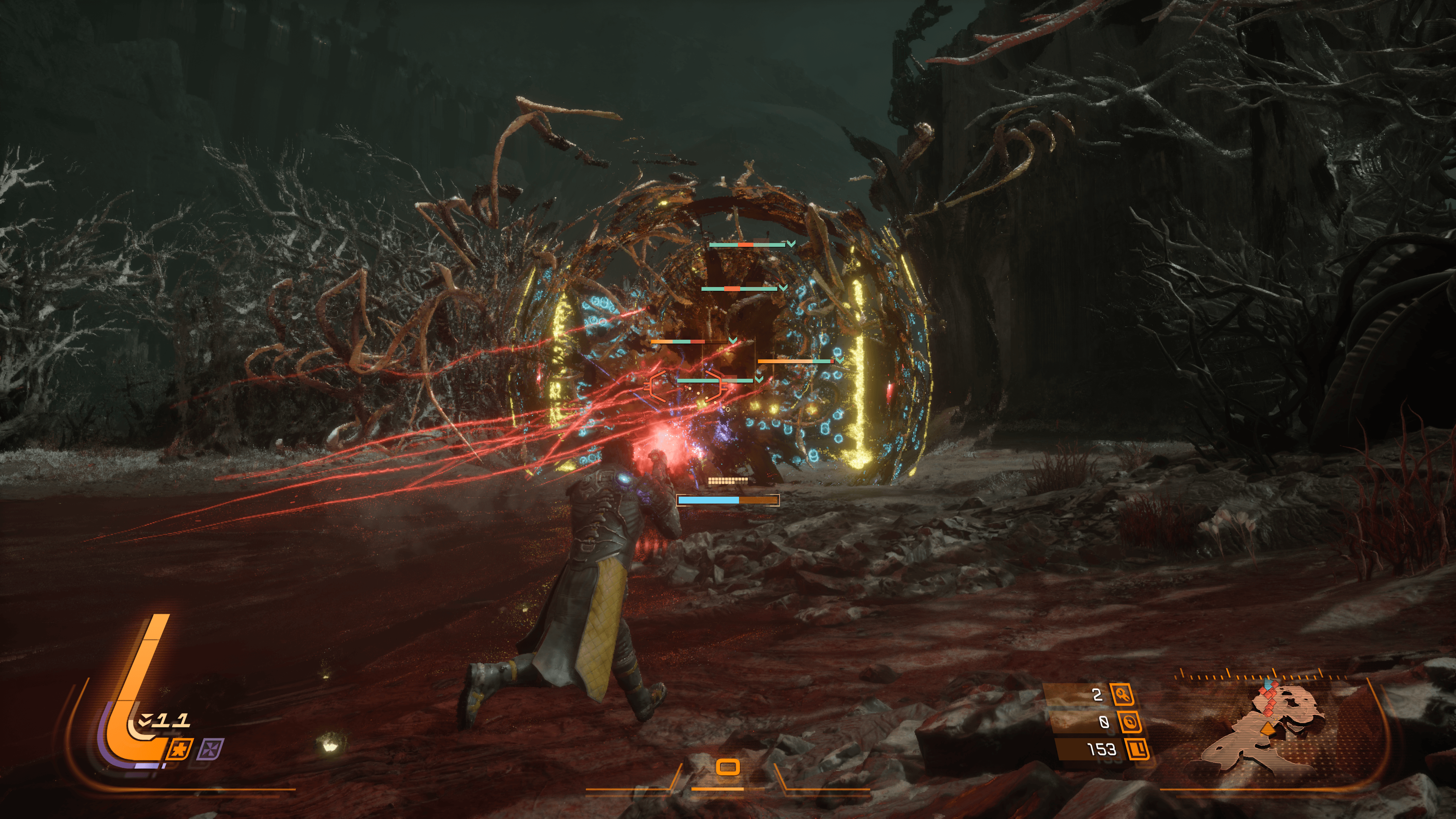
Color plays a key role in how you respond: Blue projectiles can be dodged or absorbed using the Soltari shield; Purple projectiles track the player, constantly pressuring your positioning; Yellow projectiles can’t be blocked, requiring precise dodging; Red projectiles can neither be dodged nor blocked, your only answer is to perfectly parry them using a late-game ability.
Interestingly, the game also includes options that allow players to customize projectile colors, making it easier to distinguish between these attack types depending on personal preference.
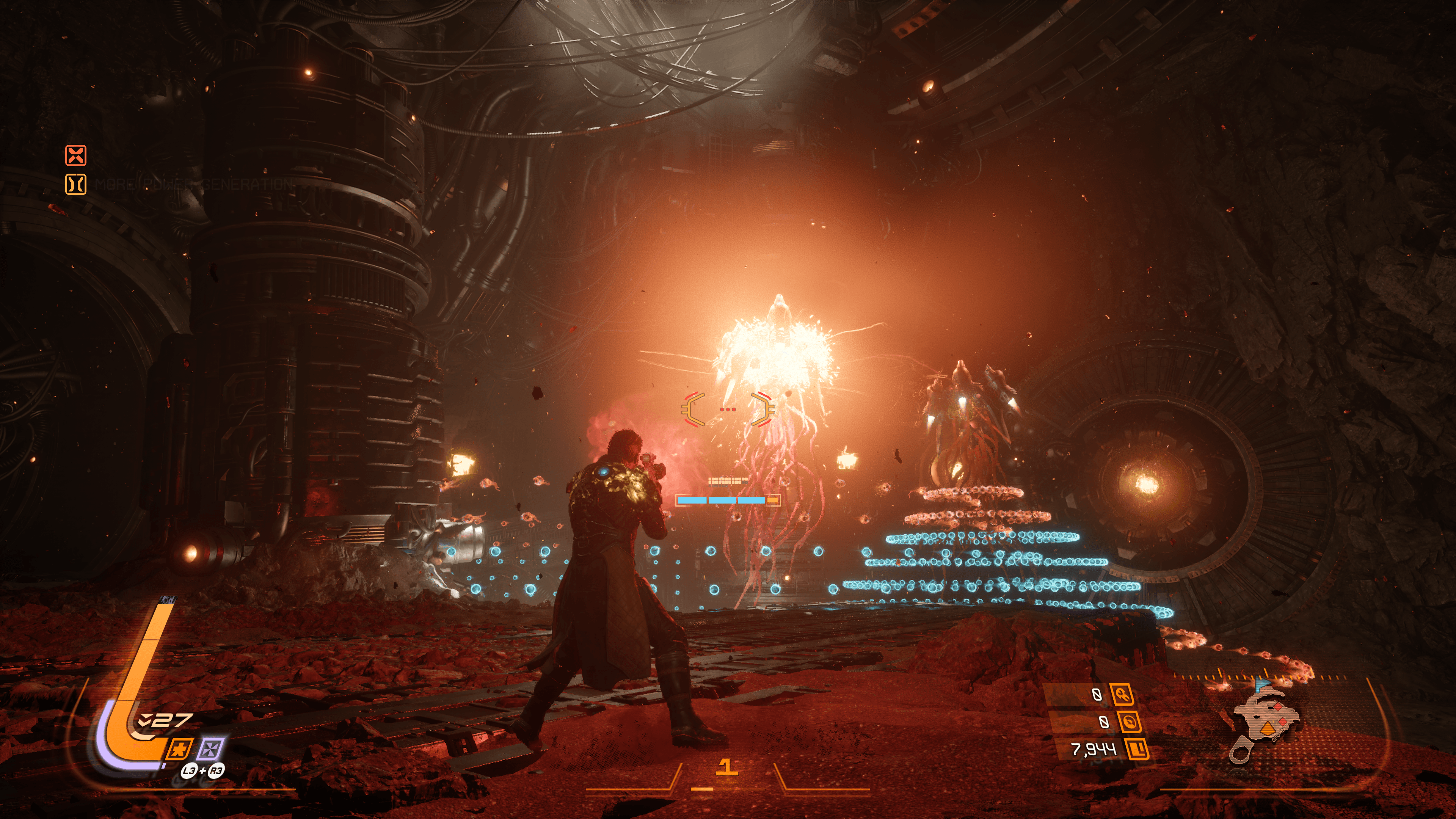
These bullet patterns aren’t just thrown out randomly, they’re arranged in varying formations, angles, and sequences, appearing simultaneously or layered on top of one another. Every encounter feels like a procedurally generated dance routine, one where you have to read the pattern in real time and react on instinct.
If that were all, it’d already be demanding, but Saros loves to mix things up. Multiple enemies often appear at once, forcing you to dodge one pattern while immediately dealing with another coming from a completely different direction. The pressure stacks fast, and there’s rarely a moment to fully reset.
At the same time, enemy placement across each biome feels deliberately tuned. While enemy types and numbers are randomized, the overall difficulty consistently sits in that sweet spot, you’re never comfortable, but you’re also not completely overwhelmed. It’s a very fine balance, and the game handles it impressively well.
As for elite enemies… that’s a whole different story.
Higher health, heavier damage, denser bullet patterns, and often backed up by smaller enemies at the same time. The moment they appear, the battlefield tension spikes instantly. These encounters aren’t just about raw stats, they’re layered, multi-directional pressure tests that push both your execution and decision-making to the limit.
Every time you come out on top, it genuinely feels like you’ve passed a stress test.
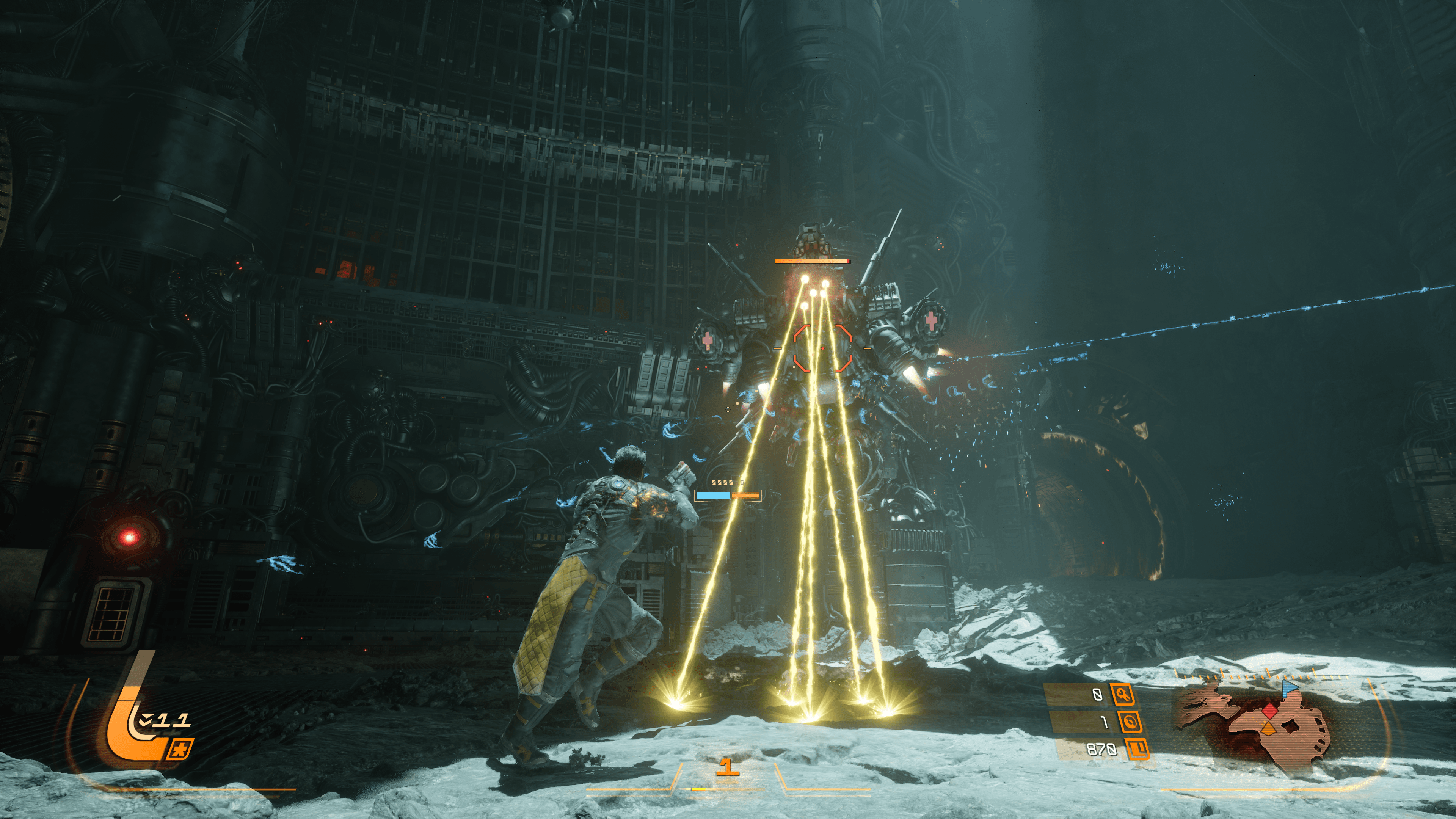
But when it comes to the true pinnacle of enemy design, nothing compares to the Overlord boss fights.
These massive, grotesque, almost incomprehensible alien entities represent the ultimate climax of the game’s “bullet ballet”. Every encounter demands that you bring together everything you’ve learned, like when to dash, when to raise your shield, which abilities to commit to, and whether you can time your energy build-up perfectly for an Overdrive finish.
You’re not just fighting a boss, you’re enduring a trial of skill and patience. I still remember one moment vividly, getting a boss down to its last sliver of health, while I was just as close to death. One final exchange, one final decision… and I went down first. That mix of frustration and the immediate urge to try again, that “I almost had it” feeling, is something only a handful of games manage to capture this well.
By the mid to late game, Overlord bosses fully embody what “bullet ballet” truly means. Their attacks can cover nearly the entire arena, forcing you to weave through impossibly tight gaps with precise movement and timing.
And yet, it never feels unfair. Because beneath the chaos, there’s always clarity, patterns you can read, rhythms you can learn. That balance between pressure and readability is what makes these encounters so addictive.
Every boss fight feels like a carefully choreographed performance, and you’re the one stepping onto the stage to face it head-on.
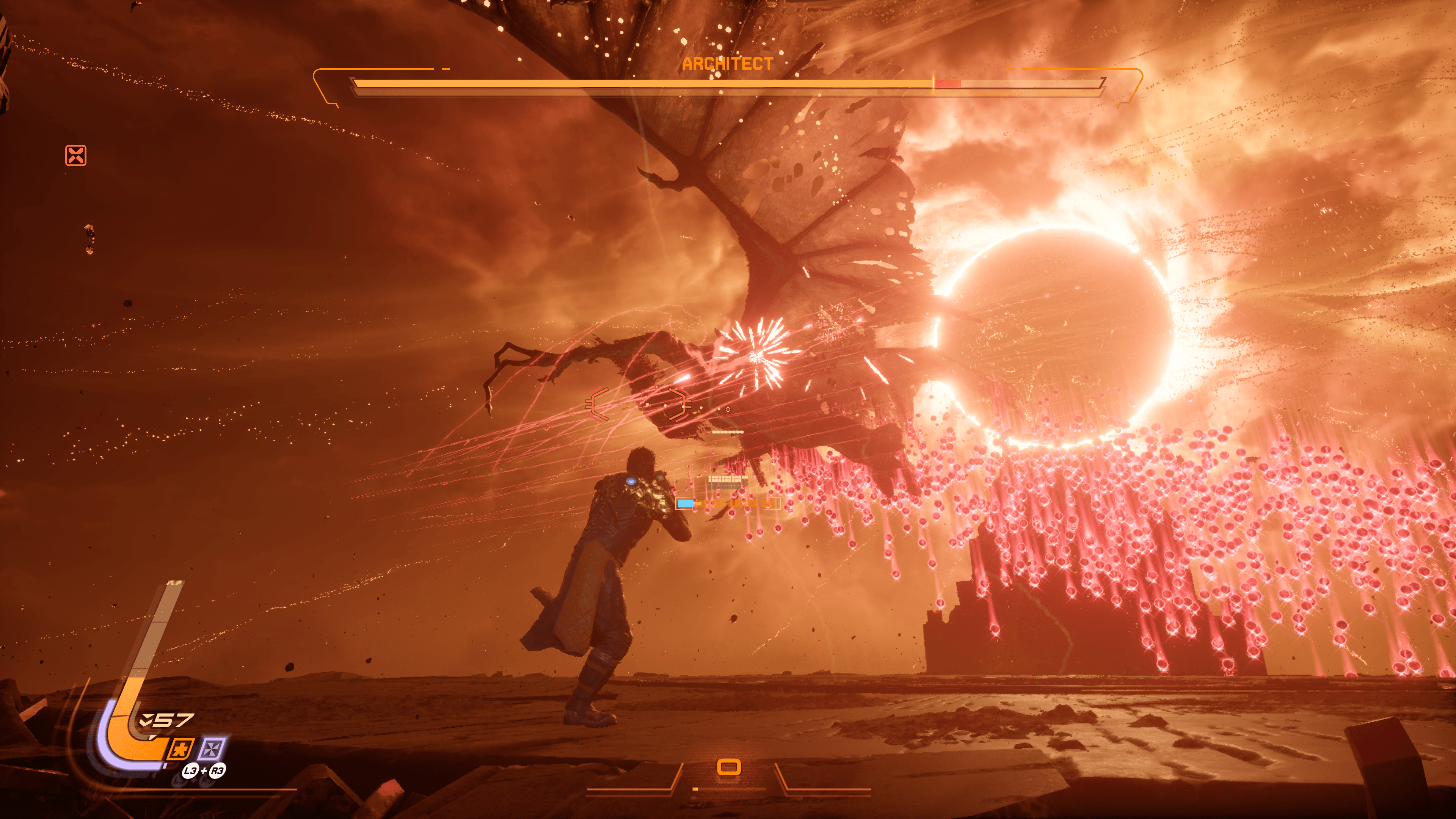
The “Eclipse” System in Saros
If there’s one mechanic that truly pushes Saros’s difficulty to its peak, it’s not the bosses, nor the bullet ballet, it’s the ominous-sounding Eclipse system. This isn’t just a narrative element; it’s a fundamental shift in gameplay rhythm.
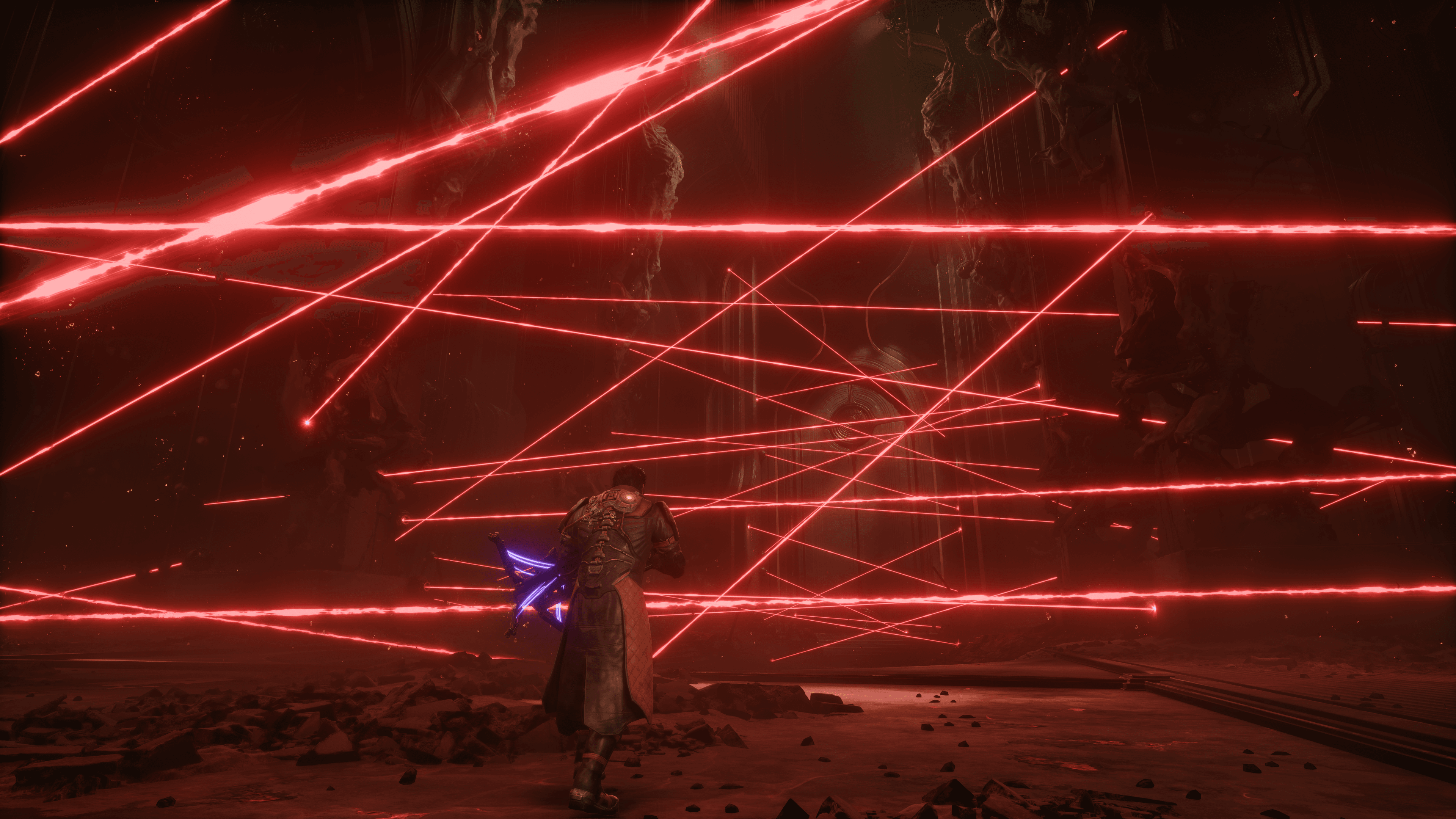
Carcosa feels like it exists in two overlapping states. The moment you interact with certain eerie statues, the entire world transforms, washed in a haunting crimson hue, with the soundtrack shifting abruptly. The atmosphere goes from tense to overwhelming, and the pace of the game ramps up dramatically.
This isn’t just a visual change, it’s a system-wide escalation.
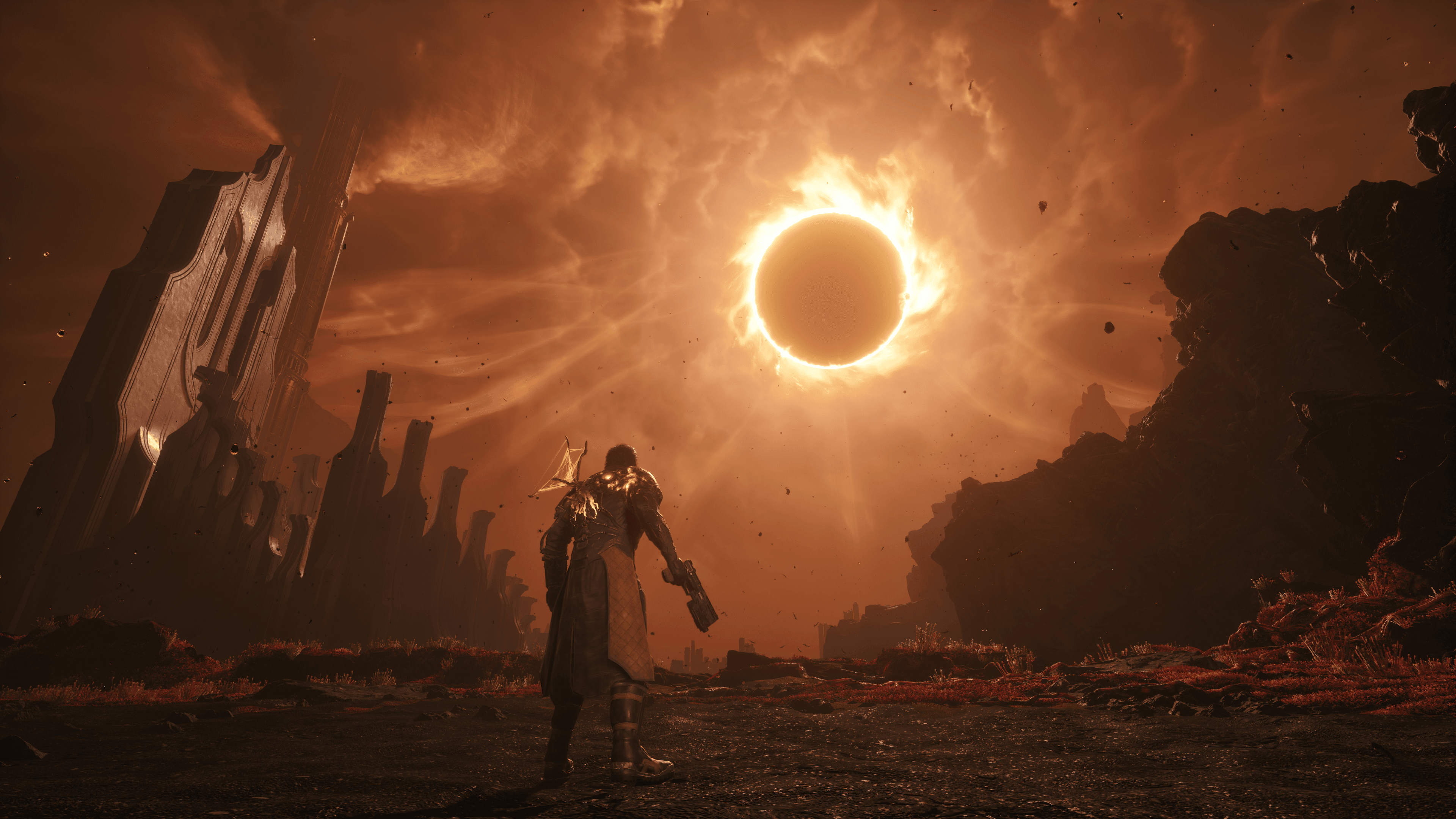
In this state, the world is consumed by an ominous Eclipse. And this isn’t just a visual effect, it effectively pushes the entire game into a hard mode, or more accurately, a nightmare mode.
Under Eclipse conditions, all enemies are significantly enhanced. Their firepower and mobility spike dramatically, and they begin using Corruption projectiles. These attacks are especially dangerous, they can’t be dodged, and they can’t be absorbed by the Soltari shield. You just have to take the hit.
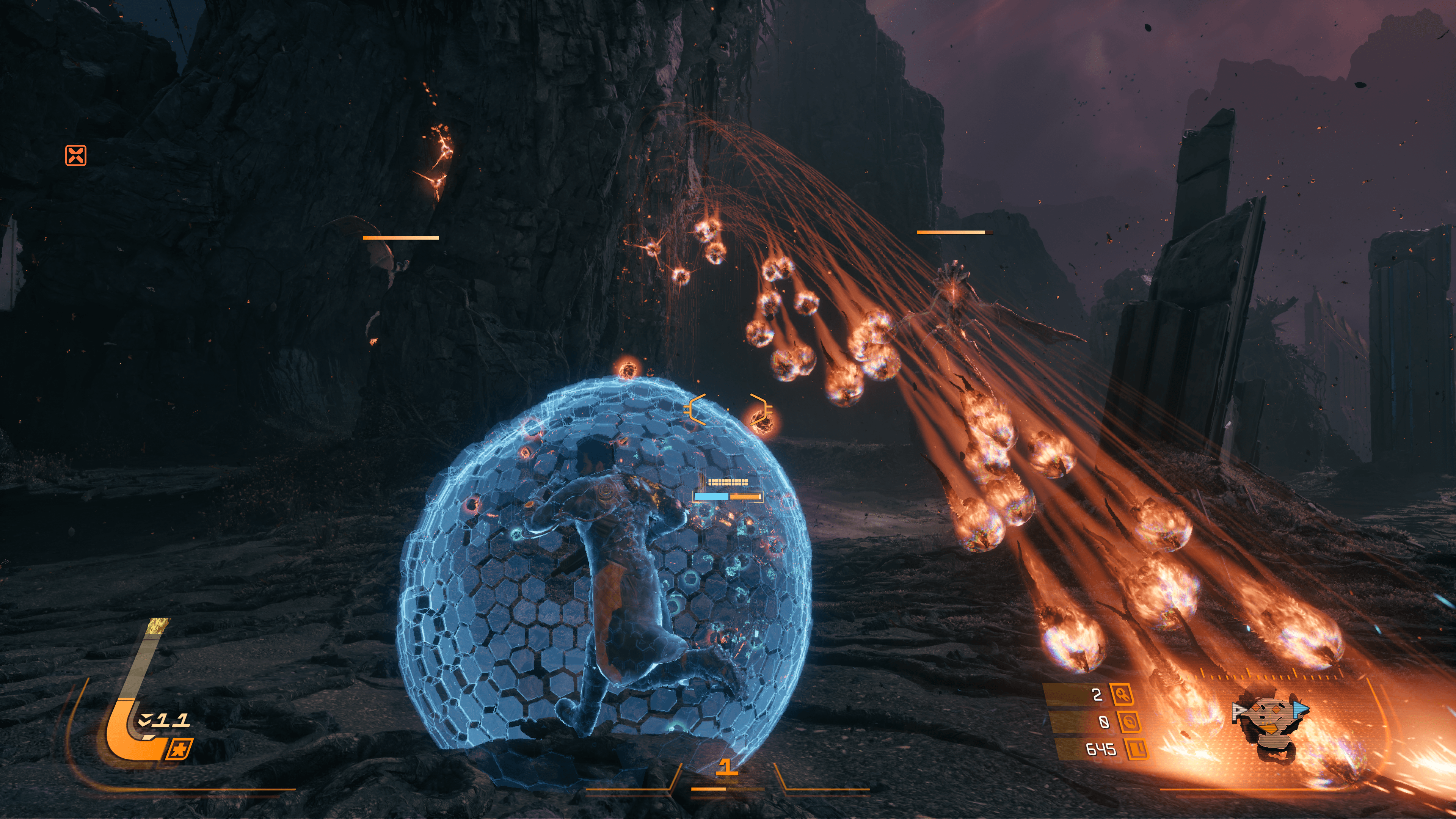
On top of that, all randomly generated Artefacts are also affected by the Eclipse. Their effects become stronger but now come bundled with harsher trade-offs.
It’s no longer just about gaining power. It’s about making difficult choices between buffs and debuffs. You might gain a powerful damage boost after dashing, for example, but at the cost of taking significantly higher fall damage after jumping. Every pickup becomes a calculated risk.
In most runs, before reaching a biome's final boss, you’ll encounter a decision point: whether to trigger the Eclipse. It’s not forced, it’s a temptation. You can choose the safer path and proceed steadily, or you can open that Eclipse gate and step into a far more dangerous encounter in exchange for greater rewards.
And it doesn’t stop there. Some maps even include mechanisms that allow you to manually trigger the Eclipse at any time, effectively throwing yourself into the fire by choice. This design turns the game’s pacing into something non-linear, driven by your own willingness to take risks.
Do you dive in now to farm resources? Or play it safe, survive the run, and come back stronger later?
Once you choose to take that risk, the rewards are very real. Higher Lucenite drop rates. Stronger Artefacts. Better chances at high-tier weapons… You find yourself surviving by the skin of your teeth, while at the same time greedily trying to squeeze out just a little more before you fall. And that’s where this system truly shines, it makes you want to take the risk, because you know it’s worth it.
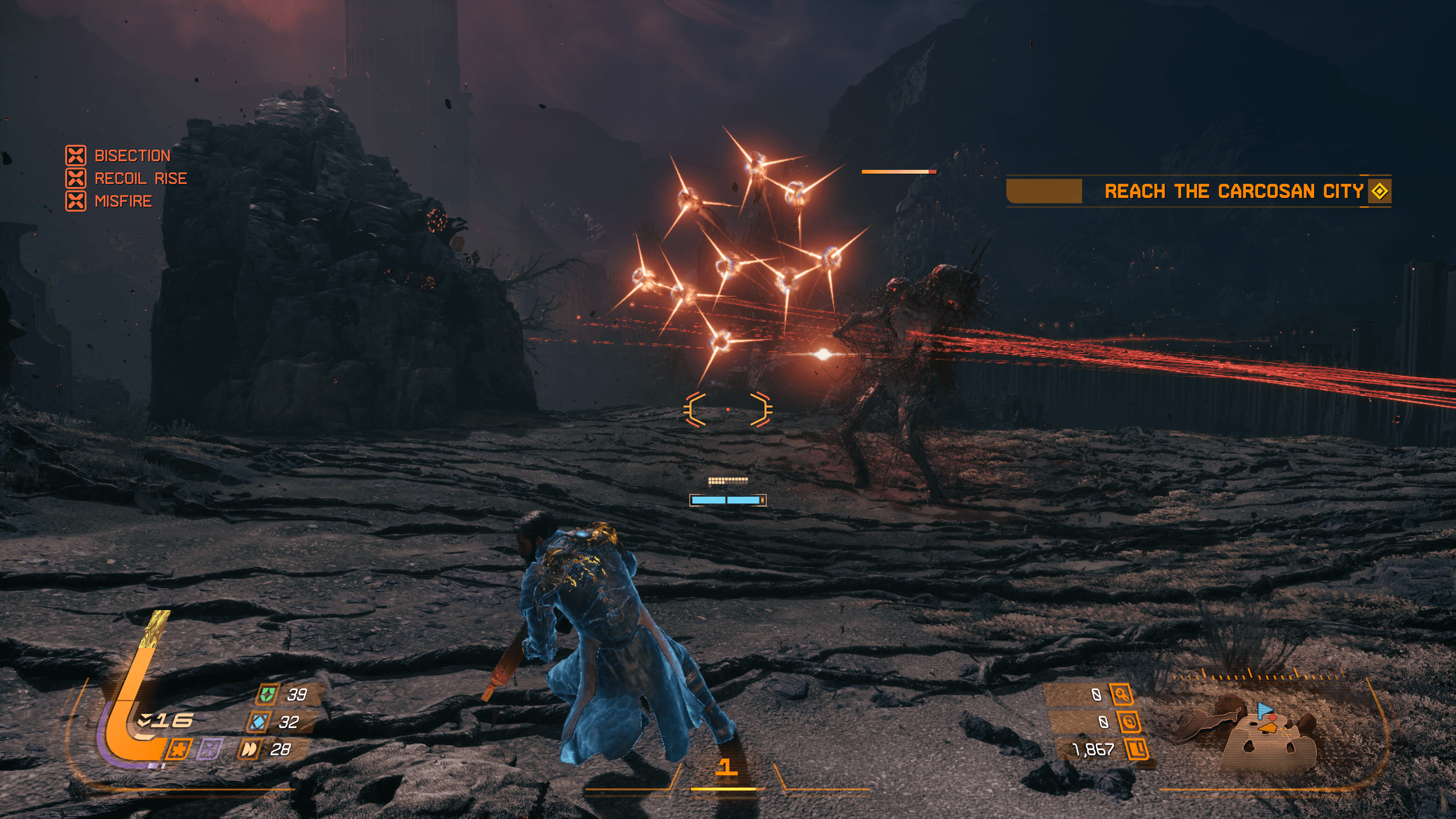
But make no mistake, the Eclipse isn’t just about boosting enemy stats.
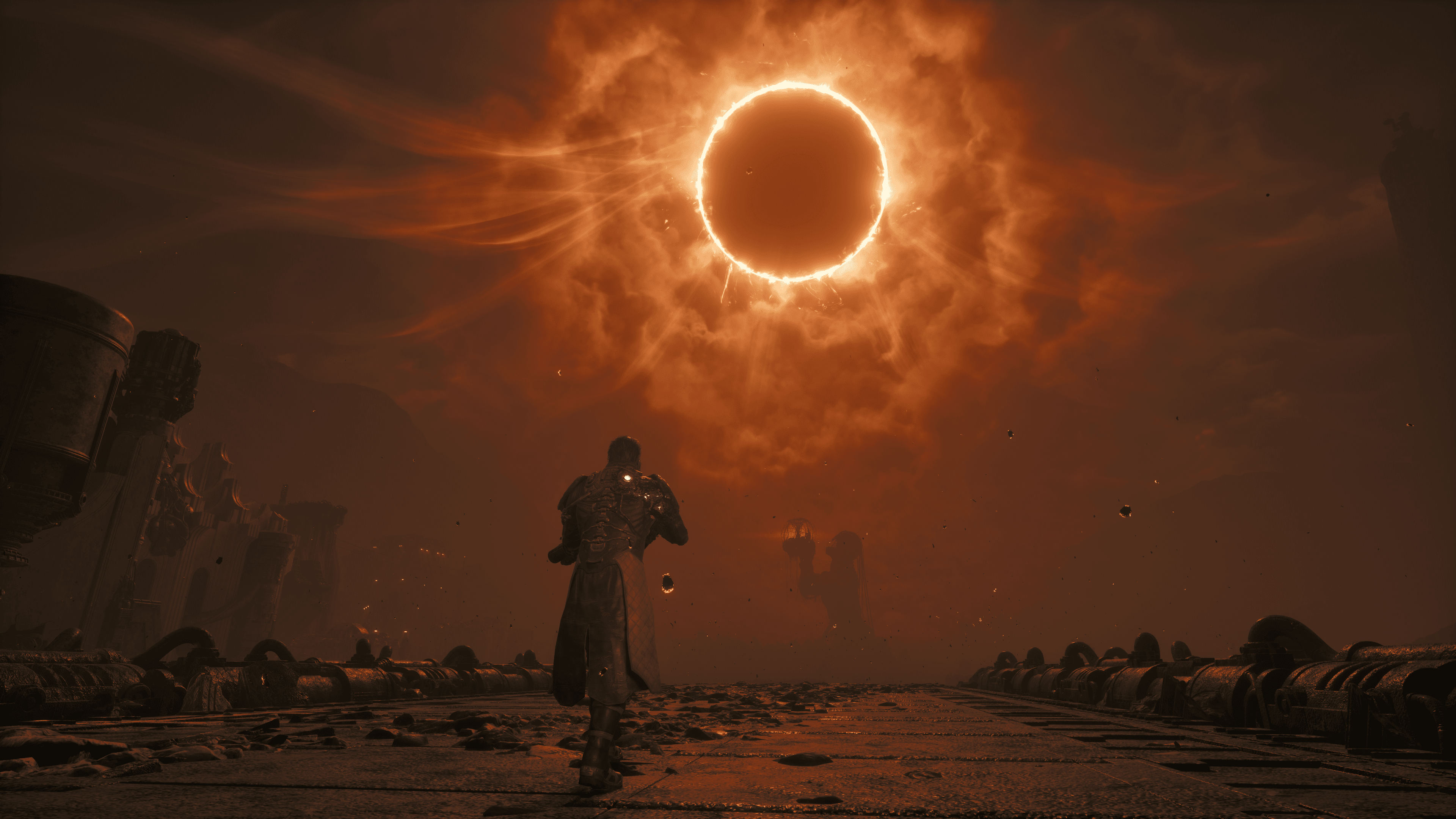
What really stands out is how it completely transforms the visual identity of the world. The sky turns a burning orange-red, the environment shifts into something almost hellish, and the terrain feels barren, oppressive, and full of quiet despair. Every corner carries tension, you’re constantly under a sense of atmospheric pressure.
This isn’t just a gameplay escalation, it’s an emotional assault.
At times, the visuals are so striking, so hauntingly beautiful, that you might instinctively slow down just to take it in… only to get immediately overwhelmed by a wave of incoming fire the next second. It’s also worth noting that Eclipse isn’t limited to scripted story moments. It can appear dynamically across different biomes, catching you off guard when you least expect it.
Early on, I went in with a bit of confidence, thinking my experience with Returnal would carry over. But the moment Eclipse kicked in, the first elite enemy I encountered completely wiped me out.
It was a harsh reminder, this isn’t something you can just dodge your way through.
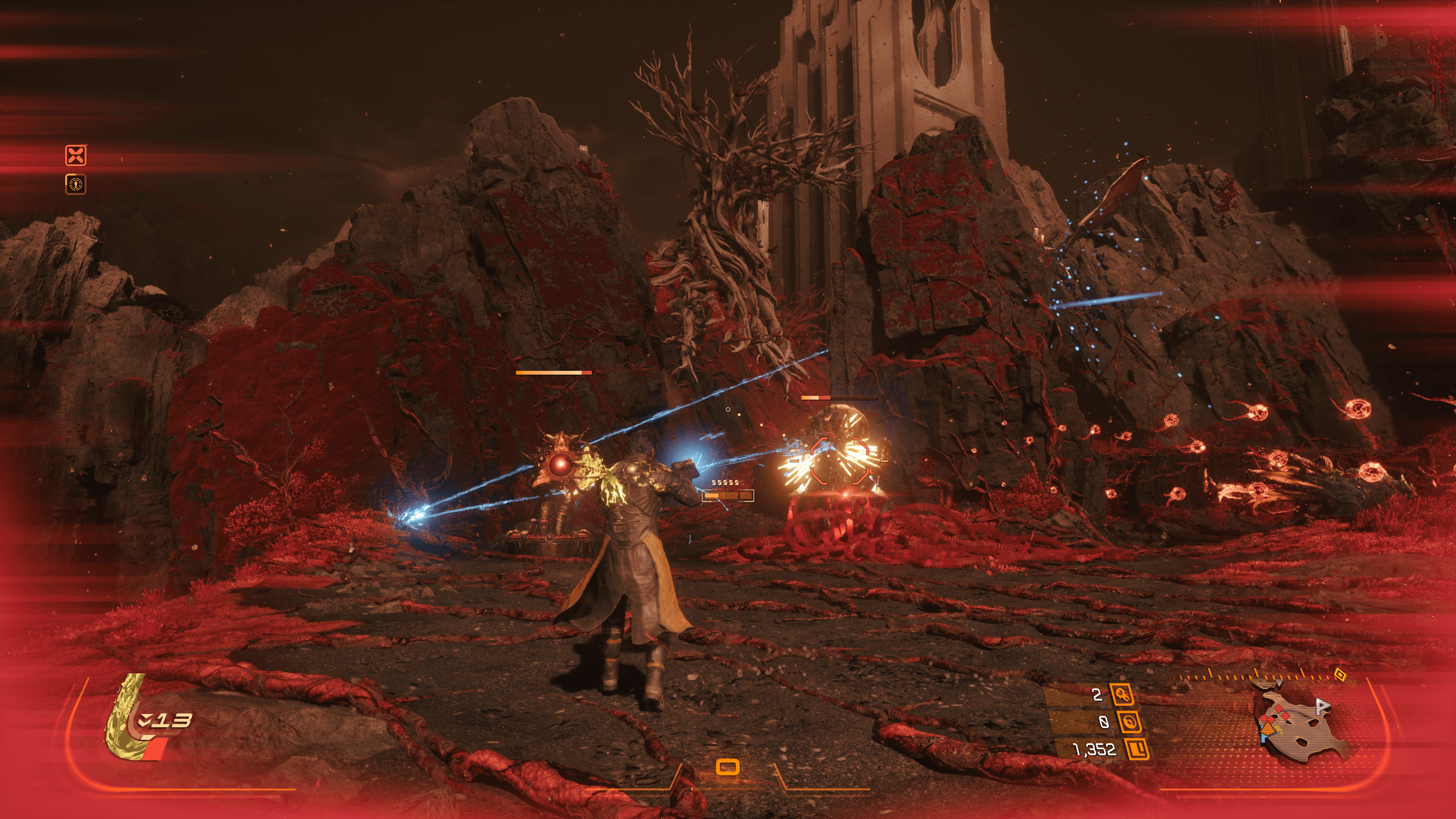
The Eclipse system feels genuinely fresh within the roguelike action space, and more importantly, it stands out as one of the most elegant, brutal, and successful points where Saros’s gameplay and narrative truly intersect.
While most biomes will eventually push you toward an Eclipse phase before facing the Overlord, the game smartly includes plenty of optional areas that follow a simple philosophy: you don’t have to engage, but if you do, the rewards are greater.
It’s a design I really appreciate. Instead of forcing difficulty through inflated enemy stats alone, it gives players the agency to take on high-risk, high-reward challenges at their own pace. It respects the player’s rhythm while being completely honest about the consequences, something far more compelling than simply scaling numbers upward.
And the impact of Eclipse goes far beyond just making the game harder. Once it’s active, the change is holistic. Enemy behaviors shift, your combat approach needs to adapt, resource priorities change, and even your movement rhythm and dodge timing have to be recalibrated. It’s not just about increasing difficulty, it’s about temporarily transforming the game into something else entirely.
More importantly, it doesn’t just affect systems. It’s deeply tied into the game’s narrative weight (no spoilers), as well as its visual presentation. The world itself feels different, heavier, more oppressive, more present. The shift is so impactful that it almost feels like you’ve stepped into an alternate version of the game.
What’s especially interesting is that the name Saros itself comes from an astronomical term referring to the cyclical pattern of eclipses. It’s not just a stylistic choice, it directly reflects the game’s core loop: death, rebirth, progression, and repeated challenge.
In that sense, the Eclipse system becomes a perfect microcosm of the entire experience, pulling you into a cycle of failure and growth, where every setback pushes you toward the next attempt.
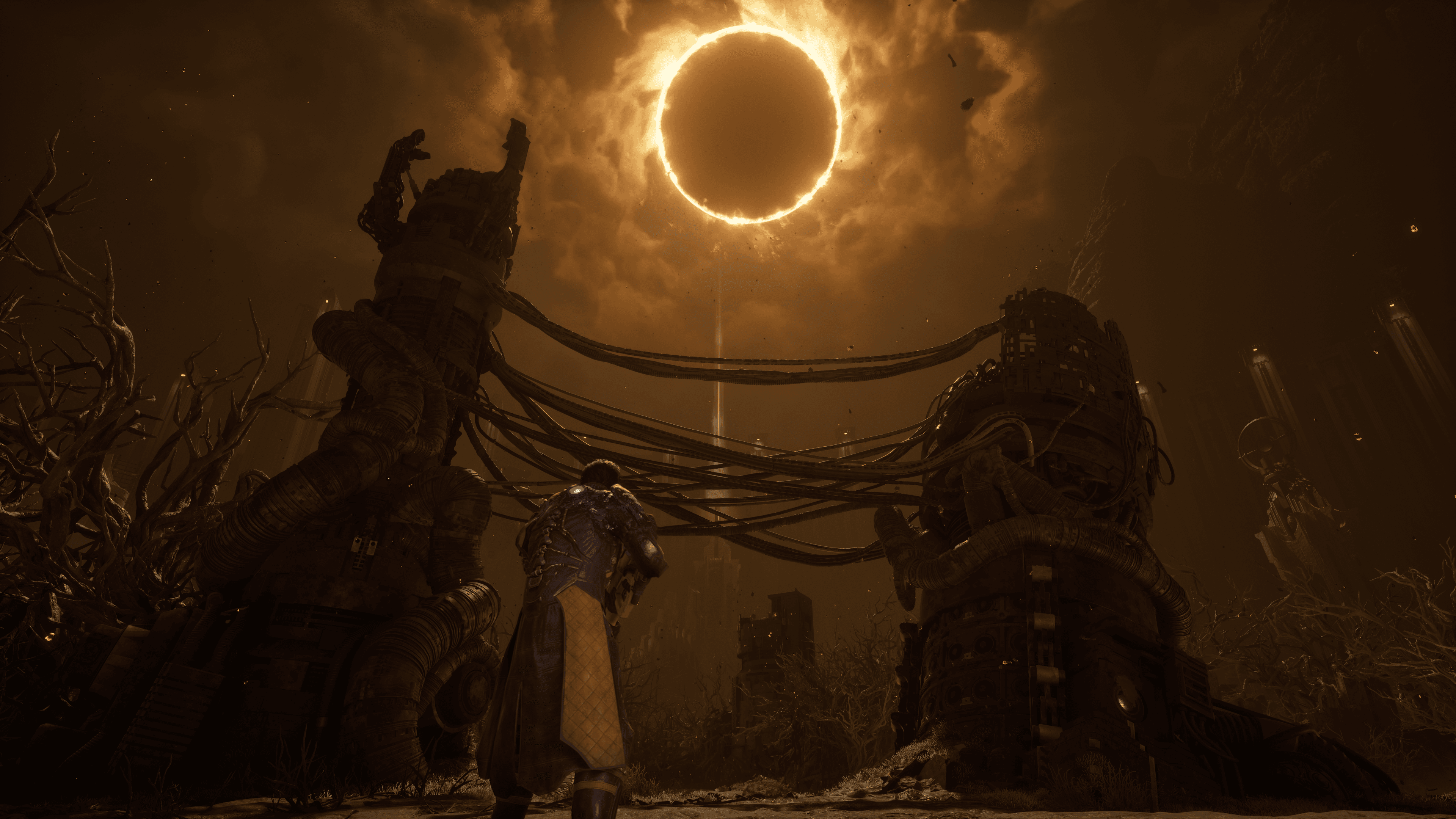
Audiovisual Presentation in Saros
The moment you get your hands on Saros, you’ll immediately feel that familiar impact, that sense of “this is what a PlayStation first-party production looks like.” From visuals and combat feedback to overall optimization and seamless DualSense integration, everything just clicks. If you’ve played flagship titles like God of War, The Last of Us, or Spider-Man, you’ll know exactly what I mean.
And in this case, Saros might just be one of the best-looking games on PS5 right now, arguably the best.
The level of detail in its environments, the dynamic lighting, and the sheer density and clarity of its particle effects all come together in a way that makes every frame feel worth admiring. There are moments where you’ll genuinely want to turn off the HUD just to take it all in.
What’s even more impressive is how it holds up under pressure. During intense combat, when the screen is filled with enemies and layered bullet patterns, Saros still manages to maintain a stable 60 FPS on my base PS5. The experience remains consistently smooth, with virtually no noticeable frame drops.
Combined with the game’s already exceptional atmospheric design, the overall visual experience becomes something almost overwhelming, a kind of oppressive beauty that feels as stunning as it is suffocating.
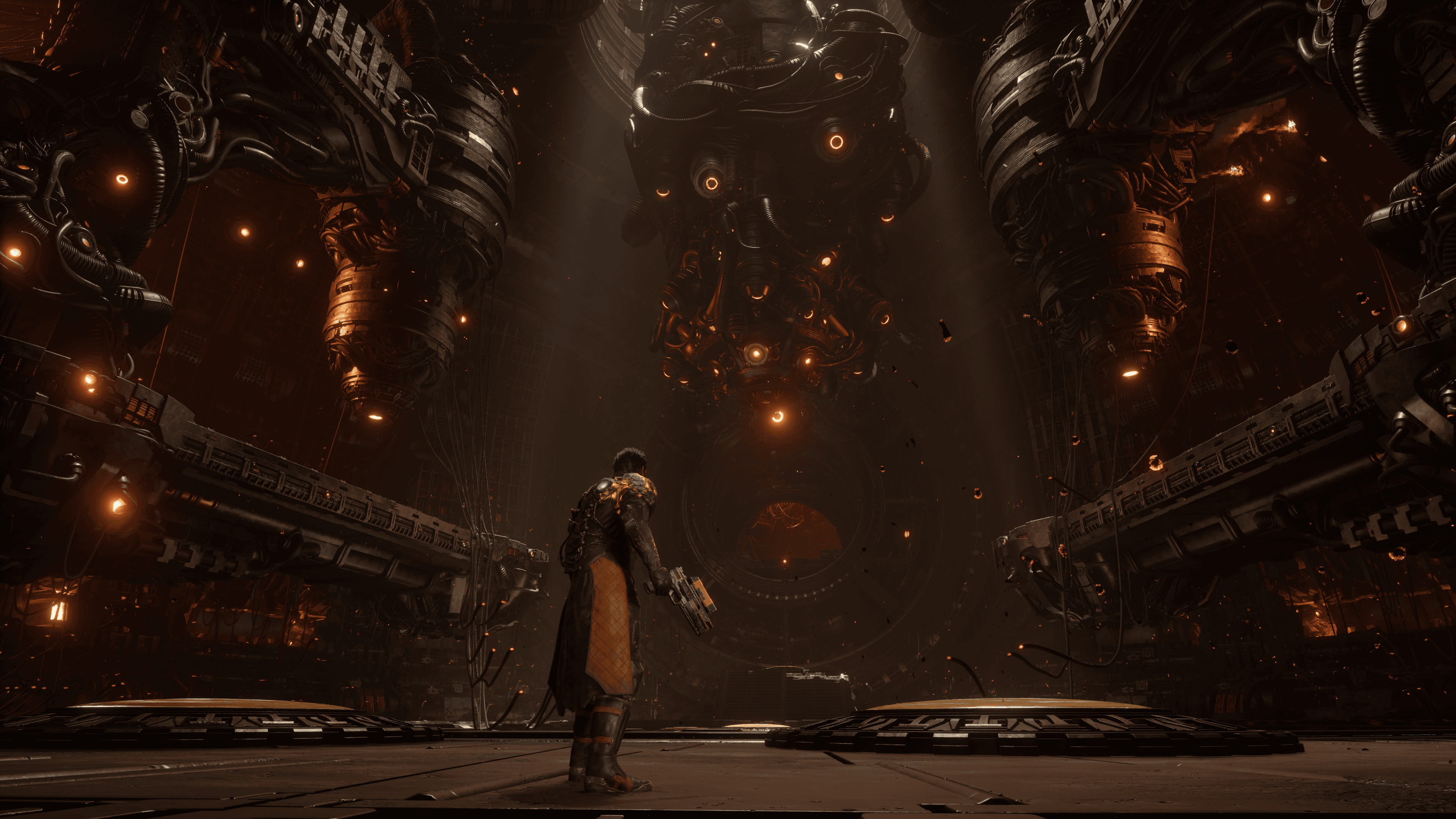
The never-ending particle effects aren’t there just to overwhelm your eyes, they’re carefully tuned in terms of color, brightness, and distribution, ensuring clarity even in the most chaotic moments. Unlike some games where effects eventually blur into visual noise, Saros maintains a strong sense of readability throughout.
That said, it’s still a bullet-heavy shooter built around dense visual effects. For players who are sensitive to high-intensity visuals, bright color contrasts, or even mild trypophobia triggers, it’s definitely something to keep in mind.
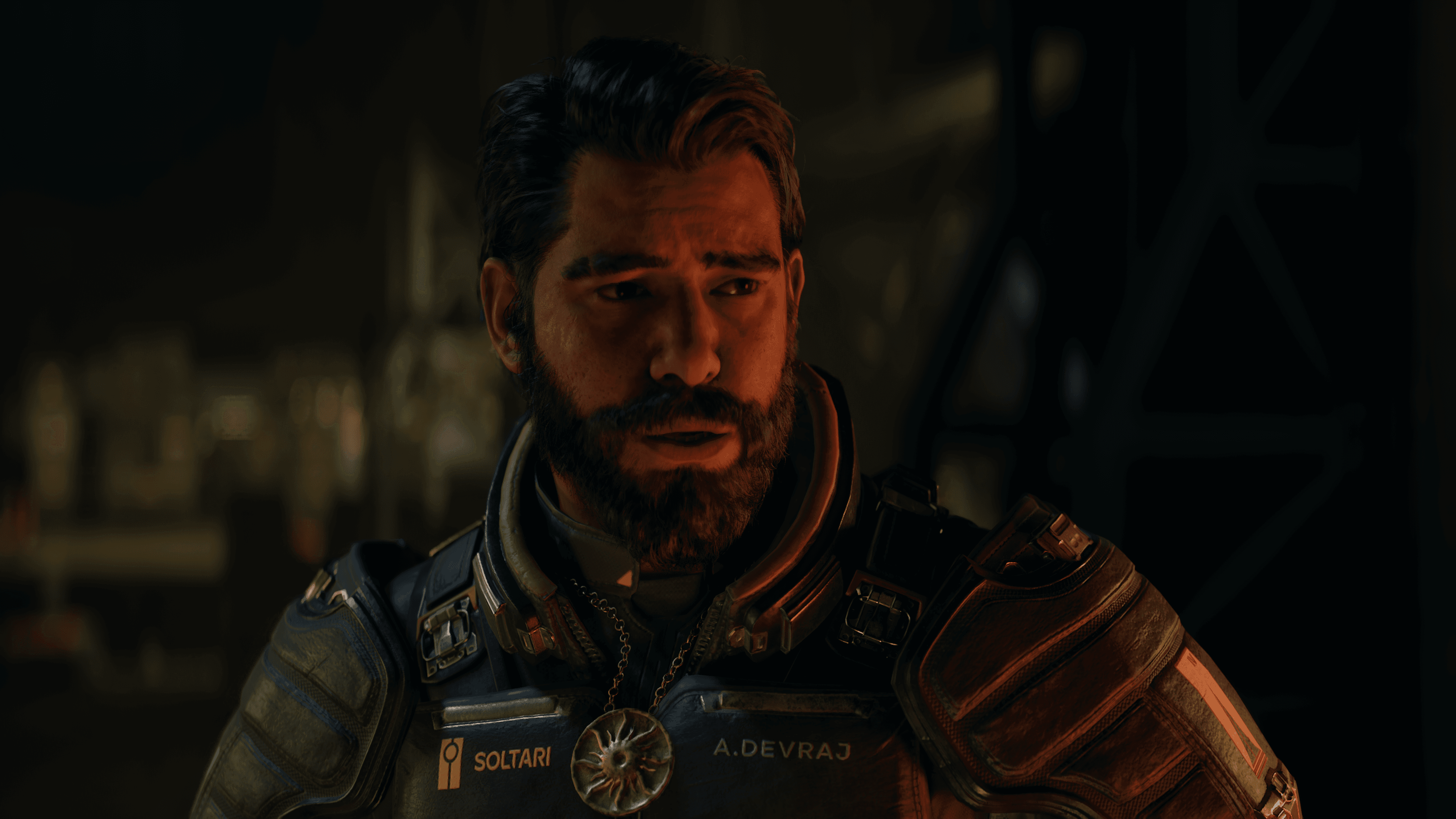
Character modeling is just as impressive. Facial expressions during story moments are especially well done, but to be fair, the character you’ll be seeing most of the time is the protagonist himself. Arjun Devraj may be a middle-aged man by design, but with that rugged look and signature stubble, he easily earns a spot among the most iconic “bearded protagonists.” Honestly, he’s the kind of character who could go toe-to-toe with Kratos in sheer presence.
The level of detail in his face is remarkable, you can clearly see the texture, density, and layering of his beard. It’s far beyond anything that could be passed off as simple texture work. And thanks to Rahul Kohli’s performance, the character carries real emotional weight. From the opening moments, especially that breakdown scene, his voice, expressions, and body language all convey a heavy, almost suffocating sense of pressure. Considering you control him for roughly 90% of the game, that level of performance does a lot of the heavy lifting for the narrative.
The music and sound design complete the experience beautifully. During exploration, the soundtrack leans into something subtle and atmospheric, lonely, mysterious, almost like drifting through an endless void. But once combat kicks in, the tempo ramps up immediately, blending electronic and industrial elements to drive your adrenaline higher.
More importantly, the music doesn’t just sit in the background, it actively pushes the pace and pulls you into the flow of battle.
As for sound effects, honestly, I’d give them full marks. From the punchy feedback of each weapon, to the sound of enemy projectiles slicing past your ears, to even the subtle differences in footsteps across various surfaces, everything is handled with incredible precision.
And when paired with the DualSense controller’s haptic feedback and adaptive triggers, it all comes together on another level. Every shot fired, every dash, every hit you take, it’s all translated directly into your hands. That sensation, like the entire battlefield is happening right in your palms, is easily one of the most addictive parts of Saros’s audiovisual experience.
Saros Final Verdict
After countless runs on Carcosa, a planet seemingly locked in an endless eclipse, where I’ve fallen again and again, only to stand back up, I think it’s clear that Saros is a PlayStation first-party title with exceptionally defined strengths, and ones that are strong enough to stand nearly unmatched.
Its near-flawless responsiveness, a combat system so fast your mind can barely keep up yet your body reacts instinctively, and a progression loop tightly woven into its roguelike structure all land squarely in Housemarque’s signature “gameplay-first” philosophy. Every time you weave through a screen filled with projectiles, defeat a major boss, or return to base with valuable resources, the sense of growth is immediate, tangible, and undeniably addictive.
Then there’s the standout Eclipse system. It allows you to deliberately make the world more dangerous, pushing enemies into more oppressive states while rewarding you with greater resources and faster progression. This high-risk, high-reward dynamic transforms each run into more than just survival, it becomes a continuous test of your own limits. You’re not passively accepting difficulty; you’re actively throwing yourself into more chaotic, more extreme conditions and figuring out how to survive. Because of this, the roguelike loop stops feeling like repetition and instead becomes a series of intentional choices.
Carcosa itself is suffocating. From its barren alien landscapes to the eerie remains of a fallen civilization, and especially the way the world is gradually consumed by the Eclipse, bathed in an unsettling crimson glow, you’re never truly at ease. This goes beyond visual fidelity. From art direction and lighting to sound design and spatial presence, everything works together to sustain a constant sense of tension. You don’t just explore this world, you feel trapped inside something fundamentally wrong. And that unease is what makes the entire experience work.
If there are flaws, they mostly come from mechanical friction points. As with many roguelikes, the reliance on randomized drops and collectibles can, over time, shift from novelty into fatigue. Certain one-way level designs, where missed opportunities can’t be recovered, add weight to decision-making in the moment, but can also lead to frustration over longer play sessions. On top of that, the combination of high-intensity combat and punishing environmental hazards means that sometimes it’s not about player skill, you simply get caught by the level design itself, which can feel unfair enough to break your momentum.
None of these issues ruin the experience, but they do accumulate into a sense of pressure that some players may feel more strongly the longer they play.
Still, it’s precisely this balance of strengths and flaws that gives Saros its identity. This is not a game that tries to appeal to everyone. It knows exactly what it is: fast, intense, and highly rewarding.
It demands commitment, learning, and a willingness to fail. But if you’re willing to meet it on its terms, the payoff feels equal, if not greater. In an era where many games are lowering their barriers to entry, this kind of design feels increasingly rare. It’s less of a product, and more of an experience, one that loops you through pressure, failure, growth, and breakthrough.
For me, the most compelling aspect of Saros is still its core roguelike spirit: the idea that every death is not an end. Through repeated encounters with Eclipse, you gradually learn enemy patterns, understand weapon feel, and internalize the systems. And then, at some point, something clicks, you find yourself moving fluidly through waves of projectiles, no longer just surviving the pressure, but actually embracing its rhythm.
That’s when you realize the game was never really about finishing it, it’s about finding order within chaos, and forging control through failure.
In the end, Saros is undeniably demanding. It stacks multiple hardcore elements, blazing-fast pacing, bullet-hell combat, and roguelike structure, into one experience that isn’t easy to get into. It’s not a game you can casually recommend to everyone. And yet, that’s exactly why its fun feels so pure. This is a highly polished, stylistically bold experience that pushes the fusion of action shooters and roguelike systems close to its limits. If you’re willing to invest yourself, its pull is undeniable, the kind that keeps you coming back, no matter how many times you fail.
On this ever-eclipsing planet, you may never truly “finish” the journey. But maybe that’s exactly why every return to its bullet ballet feels so worth it.
Review Score
Pros
Top-tier responsiveness and high-speed combat, faithfully carrying Housemarque’s “gameplay-first” philosophy, shooting, dodging, and movement feel nearly instantaneous. The bullet-heavy combat is smooth, intense, and highly immersive.
Addictive and well-structured roguelike progression loop. Death is no longer just a penalty, it becomes a consistent driver of progression. The permanent upgrade system ensures every run contributes meaningfully to long-term growth.
Strong synergy between level design and atmosphere. Procedural generation combined with a bold visual identity makes the planet itself feel like a living “character.” Exploration remains consistently immersive and engaging.
Eclipse system adds meaningful risk-reward strategy. Players can actively choose to increase difficulty in exchange for better rewards, turning each run into a series of calculated decisions rather than a linear progression.
Cons
Random elements may lead to fatigue over time. Heavy reliance on RNG for drops and collectibles can gradually shift from engaging to exhausting during extended play sessions.
Certain level design choices can feel frustrating. One-way paths and punishing environmental hazards may disrupt flow and occasionally create moments that feel unfair or overly punishing.