 Slimepress
Saros Hands-On Preview — This is the Bullet Ballet Beneath Returnal’s Eclipse
For many players, including myself, Housemarque's Returnal was the first game that truly felt “next-gen.” It combines third-person shooting, bullet-hell action, and roguelike elements, all wrapped in a mysterious atmosphere and punishing difficulty, both polished and brutally challenging. Now, Housemarque returns with a new IP, Saros.
Clearly a spiritual successor to Returnal, Saros is shaping up to be one of PlayStation’s standout first-party titles, and a long-awaited release for fans. I recently had the chance to try the first three hours of the game at a preview event hosted by Playstation. Alongside the demo, a developer presentation gave us a clearer idea of what this spiritual successor is aiming for.
At its core, Saros focuses heavily on progression and replayability, encouraging players to keep improving with each run. The team describes it through three ideas: preservation, evolution, and innovation, building on Housemarque’s signature style while pushing the experience further with the power of the PlayStation 5.
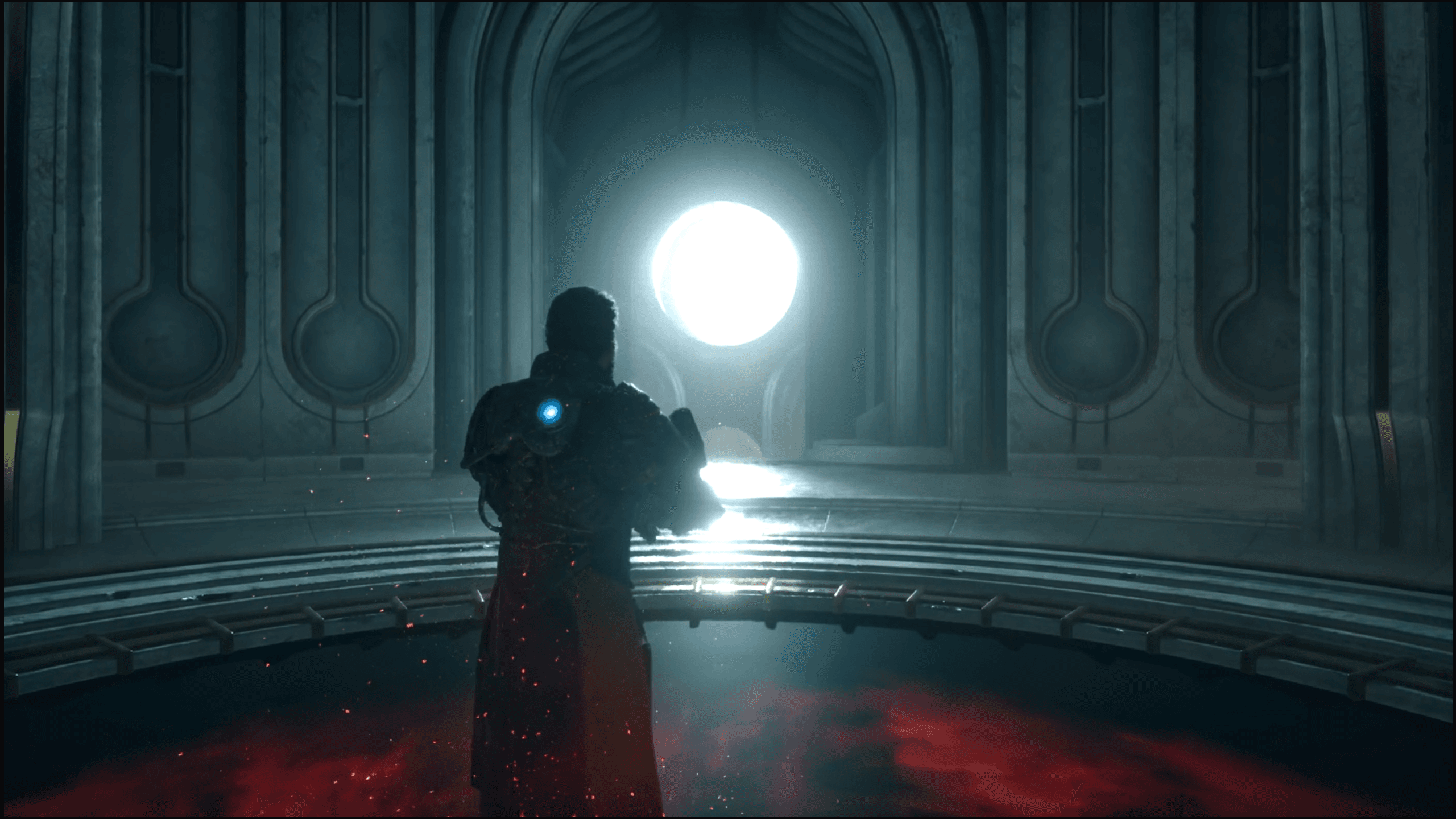
Housemarque’s goal with Saros is clear: to build on Returnal by improving combat feel and controls, while also expanding its world and storytelling.
On the new features side, the game introduces a stronger permanent progression system, so every run leaves real progress behind. It also brings in a larger cast of characters, along with a new mechanic called Eclipse, which, based on my time with it, might end up frustrating quite a few players. And yes, there’s finally an auto-save system.
As for the story, I won’t go into too much detail. If you’re familiar with Housemarque, you’ll know they’ve always been about gameplay first. Story still matters, but revealing too much early on could take away from the experience.
At least in the opening hours, the narrative leans into a mysterious, slightly abstract tone, but it’s not so fragmented that it becomes hard to follow. Personally, I’d recommend going in blind and experiencing those key moments for yourself rather than knowing everything beforehand.
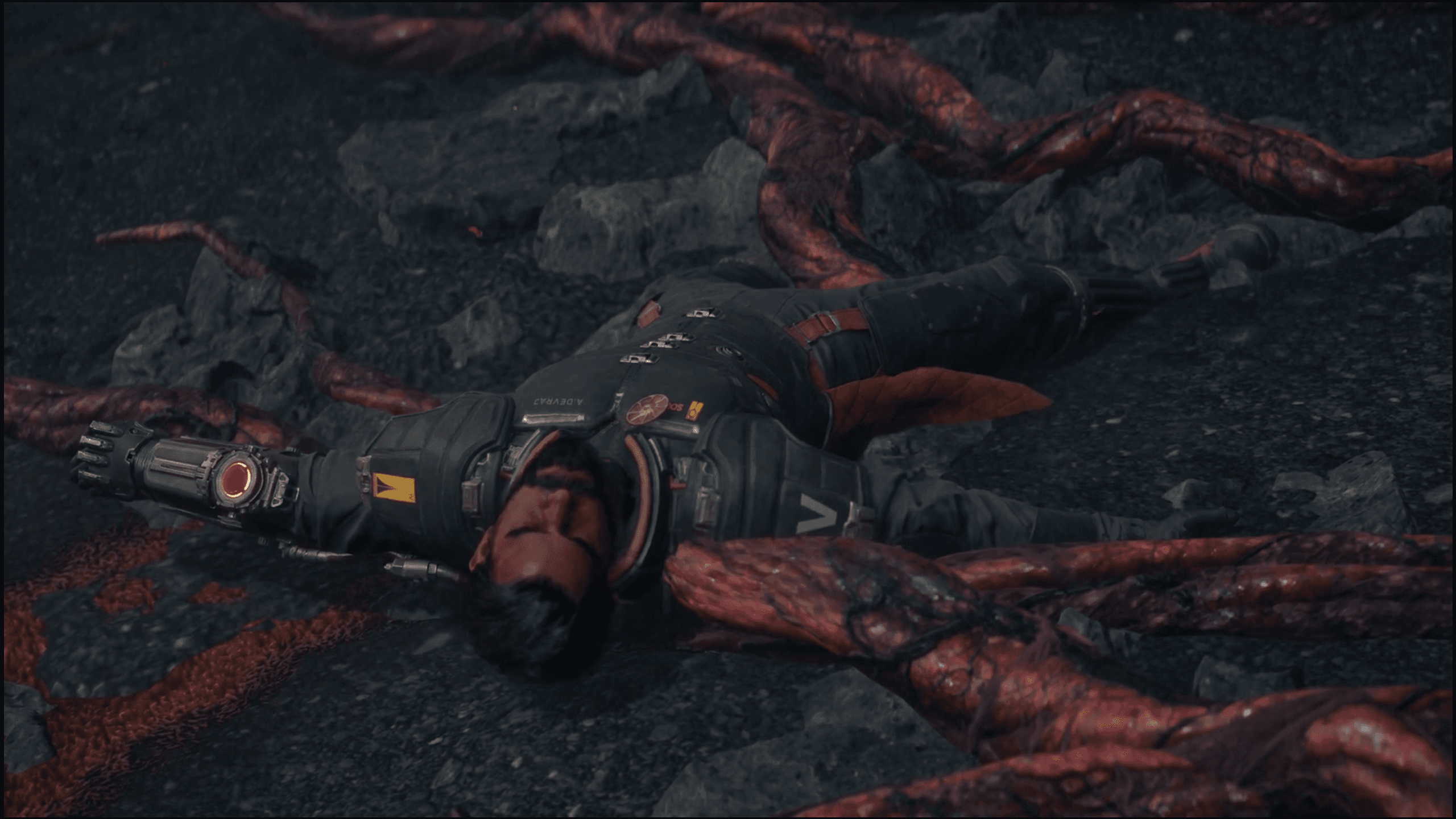
First things first, Saros is, at its core, a roguelike action game. That means death will be one of the most common things you experience.
But unlike Returnal, it doesn’t feel like you’re getting less in return the more you play. At least, that’s how it felt to me. In Returnal, there were moments where progress felt far out of reach, making each death feel especially punishing. In Saros, though, every failure comes with some kind of real gain, not just better skills or knowledge, but actual progression you can carry forward.
Saros takes place on a constantly shifting planet called Carcosa, and it’s completely separate from Returnal’s universe, which is actually quite surprising.
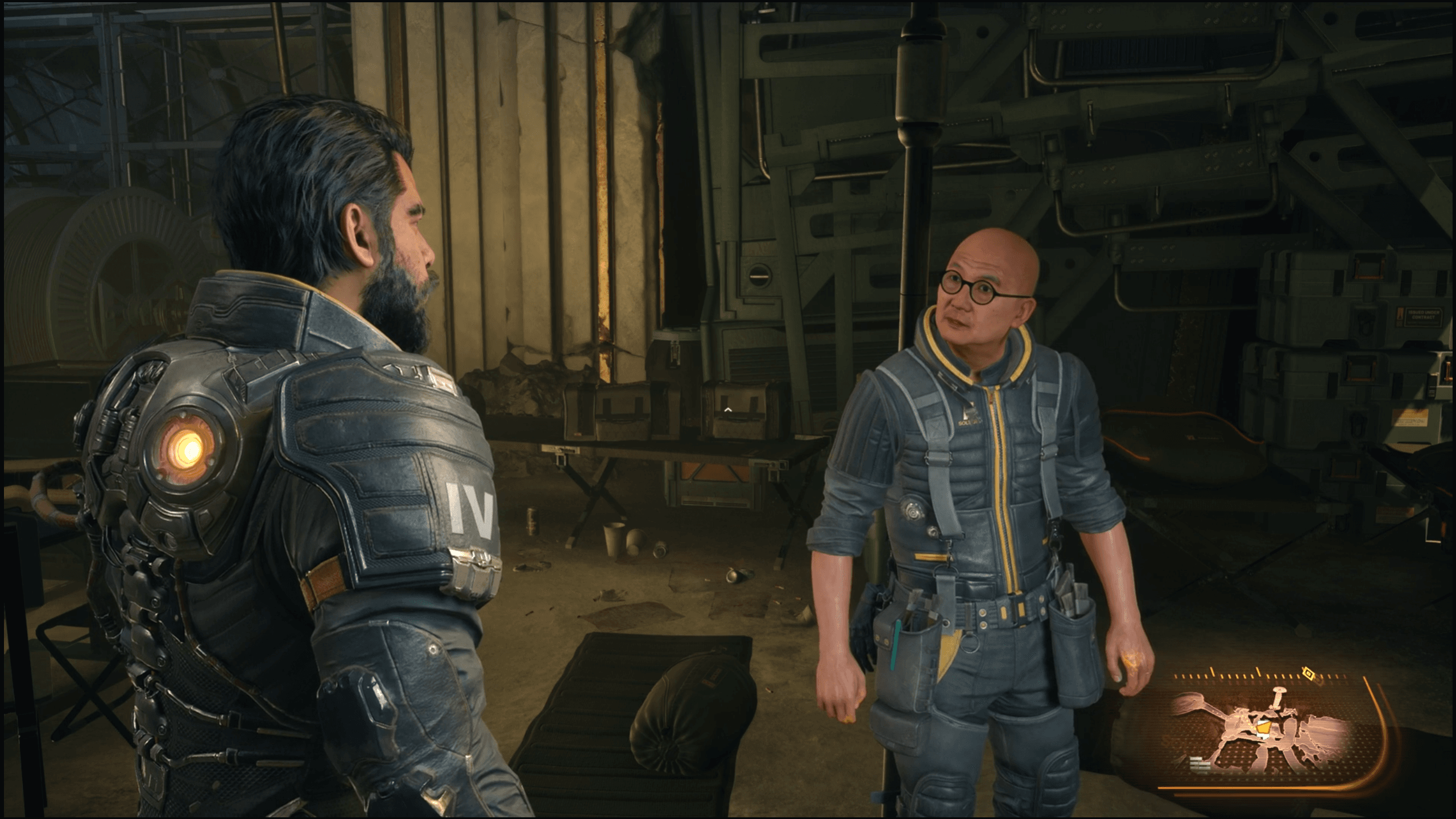
You play as Arjun Devraj, portrayed by Rahul Kohli, who provides both the face and voice performance. He arrives on the planet to investigate what happened to the Soltari colony that came before him, but also to find someone important to him, giving the mission a strong personal edge.
Arjun feels like a solid, well-defined protagonist, and Rahul Kohli’s performance really sells it. Even early on, his emotional breakdown is convincing enough to pull you in. After your first death (which is also the player’s first failure), Arjun wakes up to find that several days have passed, even though it only felt like a few hours to you. As you continue dying and returning on Carcosa, collecting logs and clues along the way, the story slowly unfolds and pieces itself together.
That said, the most interesting character in Saros might not be a person at all, but the planet itself. Carcosa feels ancient, alien, and almost alive. To match its roguelike design, the world constantly reshapes itself, making each run feel different from the last. It keeps everything mysterious and unpredictable, and naturally makes you want to explore just a bit further each time.
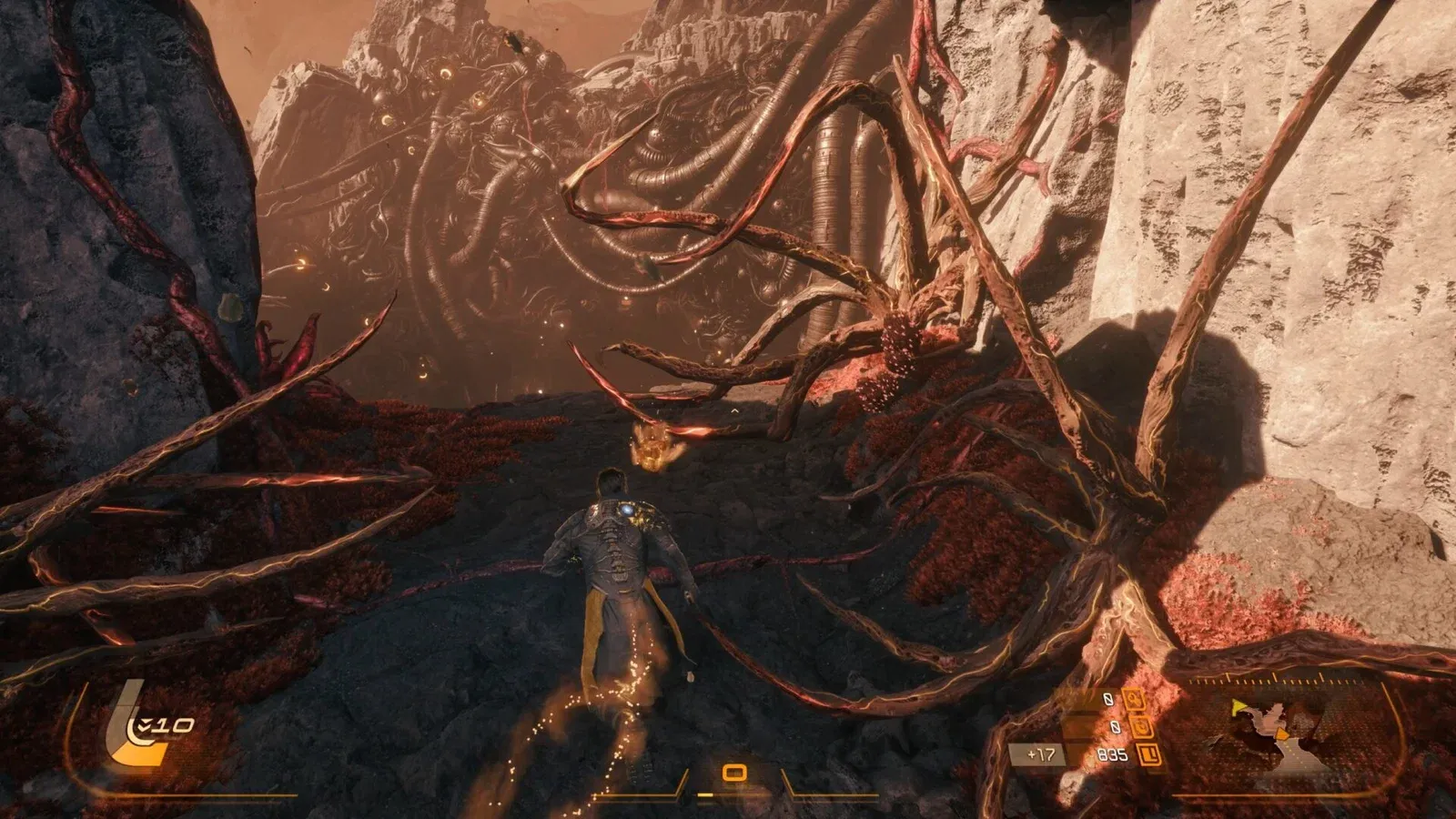
One thing worth highlighting is the game’s fast travel system, which is genuinely useful. It lets you freely return to different biomes across the planet, whether to follow the main objectives (which are clearly guided), or to revisit earlier areas and reach places that were previously inaccessible with new abilities. This keeps the pace focused on combat and exploration, while cutting down a lot of unnecessary backtracking.
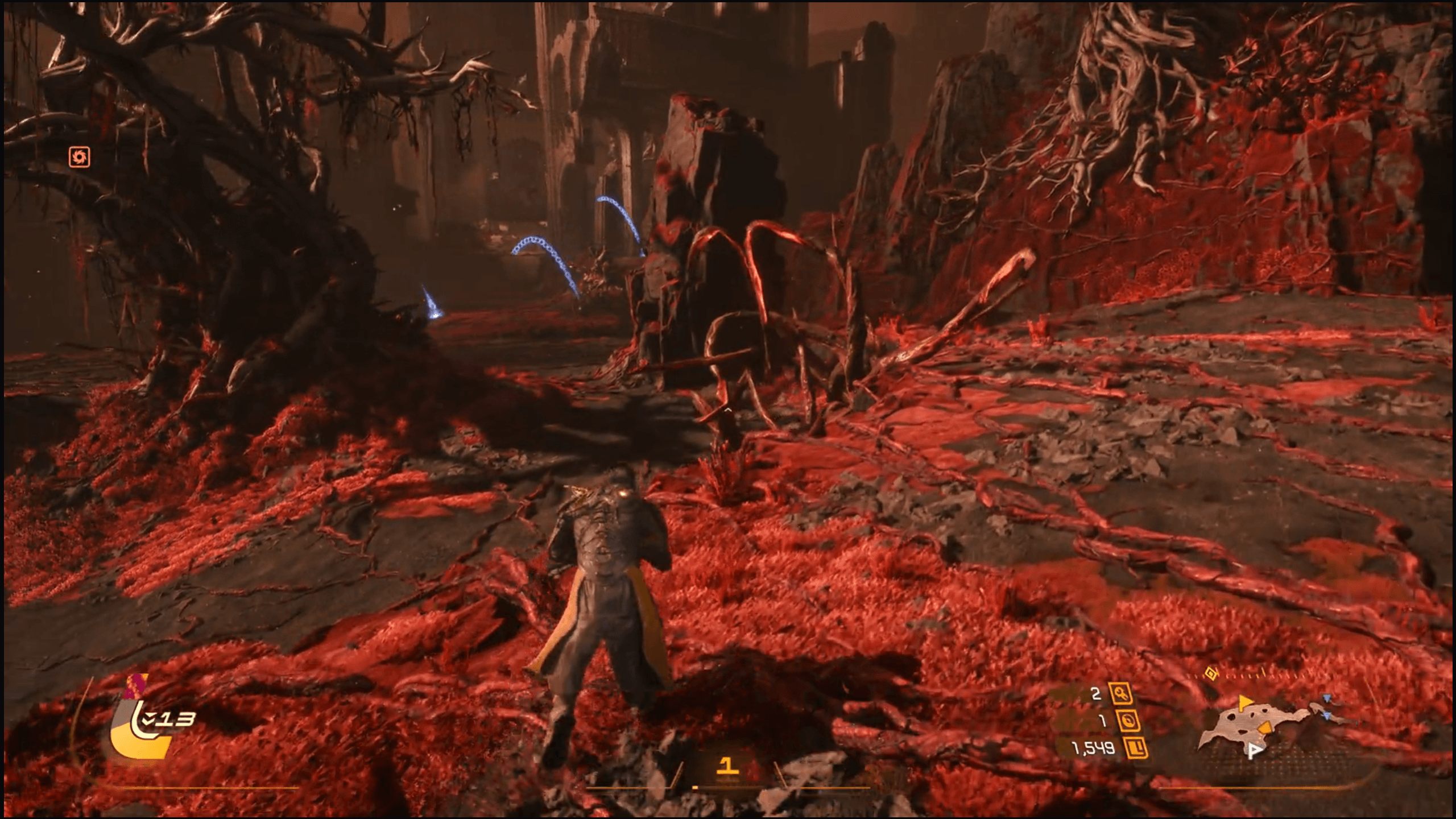
That said, Saros’s world also has a dual nature. In certain areas, the planet shifts into a state where everything is consumed by an ominous Eclipse, something triggered by one of Arjun’s decisions. Under this darkened sky, enemies become far more dangerous, and a spreading corruption effect starts to weaken your survivability.
I’ll go into more detail about the Eclipse system later. But in return, players can earn more Lucenite, the game’s main currency and progression resource. It’s also a key system that sets Saros apart from Returnal when it comes to long-term progression, something I’ll explain further shortly.
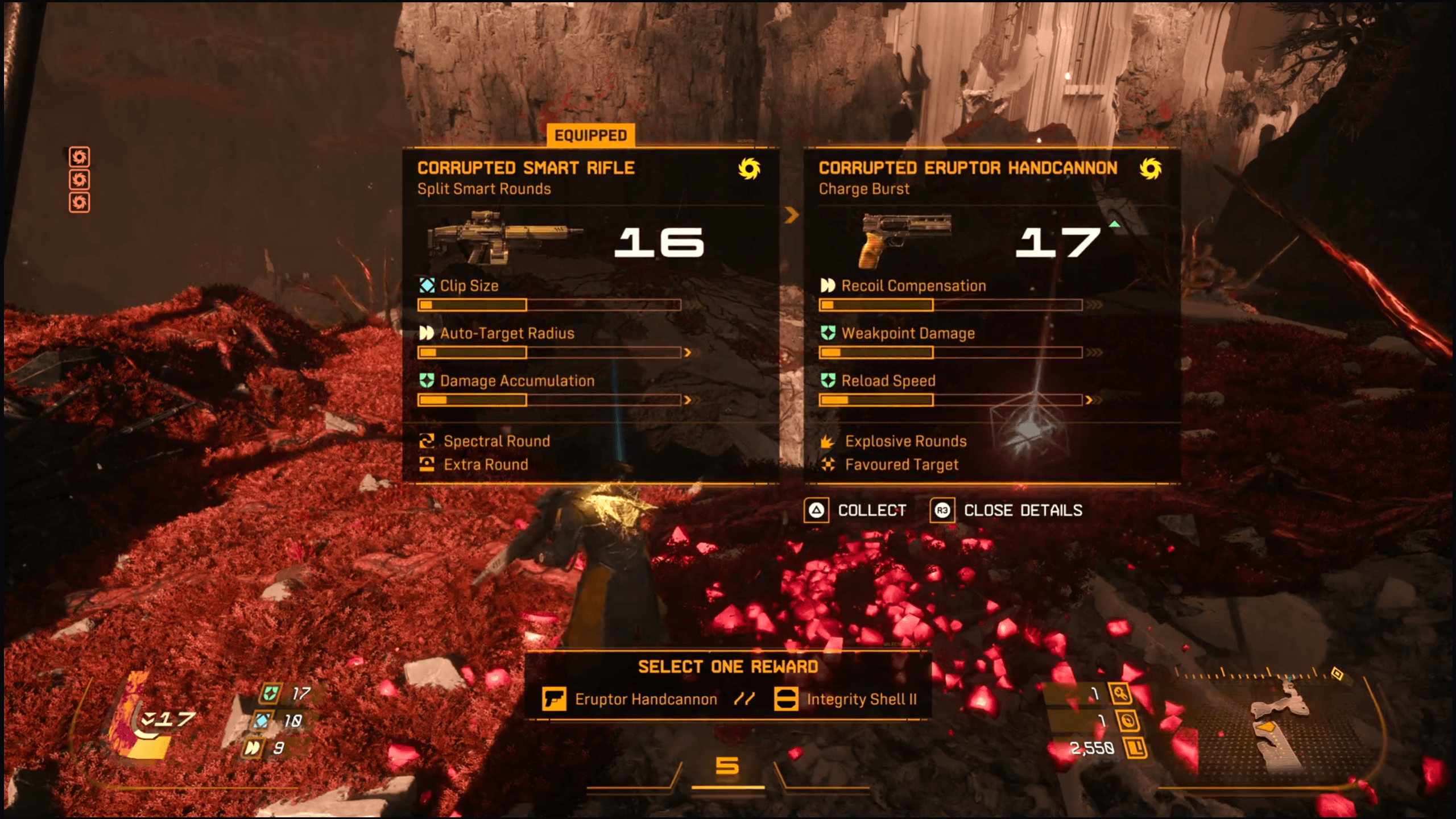
Even after nearly three hours of play, it’s clear that not all systems have been unlocked yet. Saros takes a layered approach, slowly introducing its mechanics over time.
Arjun uses energy weapons developed by his company, Soltari. Each loadout has two parts: a standard firearm (like rifles or pistols), and a system called Prominence, a kind of power-based weapon released through his suit and arm, which feels closer to a skill ability.
You also have a key shield system. It can absorb incoming bullet-hell attacks and convert them into energy, which you can use to charge your weapons for burst damage, or to counter the Eclipse corruption mentioned earlier.
At its core, Saros is built around one idea: making death meaningful. As the developers put it, “you come back stronger every time.” Unlike most roguelikes where you reset after death, this game uses a clear permanent progression system, so each run makes you faster, stronger, and more efficient.
For someone like me who felt Returnal could be a bit too punishing, this feels like a smart evolution. It keeps the challenge, but makes the experience more accessible overall.
Carcosa’s environment leans heavily into a dark, oppressive style. Visually, it’s striking right away, one of those worlds that immediately grabs your attention. The atmosphere feels alien, eerie, and slightly Lovecraftian, creating a sense of unease. Compared to Returnal, Carcosa still feels otherworldly, but its tone is much darker, closer to something like DOOM, with a hellish, suffocating vibe.
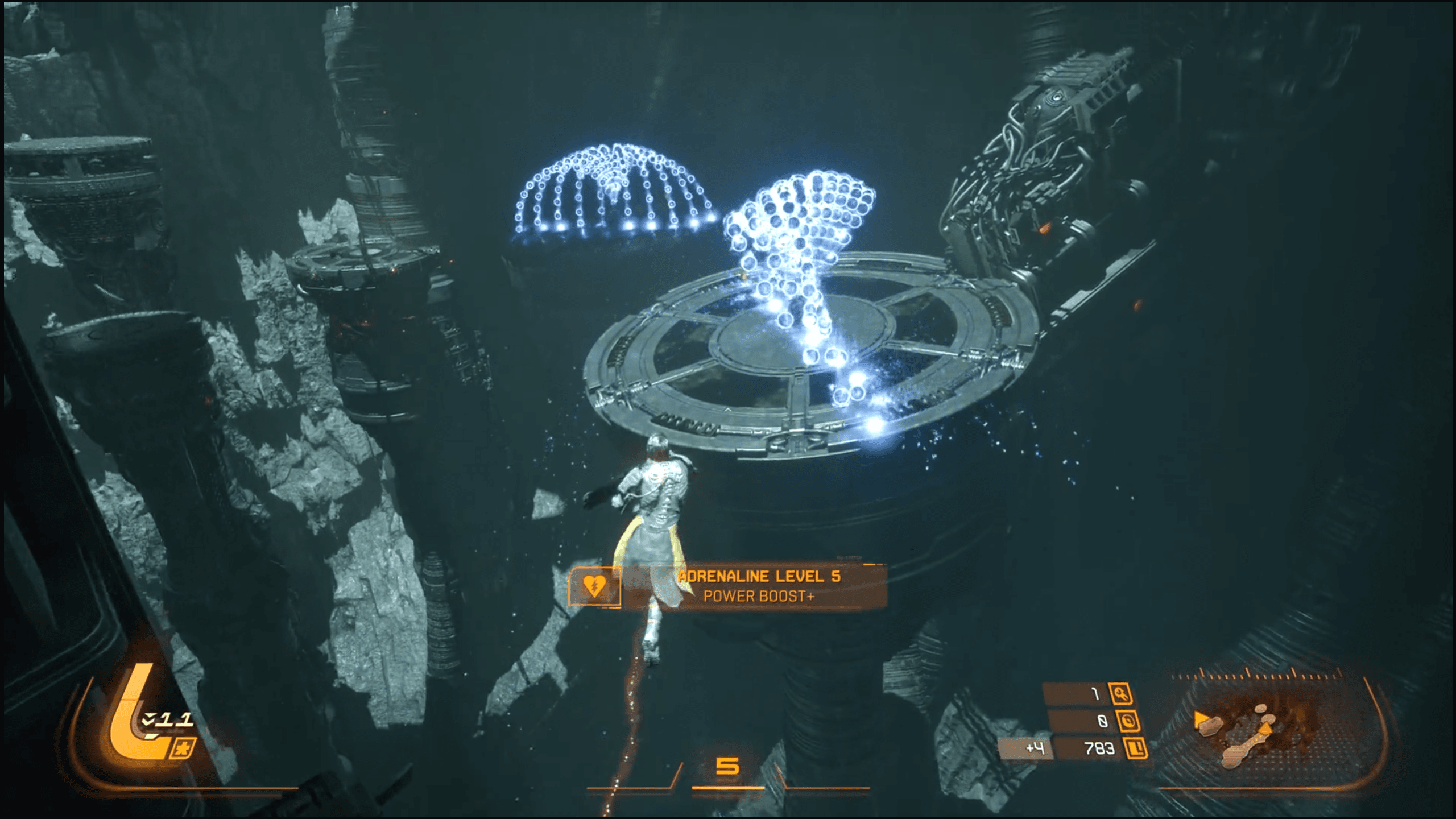
In this preview, I explored the first two major biomes: Shattered Ruins and Ancient Depths. The former is an outdoor, ruined alien city made up of broken stone structures and brutalist architecture. The latter shifts underground, into a closed network filled with machinery and defensive systems, with a more unsettling and mysterious tone.
No matter which variation of the map you get, both the level design and atmosphere stand out. Much like Returnal, Saros once again shows that strong mix of art and technology, with its visual style fully on display.
At the same time, it clearly feels like a showcase for current-gen hardware. Even at this stage of the console’s life cycle, the visuals are still impressive, packed with flashy gunfire, particle effects, and dynamic lighting. And when the Eclipse hits, the entire world shifts instantly into something darker and more ominous. That sudden change in tone feels powerful, almost like being pulled into a completely different world.
After each death, the world changes. This isn’t just about map layout, it’s reflected in the dialogue too. Arjun and other characters start talking about how the world is never the same, and he even begins to question why he keeps coming back. For now, there’s no clear answer.
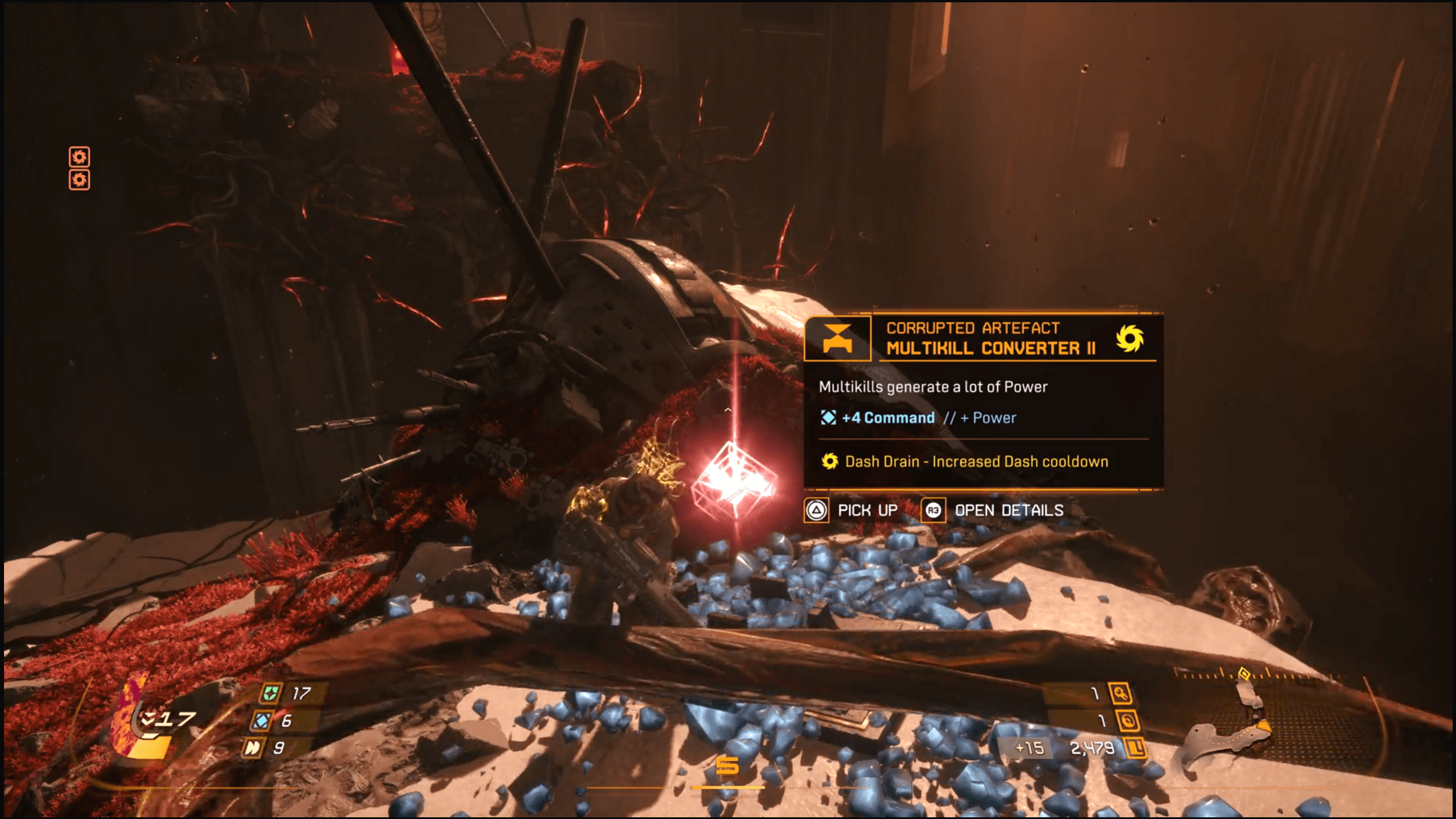
On the gameplay side, each run works similarly to Returnal. You collect Artefacts during a cycle, but they only last for that run, once you die they’re gone. Most Artefacts boost Arjun’s core stats: Command, Drive, and Resilience. But as I progressed further, I noticed many of them come with downsides too, like weapon jams or fewer dashes.
What really stands out is that your Artefact slots are limited, and once they’re full, you can’t swap them out. Every pickup becomes a decision. You start thinking about what’s worth taking and what to leave behind, and you can feel that pressure in the moment.
That’s when it clicked for me, that Saros isn’t just about getting stronger, it’s about forcing you to make choices.
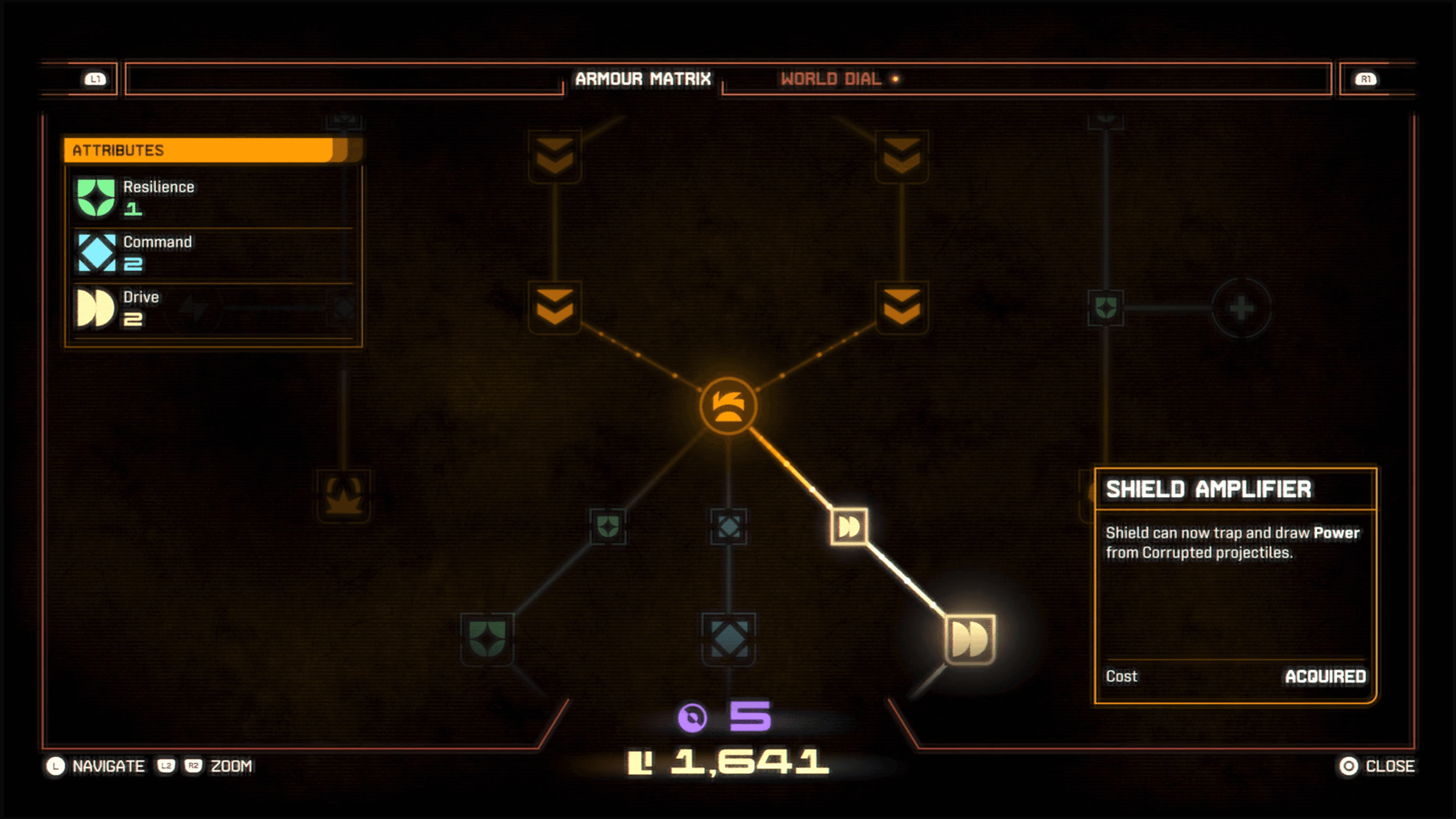
As for permanent progression, the resource you bring back each run, Lucenite, can be spent on a skill tree. The upgrades are mainly split across three core stats: Command, Drive, and Resilience, each tied to different passive bonuses.
For players struggling to survive in this high-pressure game, upgrades that boost survivability will likely be the top priority. That said, there are also more strategic unlocks, like starting with a chest key, or gaining an extra revive after death.
All of this progression is handled through a Soltari system called “Primary.” Interestingly, the developers clearly don’t want players to simply grind their way to overpower everything. Parts of the skill tree are locked behind Overlord nodes, which can only be unlocked by defeating specific bosses.
It’s a smart system, it still rewards progression, but keeps the challenge and pressure intact.
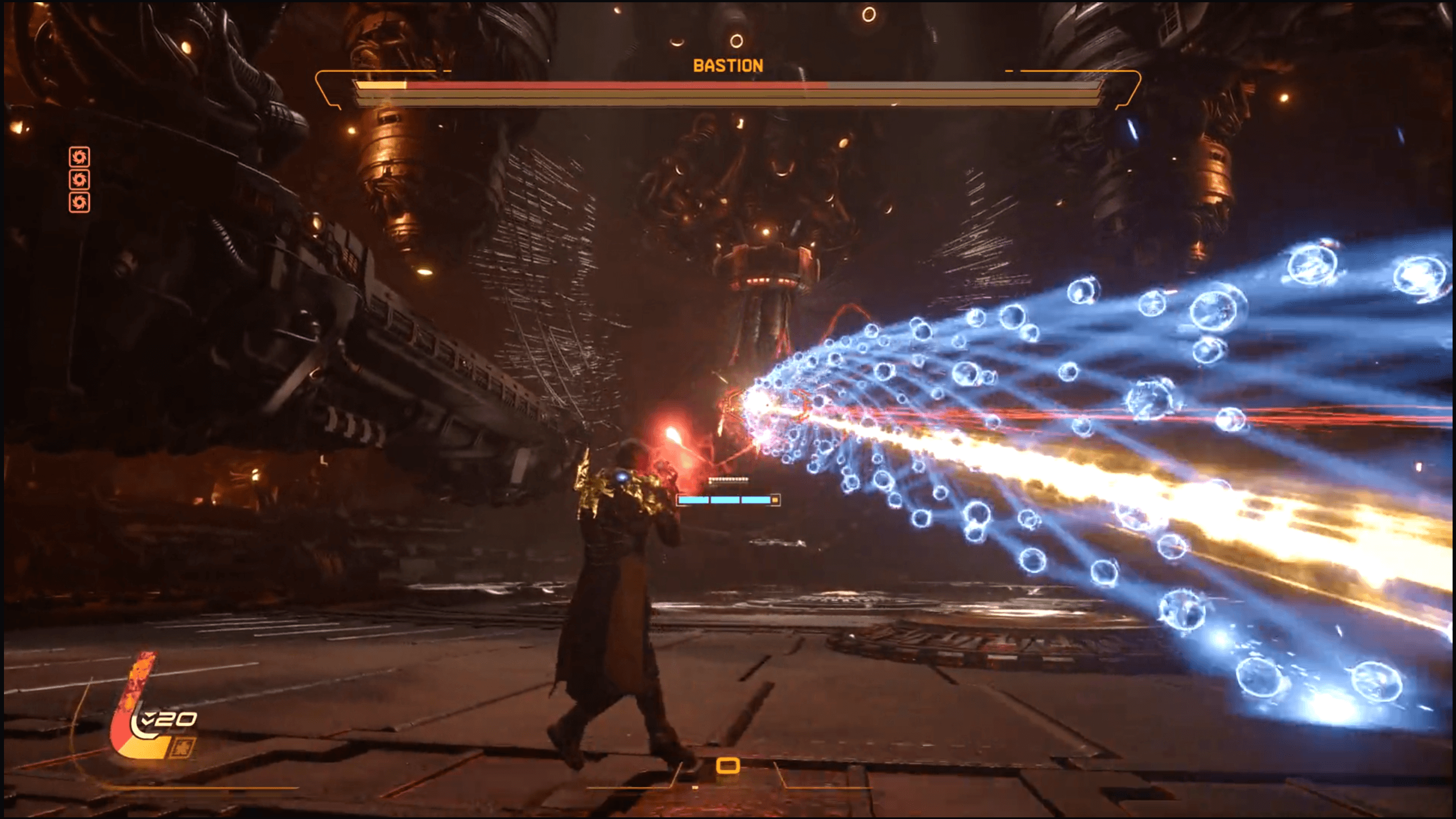
As for combat, this is clearly where Housemarque shines. Gameplay has always been their priority, and it’s the core of what makes Saros work.
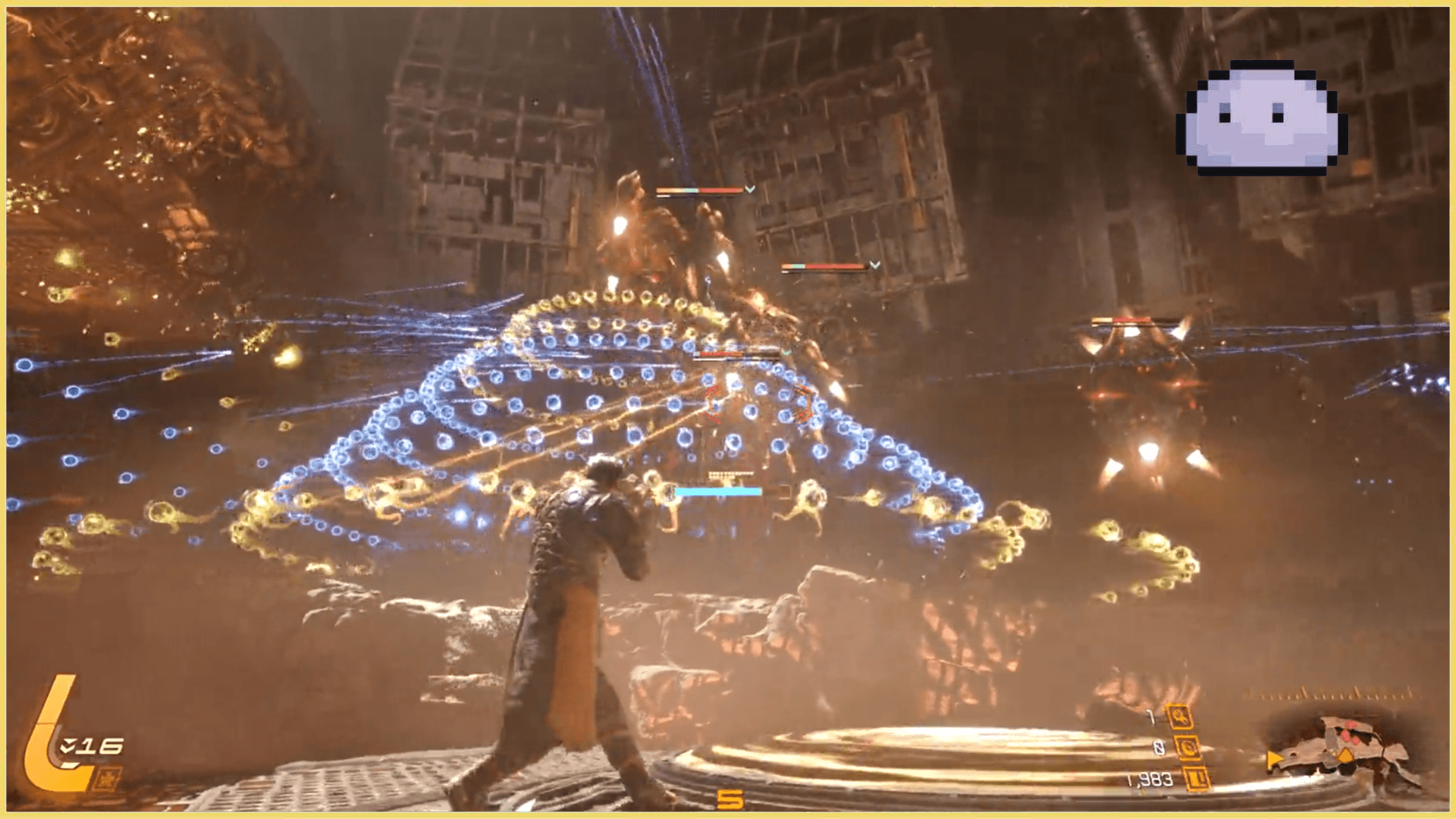
The game builds on Returnal’s fast, arena-based combat and pushes it even further. There’s a wide range of weapons, from charged burst types to rapid-fire options, and even ones that can bounce shots off walls. It all creates that intense bullet-hell feel I’ve been hoping to see again.
Housemarque calls this style “bullet ballet,” and it really fits. It’s what they do best, combining shooting and movement into something that feels smooth, precise, and satisfying.
In this kind of combat, movement and rhythm are everything, and once again, they push both to the limit. With Arjun’s dash and jump, you’re constantly moving across the arena at high speed. Clearing waves of enemies, from ground units to turrets and airborne threats, quickly becomes almost instinctive.
Every fight feels like an invitation. It keeps pulling you back in, making you want to jump into just one more run.
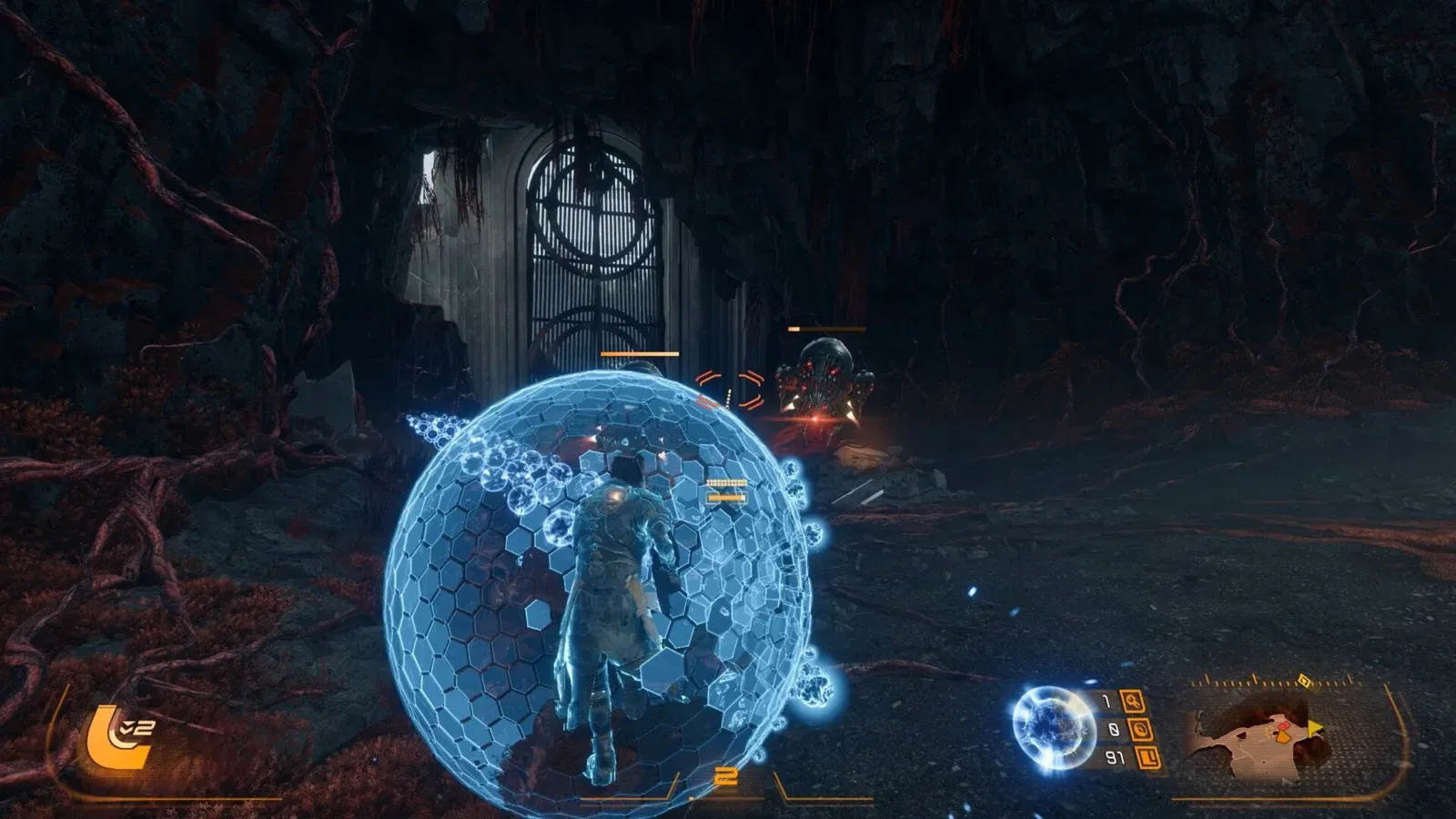
One standout system in Saros is the Soltari shield mentioned earlier. Honestly, as someone who tends to focus more on attacking than defending, I kept forgetting it was even there, and paid for it quite a few times.
The shield isn’t a full block, but it can absorb part of incoming bullet attacks and convert them into energy, giving you another resource to work with. It’s a really interesting system that adds more options to how you approach combat.
At the same time, it means you have more to manage during fights. It’s not just about attacking and moving, you also need to think about defense and resource conversion. But in a high-pressure world like Carcosa, this system often ends up being the difference between surviving and dying.
The mechanic that really defines Saros challenge is the Eclipse, and it feels just as ominous as it sounds.
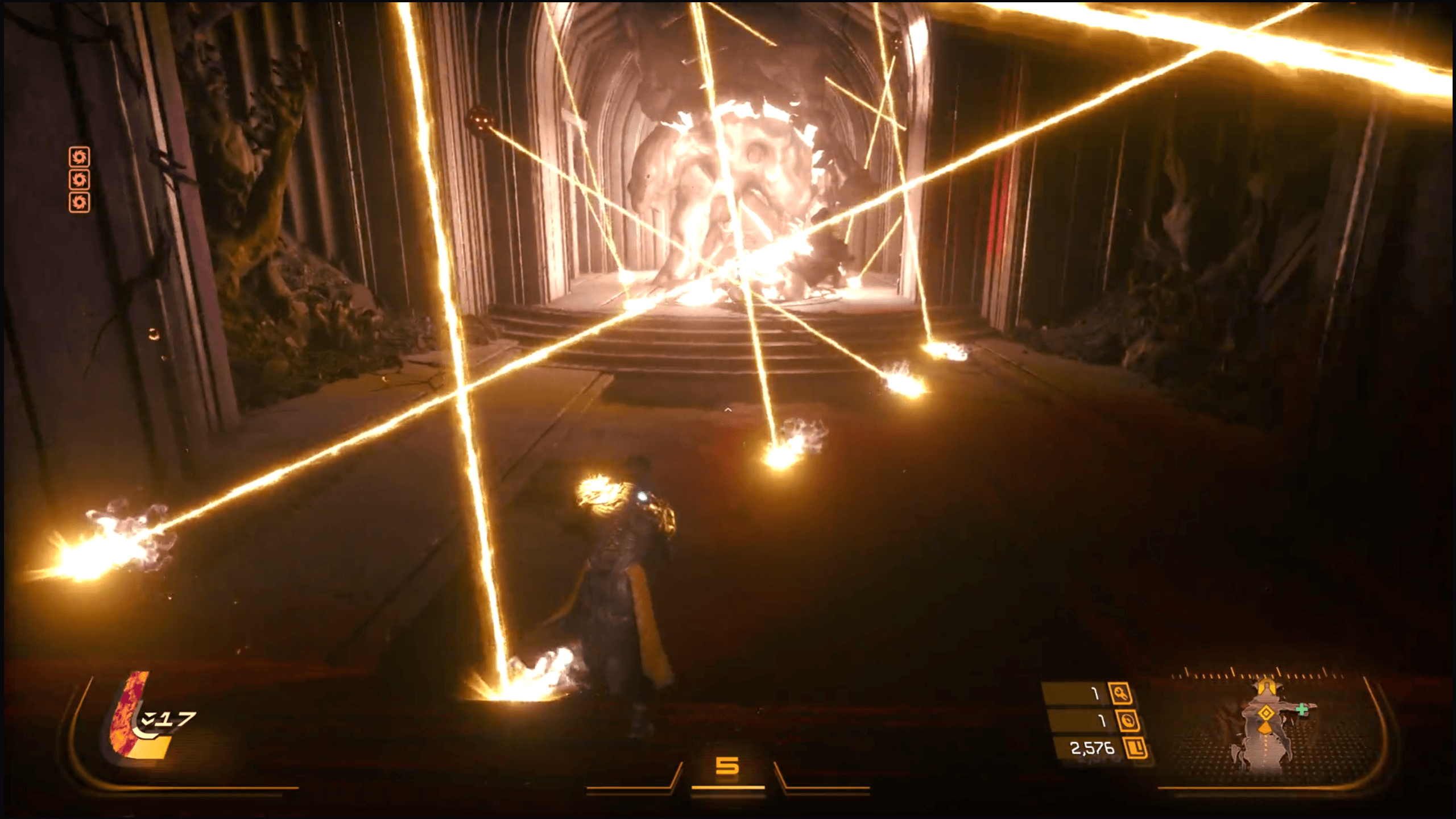
In most runs, as long as you haven’t reached the area’s final boss, you’ll eventually enter an Eclipse phase. When that happens, enemies get stronger and start using corruption attacks. Unlike normal bullet patterns, these can’t be absorbed for energy, they hit you directly and hard.
In simple terms, once Eclipse begins, your focus shifts from offense to survival. But it’s a double-edged system. While it makes the game much harder, it also increases the rewards. You can even trigger it yourself by interacting with strange alien statues, pushing the entire world into this dangerous state. The moment everything turns blood-red, the music shifts, and the tension ramps up instantly.
That danger also means opportunity. During Eclipse, you earn more resources for progression. In a way, you might even want to trigger it, dive into high-risk situations, gather as much as you can, then fall when you can’t hold on anymore, and come back stronger for the next run.
That loop is really the heart of Saros. Even in the first biome, I quickly ran into enemies that felt way tougher than expected, elite units, even near boss-level threats. Honestly, I went in feeling confident after playing Returnal, thinking the early game would be manageable… but the first elite enemy immediately proved me wrong.
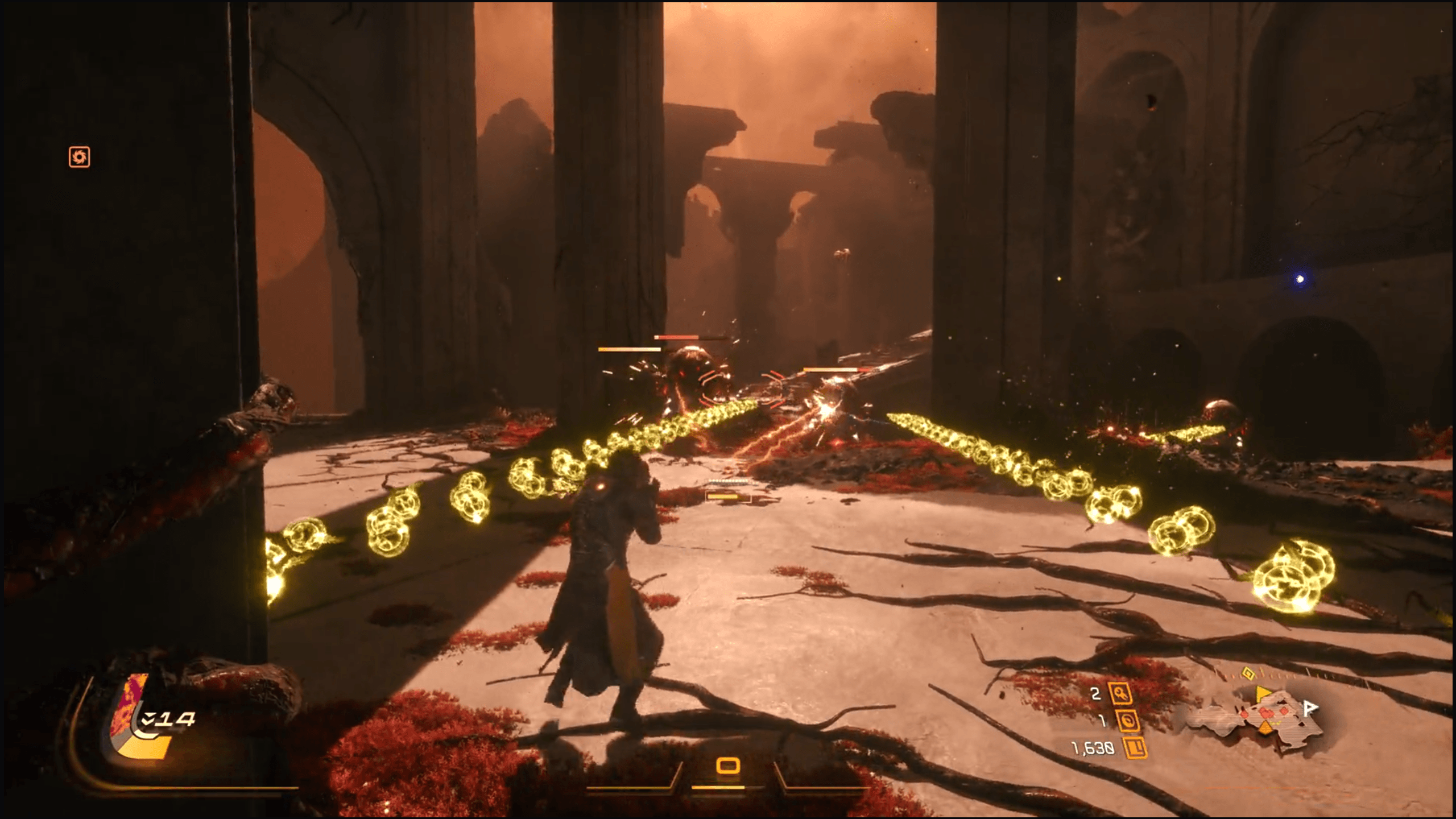
With each death, I slowly started to understand enemy patterns and mechanics, but the overall pace still felt chaotic and intense. The enemy designs don’t help either. Many of them look like something out of a Lovecraftian nightmare, dark, twisted creatures with wings, tentacles, and eyes. Even visually, they’re unsettling.
Even the most basic enemies become much more dangerous once Eclipse kicks in. And as the saying goes, the bigger they are, the harder they fall, though here, it also means better loot. This becomes especially noticeable when fighting elite enemies.
Under Eclipse, combat turns into a high-pressure standoff. These encounters are usually short, but extremely tense, almost like a cat-and-mouse mind game. Positioning, timing, and decision-making all matter, and every mistake feels amplified. Because of that, these quick, intense fights feel very different from the larger boss battles.
When it comes to full boss fights, the pacing shifts back to something closer to Returnal. Multi-phase encounters bring together everything you’ve learned, enemy patterns, mechanics, and movement. At that point, it’s not just about reacting fast, but executing with near-perfect precision.
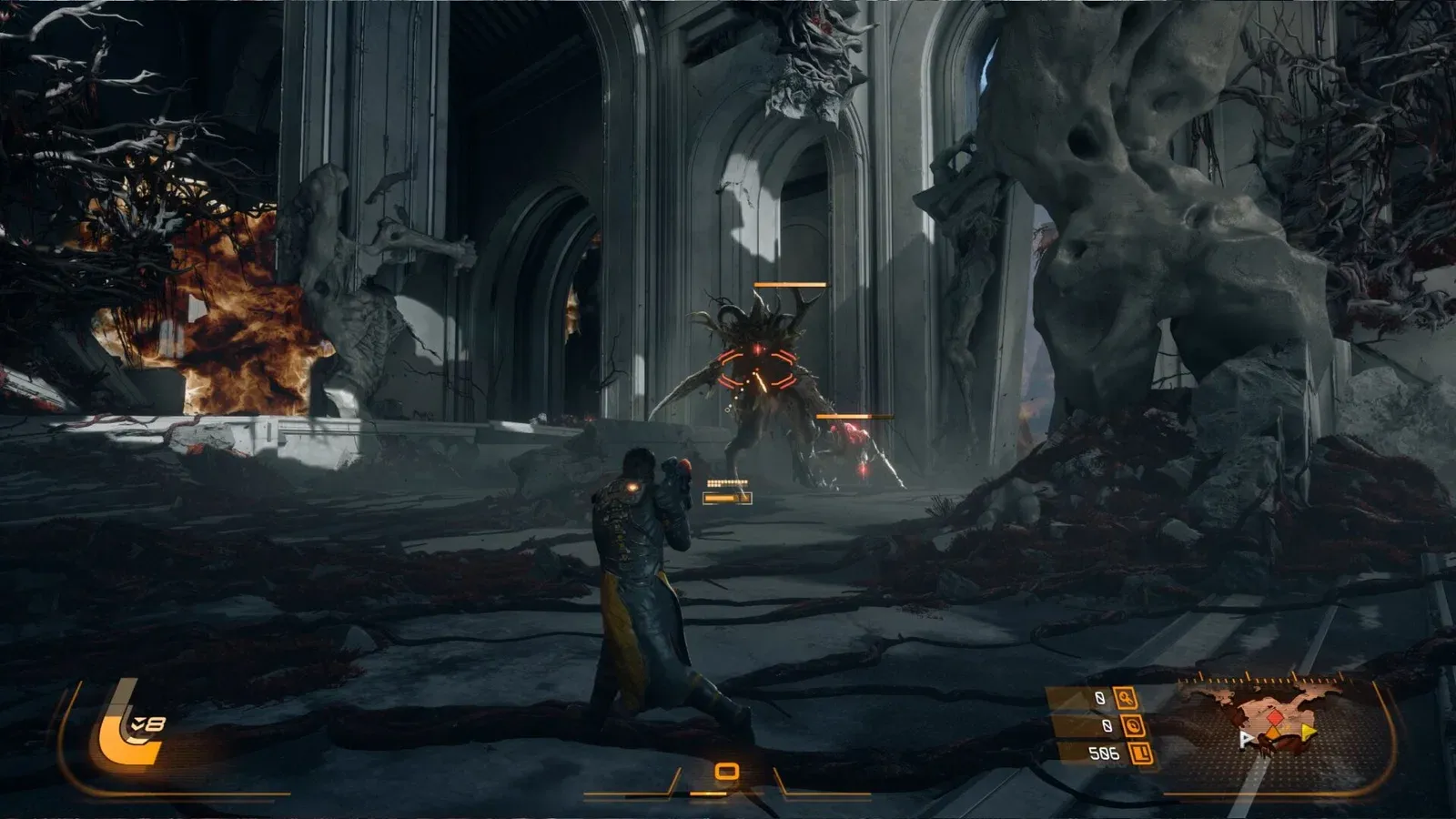
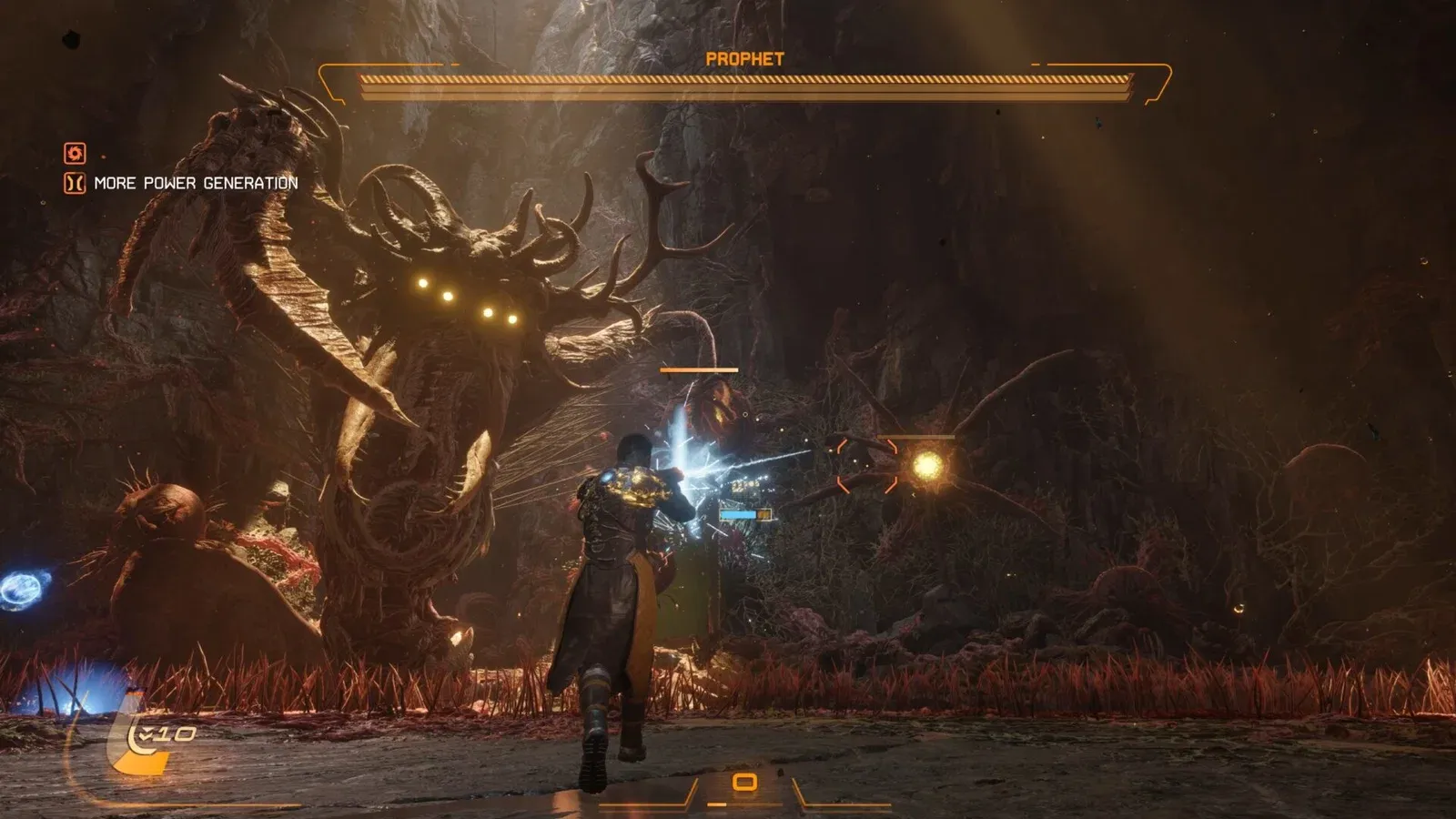
After about three or four deaths, I finally reached the first biome’s boss Prophet. It’s a massive alien creature covered in branch-like growths, twisted and unnatural, honestly hard to even describe. And unsurprisingly, this was the most intense fight in the entire preview.
The battle pushed me to use everything I had learned so far, dodging waves of bullets, knowing when to attack, when to switch weapon modes, and when to use the shield to absorb damage and convert it into Prominence energy. Every decision felt amplified.
In the end, I got the boss down to just one hit from defeat… but I went down first.
Yes, Saros is more approachable, but it’s still a very challenging roguelike. Like Returnal, the longer you survive in a run, the stronger you become, weapon proficiency ramps up quickly, staying unharmed builds adrenaline and powerful buffs, and with enough Artefacts, you can turn into a killing machine within just 20 minutes.
But under the Eclipse, everything gets pushed further. Artefacts become stronger, but also more dangerous. Risk and reward are amplified. You might deal more damage after a dash, but also take heavier fall damage.
It’s a constant push and pull. Every choice matters, and in most cases, the system rewards players who are willing to take risks.
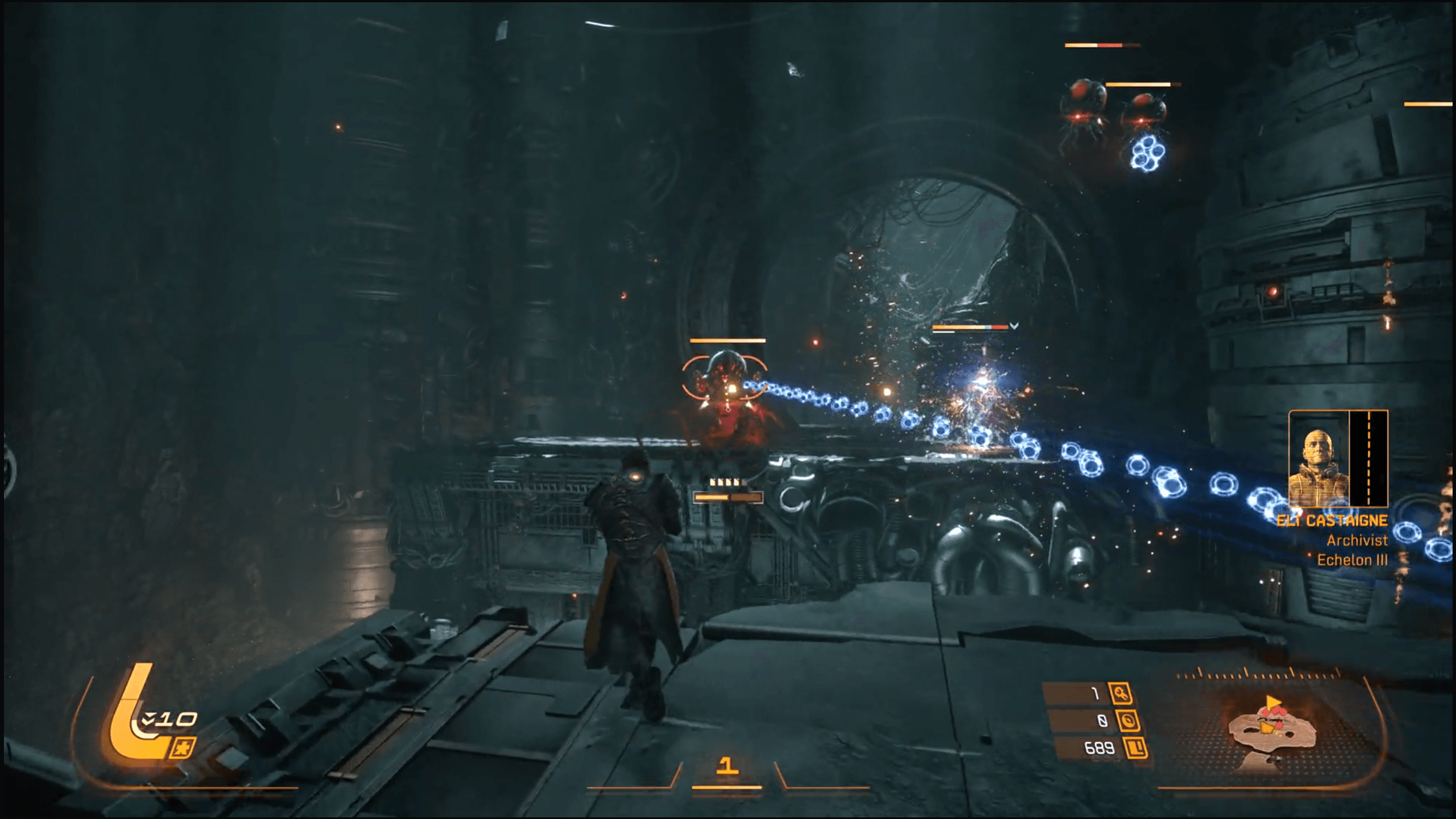
Thinking back to the immersive, almost hypnotic atmosphere of Returnal, combined with its addictive bullet-hell roguelike gameplay, I had high expectations for what Housemarque could do with Saros, and they’ve clearly put in the effort.
In terms of controls, the DualSense haptic feedback once again plays a big role. You can feel the rhythm of bullets hitting the Soltari shield, and each weapon has its own distinct feedback, making combat feel weighty and precise.
But without strong sound design, none of this would really work. Since Returnal, very few games feel this confident in asking players to use a good pair of 3D headphones, and Saros is definitely one of them. In a game where you’re almost always under pressure, accurate directional audio is essential for survival.
The music also goes all in. It’s heavy, aggressive, with a mix of industrial and rock influences. Screeching guitars and deep, layered soundscapes come together to make every fight feel bigger and more intense.
Of course, the full experience will have to wait for the final release. But based on what I’ve played so far, Saros already shows a lot of promise.
Strong visuals, unique sound design, engaging storytelling, and satisfying combat all come together really well. Even from just three hours, I feel confident saying Housemarque might have another standout title on their hands.
Yes, it clearly feels like an evolved version of Returnal, which makes sense as a spiritual successor. But it also aims to tell a bigger story. More importantly, from this early experience, it seems the team has found a better balance between challenge and frustration, letting players keep moving forward instead of getting stuck.